
Exped Ultra 6.5R Sleeping Pad
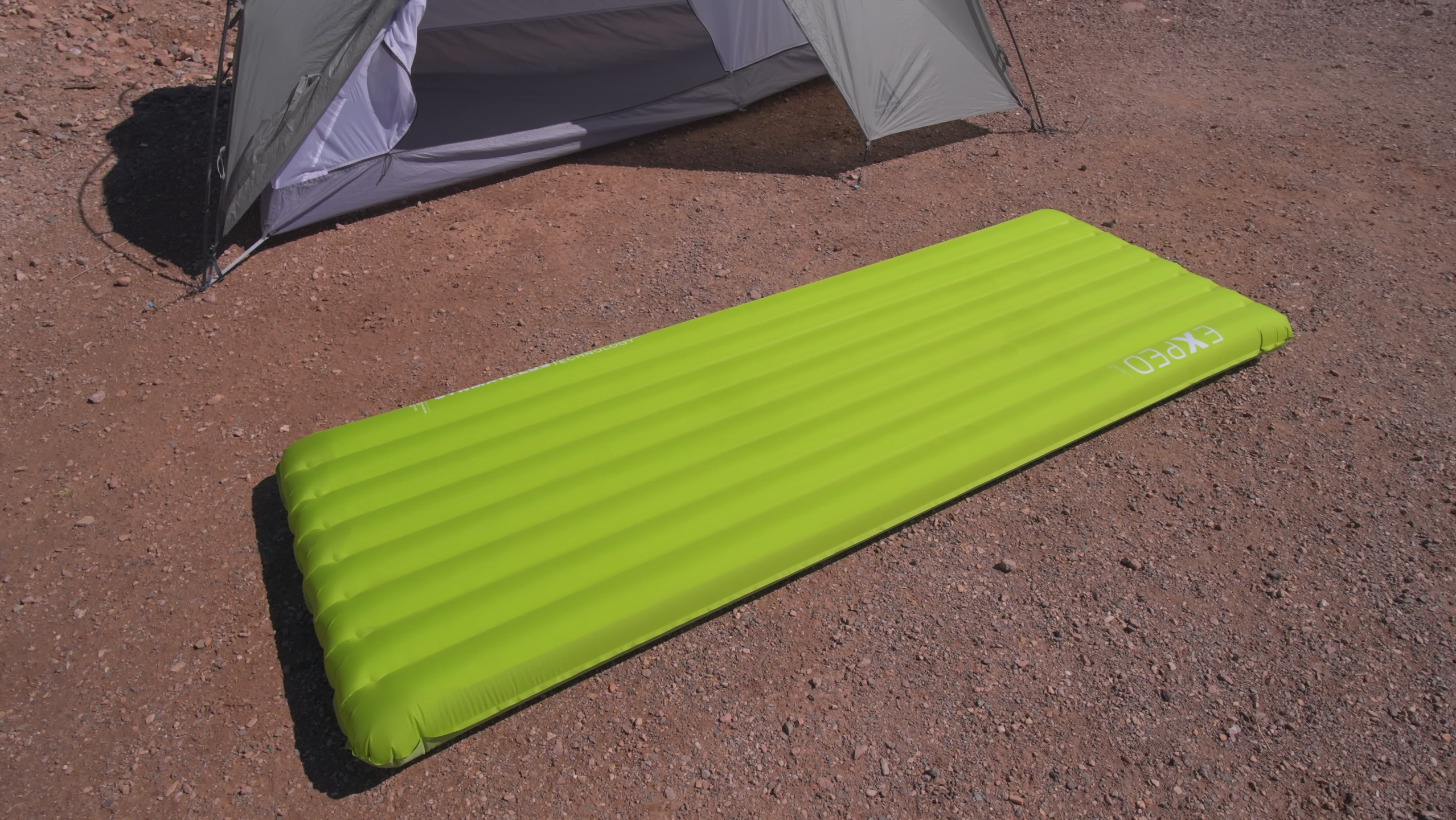
The Exped Ultra 6.5R claims to be the go-anywhere, do-anything option for fast-paced, human-powered adventures. After a dozen nights on trail pushing it to its limits, I’ve got a clear picture of the good and the bad — and whether it stacks up to the competition.
The Ultra 6.5R comes in at $200 and 551 grams for the regular wide rectangular version, which puts it squarely in ultralight territory for a pad with a 6.9 R-value. On paper, that’s a rare combination of warm, light, and affordable. On trail, it mostly delivers — with one design decision I keep butting heads with.
Available Sizes
| Size | Dimensions | Weight |
|---|---|---|
| Medium | Rectangular | 72 x 20.5 in |
| Medium Wide | Rectangular | 72 x 25.6 in |
| Long Wide | Rectangular | 77.6 x 25.6 in |
| Medium | Mummy | 72 x 20.5 in |
| Medium Wide | Mummy | 72 x 25.6 in |
Comfort score: 9.5/10
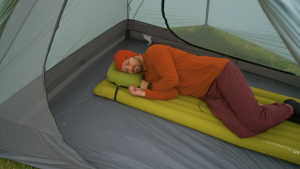
This is where the Ultra 6.5R separates itself. The biggest differentiator is the slightly stretchy 20-denier polyester top — it's noticeable, it lets you sink into the pad, and it feels soft against skin rather than sticky or plasticky, even if you're not wearing much.
The vertical baffles do a lot of work here too. Unlike horizontal baffles, they don't create pressure points, and combined with the stretch in the fabric, pressure relief is excellent — no numb arms, no hot spots. Stability is solid as well: the outer tubes are slightly thicker than the middle ones, which is meant to cradle you toward the center. I don't notice the cradling effect much, but edge support is good regardless.
At 9 cm (3.5 inches) thick, it's not the thickest pad on the market, but I've never bottomed out on it, and I think it's a thickness that works for most people.
One underrated comfort factor: the size range. Rectangular or mummy, regular or wide, short or long — you can genuinely customize this pad to your body and sleep style, and that matters more for comfort than it gets credit for.
Warmth score: 8.5/10
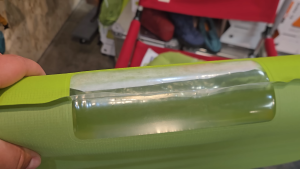
The Ultra 6.5R carries an R-value of 6.9 and is advertised as an all-season pad good for temperatures below freezing. The insulation approach is genuinely clever: a layer of synthetic fiber glued to the top of the pad, with reflective film glued beneath it — suspended from the top rather than filling the whole chamber. You don't need insulation throughout the entire pad, just near your body, and this is an efficient way to save weight while staying warm.
In practice, I took it down to about -6°C on frozen ground before feeling heat loss. Some people will be disappointed that a 6.9 R-value doesn't sleep warmer — but R-value is not the be-all-end-all metric it's often treated as. Judged by warmth for its weight, -6°C on a 551-gram pad is genuinely impressive, and it lines up with how Exped actually advertises it. Credit to them for marketing real-world performance instead of leaning on the number.
Weight and Packability score: 9.5/10
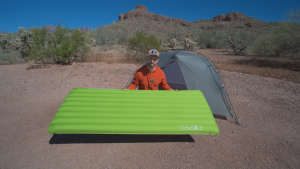
551 grams measured for the regular wide rectangular version (6 grams over spec), and the mummy regular/wide is advertised at just 425 grams. For a pad with this warmth and comfort, that's excellent — this is a true ultralight pad that doesn't feel like one when you're lying on it.
Ease of Use score: 7/10
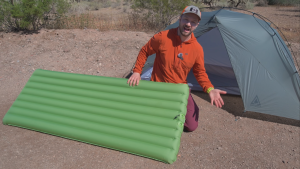
The pad packs up small and stores easily, and the included inflation bag works well. The valve system is my biggest gripe. You get two separate flat valves — one for inflation, one for deflation. The deflation valve dumps air fast, which is nice at pack-up time. But both valves sit on the bottom of the pad, which makes midnight adjustments a pain: if the temperature drops and pad pressure falls, or you want to soften the pad a touch, you're digging underneath yourself to find the valve.
Two valves also means added weight, complexity, and more points of failure — and valve welds are exactly where I've seen pads fail. A single one-way valve on the top corner of the pad, like other manufacturers use, is simply the better system.
Durability score: 9/10
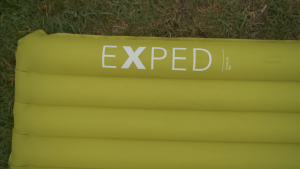
The Ultra 6.5R uses a 20-denier ripstop polyester shell with TPU extruded onto the inside to create the air chamber, and welded baffles separating the air chambers. The construction is simple, with fewer welds than pads that use many small weld points — and long single welds per baffle are exactly what you want, since small welds are where I've seen other brands' pads fail.
Exped had a reputation for weld failures five to ten years ago, but the Ultra line has been around a few years now and seems to have put that behind them. I've had zero issues across multiple Ultra pads, and reviews online back that up. I'd now put this among the more durable ultralight pads on the market.
Noise score: 7.5/10
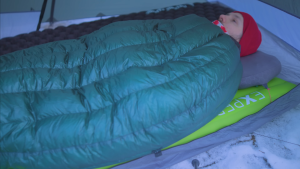
One of the quietest pads on the market. Despite having reflective film inside, there's no crinkle factor at all, and the soft stretchy polyester has none of the rubbery squeak you get from some pads. Tossing and turning in a tent at 2 a.m., this pad won't wake your tentmates — or you.
How it compares
| Exped Ultra 6.5R | NEMO Eclipse All-Season | |
|---|---|---|
| R-value | 6.9 | 6.2 |
| Weight | 528 g | 558 g |
| Price | $199 | $189 |
| Thickness | 6 cm | 10 cm |
| Overall Rating | A- | A |
| Comfort score | 9.5/10 | 10/10 |
| Warmth score | 8.5/10 | 9/10 |
| Weight score | 9.5/10 | 9/10 |
| Ease of Use score | 7/10 | 10/10 |
| Durability score | 9/10 | 8/10 |
| Noise score | 7.5/10 | 8/10 |
The obvious comparison is the Therm-a-Rest XLite. The Ultra is just as light — lighter in the mummy version — and way more comfortable. The XLite holds a small warmth edge (I've taken it to about -8°C versus -6°C for the Exped), but both are very respectable, and I think most people will happily trade a couple degrees for the comfort gain.
Against heavier pads, it's not quite as comfortable as something like the REI Helix — but that's not the category it's competing in.
Final Thoughts
The Exped Ultra 6.5R might be the best all-around pad on the market. It's warm for its weight, genuinely light, and very comfortable, with the valve placement standing as its only real weakness.
The clearest fit is thru-hikers and ultralight hikers: the mummy regular/wide at 425 grams with warmth down to -6°C is the sweet spot for high-elevation miles, and I think it's all-around better than the XLite and the rest of the competition in this class. But its balance of strengths makes it an easy recommendation for just about anyone. This should be the pad the XLite used to be.