
Winter Camping Gear List 2026
Warm, comfortable, and easy in the cold.
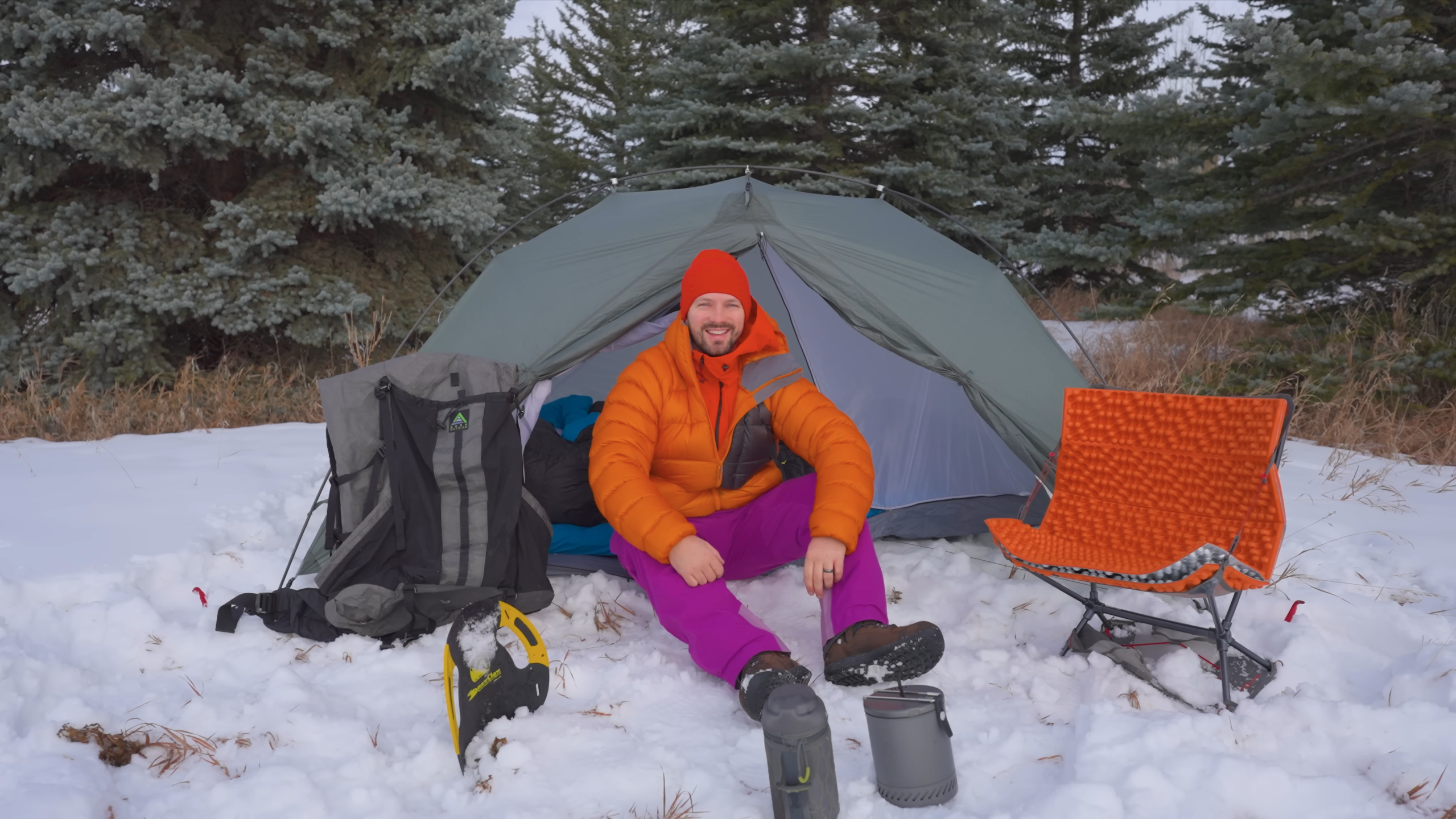
Winter camping can be tough. It is cold, the nights are long, and most of the time some comfort gets compromised for the ability to stay warm. This kit does not make that compromise; it stays warm down to -25°C (-13°F), it does not compromise on comfort, and it makes winter camping easy. This winter kit is not built for the most extreme cold, which requires a different set of gear; but for most people adventuring in winter, this is the right balance.
The Priorities
| 1 | Warm to -25°C (-13°F). Every piece is tested on snow at that temperature. |
| 2 | Comfortable. Winter does not have to mean a rough night. |
| 3 | Easy. Gear that is simple to set up and use in cold conditions. |
| 4 | Works in the cold. Batteries and equipment that can operate when it is freezing. |
TOTAL KIT WEIGHT 9.09 kg (20 lb)
The Big 3
In winter, the pack, tent, and sleep system are more important than a summer or 3-season trip. The pack carries a bigger and bulkier load, the tent has to stand up to wind and snow, and the sleep system has to keep you warm on snow all night. Using heavier gear for these items is often the right choice, since warmth and comfort matter more than a few grams when it is well below freezing.
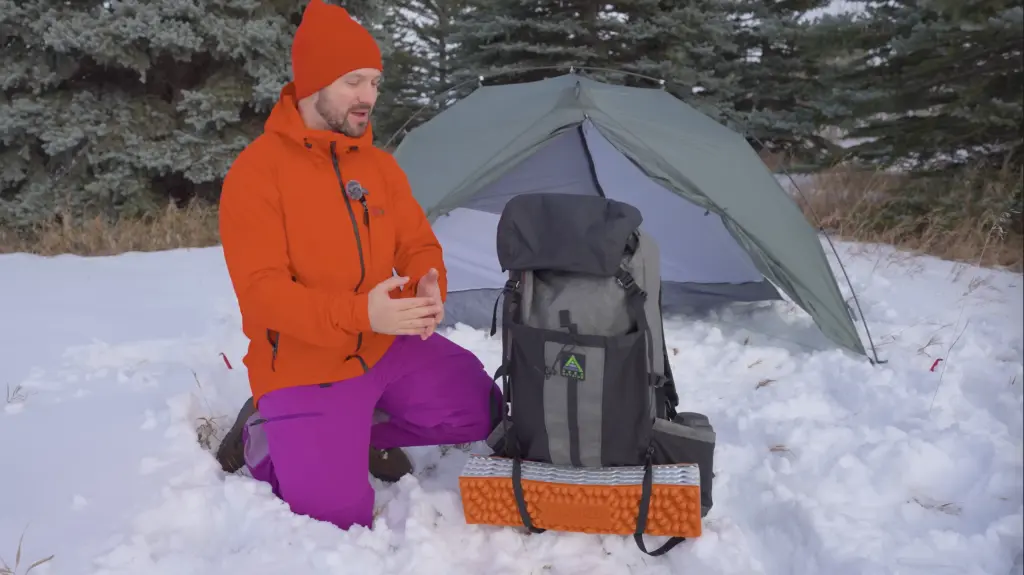
Seek Outside Divide 4800 2.0 Pack
Advantages
- ✓79 L of space for a lot of gear.
- ✓A very sturdy frame that carries heavy loads well.
- ✓An adjustable torso that provides a good fit for most people.
- ✓Modular strap points on the sides, top, and bottom for bulky items like a foam pad.
Compromises
- −No dedicated avalanche pocket for a shovel and probe.
A big, sturdy pack that makes a bulky winter load feel manageable. It has been tested over the last year on trips that call for a lot of gear, and it carries weight as well as any pack out there.
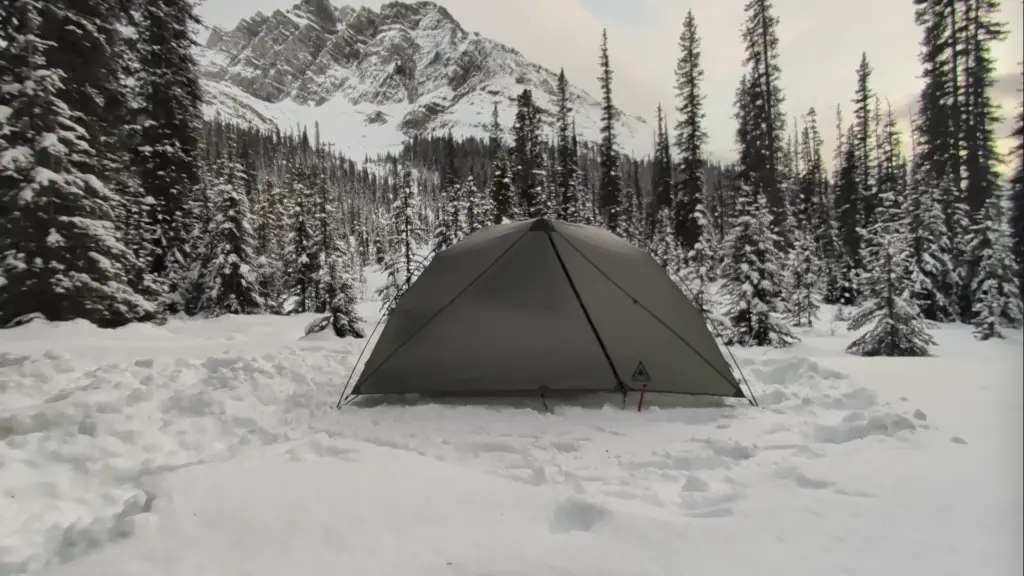
Durston X-Dome 1+ Tent (Solid Inner)
Advantages
- ✓Handles winds up to about 100 km/h (62 mph) and a lot of snow load.
- ✓Very light for a tent that can handle winter. Most four-season tents weigh close to 2 kg (4.4 lb).
- ✓Tall and roomy, with space to sit up and change or wait for a storm to finish.
- ✓Good storage inside and in the vestibule.
- ✓Freestanding, with an all-in-one pitch that goes up fast in the cold.
Compromises
- −Would likely be unable to handle 150 km/h (93 mph) wind.
Not technically a four-season tent, but it has handled some serious winter conditions without any trouble. The solid inner adds about 5°C (41°F) of warmth over the mesh inner in testing; that is not something to rely on, but it makes the sleep system a little more comfortable. Being freestanding also matters in winter, since good stake-out points are not always possible.
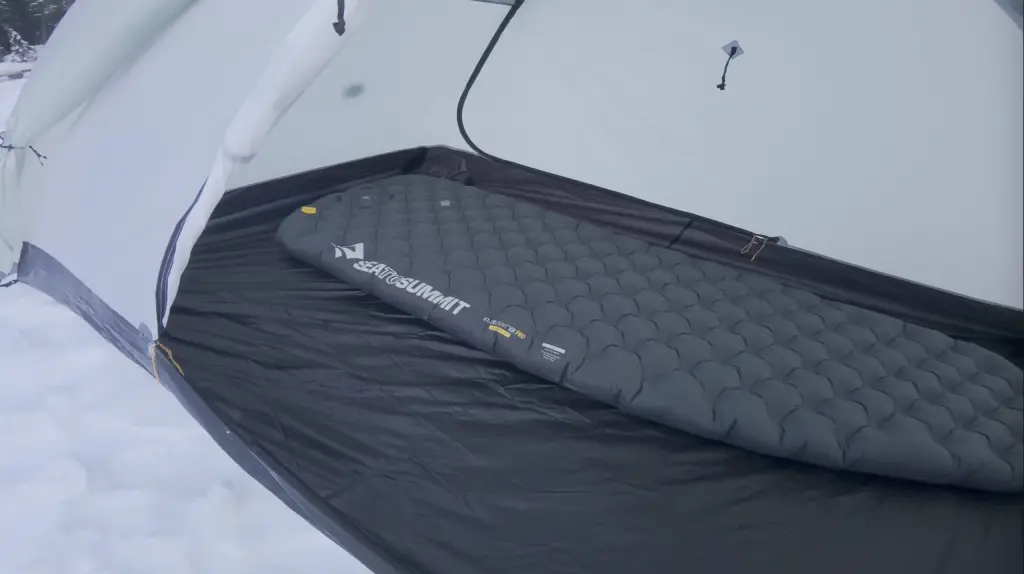
Sea to Summit Ether Light XR Pro Sleeping Pad
Advantages
- ✓The most comfortable pad tested that works down to -25°C (-13°F) on snow.
- ✓Dimpled baffles give better pressure relief than horizontal baffles of pads like the Therm-a-Rest XTherm or NEMO Tensor Extreme Conditions.
- ✓Reflective insulation reflects heat back to you to reduce radiative heat loss.
- ✓Lighter and more compact than earlier Sea to Summit winter pads.
Compromises
- −Not as warm as the warmest pad on the market (Therm-a-Rest XTherm).
Comfort is what puts this pad on the list. It is just as warm as the NEMO Tensor Extreme Conditions, but the dimpled baffles make it more comfortable. The Therm-a-Rest NeoAir XTherm is the warmest pad out there if warmth is the only thing that matters.
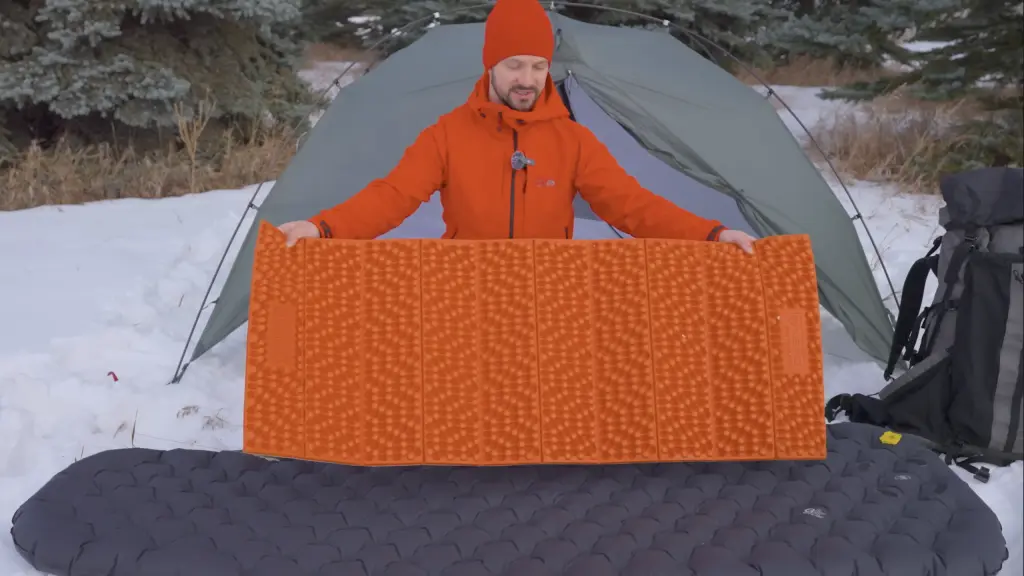
NEMO Switchback Foam Pad
Advantages
- ✓Adds warmth under the sleeping pad.
- ✓Adds a backup if the sleeping pad fails.
- ✓Doubles as a seat on the snow.
A closed cell foam pad is an inexpensive backup in winter. It goes under the sleeping pad for extra warmth, and it fits perfectly into the seat of the NEMO Moonlite Elite chair. On trips without a chair, it sits on the snow so you stay warm while sitting.
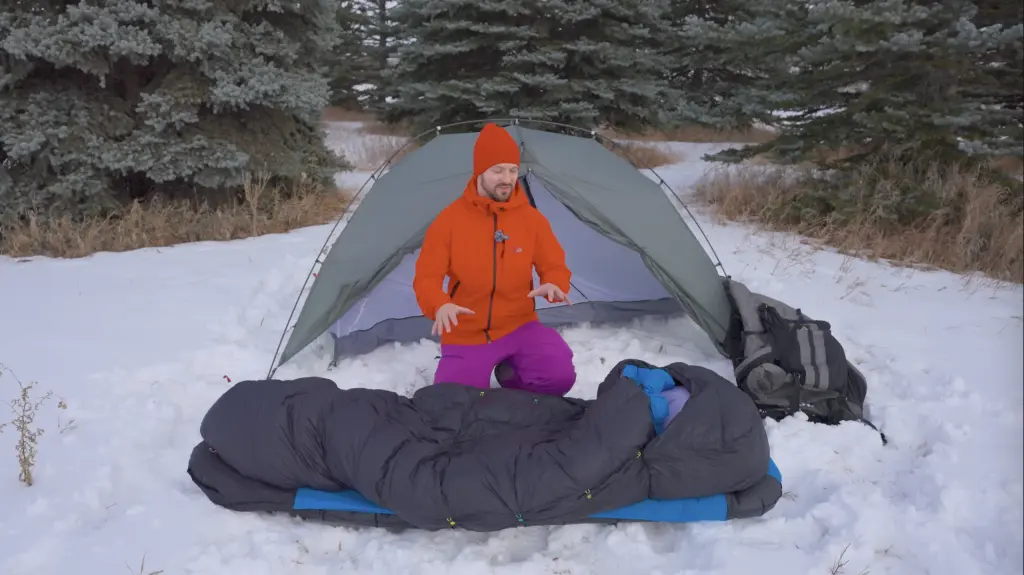
Zenbivy Winter Bed and SoftTop Pillow
Advantages
- ✓Tested down to -25°C (-13°F) and stayed warm.
- ✓Toss and turn freely, and sleep on your side, stomach, or back.
- ✓Draft walls along the sides keep cold air out.
- ✓A warm hood for your head.
- ✓The pillow's down topper adds comfort and warmth.
Compromises
- −Very heavy and bulky, with a lot of down and material.
There was initial doubt about whether this bed could be warm in true winter conditions, but it has proven to be an extremely warm sleep system. The weight is the price for that warmth, but it is worth it to sleep comfortably. The SoftTop Pillow clips into the hood of the bed and stays put all night while providing comfort and insulation with the down topper.
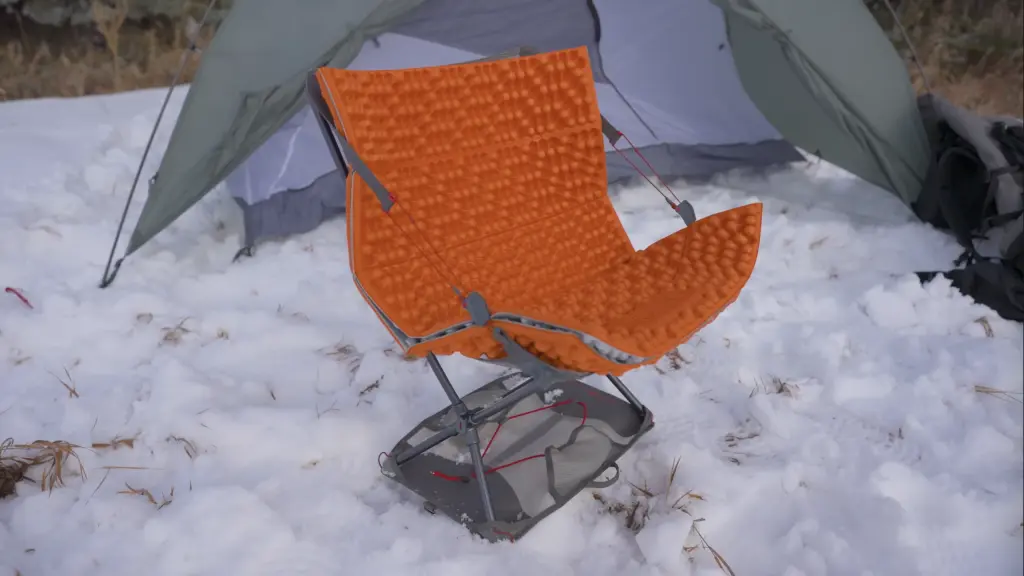
NEMO Moonlite Elite Chair
Advantages
- ✓The NEMO Switchback foam pad fits right into the seat.
- ✓The carry case doubles as a footprint, so the feet do not sink into snow.
A chair in winter is about more than comfort. Without a footprint, chair feet sink into the snow until you are sitting on the ground. The case on this one solves that, and the foam pad fits into the seat for extra warmth.
Cook & Water
In winter, the stove is how you make water. So the stove needs to be efficient and it needs to work in the cold. Below about -12°C (10°F) the isobutane in a fuel canister stops turning into gas and remains a liquid, so a true winter stove lets you flip the canister and burn the liquid isobutane through a preheating tube. Once the water is made, keeping it from freezing is also a priority.
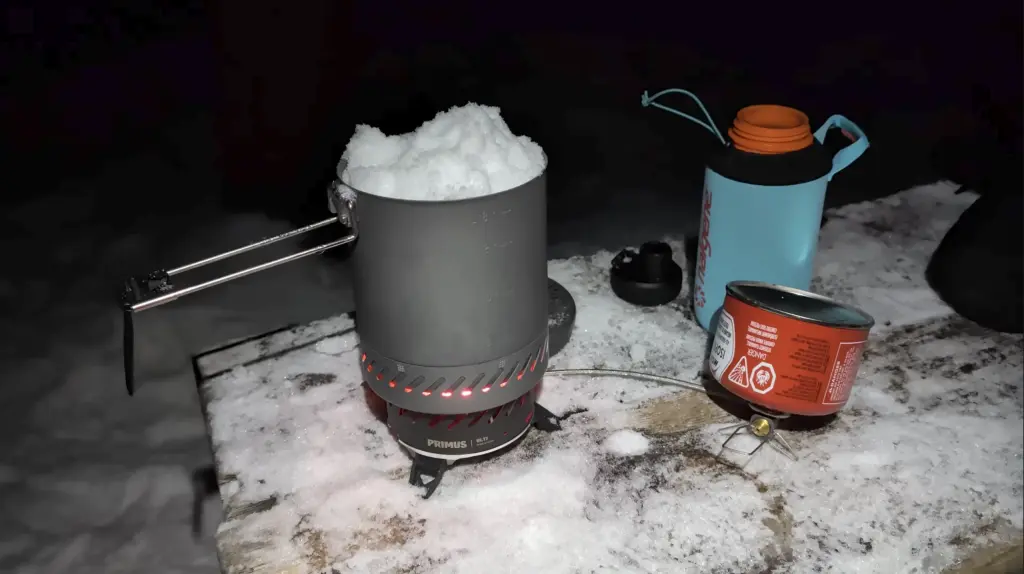
Primus Ulti 1.7 Cook System
Advantages
- ✓The first and only radiant burner stove that can run an inverted canister.
- ✓Is very quiet during operation.
- ✓Very efficient, so it does not burn much fuel.
- ✓Works great in the wind.
- ✓Comes with a heat exchanger pot that adds even more efficiency.
Compromises
- −Very expensive.
- −Heavy.
This is close to the perfect winter stove. A radiant burner, an inverted canister, and a preheating tube together mean it burns liquid isobutane fuel well below freezing and does it quietly and efficiently. It is one of the most efficient stoves tested and far more efficient than the MSR WindPro II. The WindPro II is still a good winter option that is lighter and less expensive while still using isobutane. The MSR Whisperlite is the best stove if you want to use white gas liquid fuel.
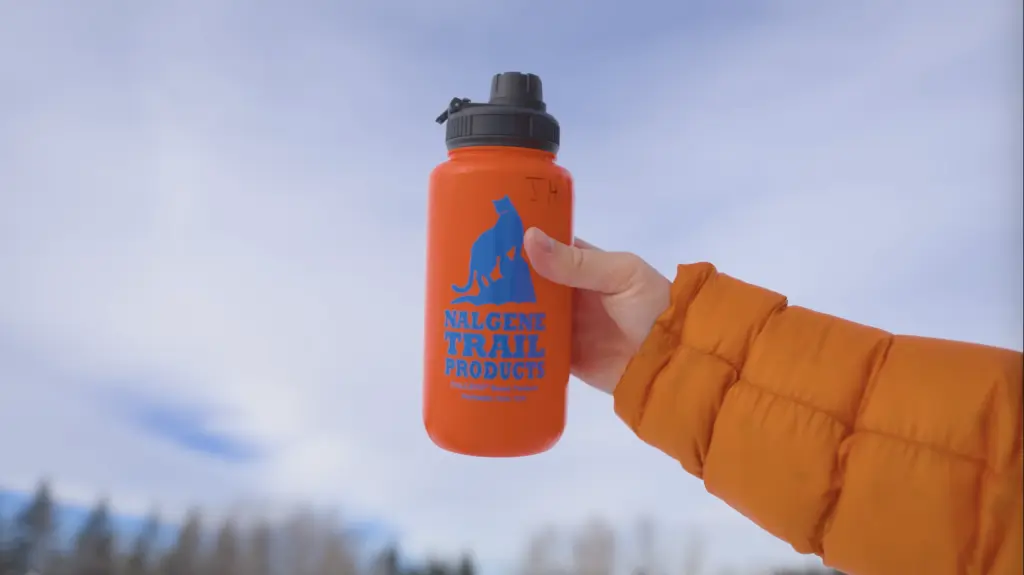
Nalgene HDPE 1L Water Bottle
Advantages
- ✓Much lighter than a regular Nalgene.
- ✓Can hold boiling water.
Compromises
- −Can warp as hot water cools unless it is filled to the brim.
The bottle for storing hot water overnight. Fill it all the way to the brim before putting the cap on, so the bottle does not warp as the water and air inside cool down.
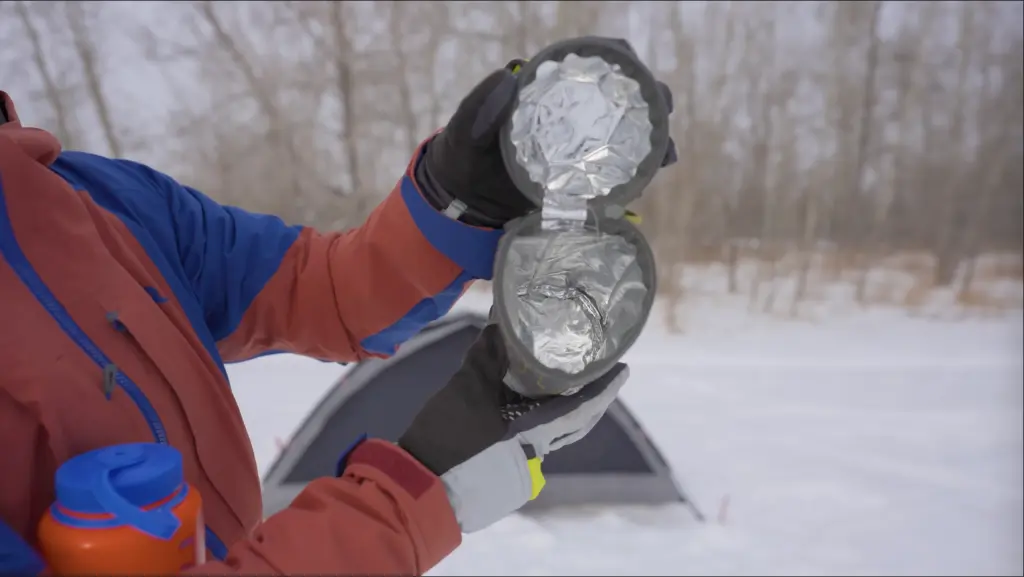
Nalgene Bottle Insulator
Advantages
- ✓Keeps boiling water from freezing overnight inside the tent down to about -20°C (-4°F).
Compromises
- −Below about -20°C (-4°F) the bottle needs to go inside the sleeping bag instead.
A simple sleeve that saves a lot of stove time in the morning. Boil water at night, put the bottle in the sleeve, and leave it in the tent.
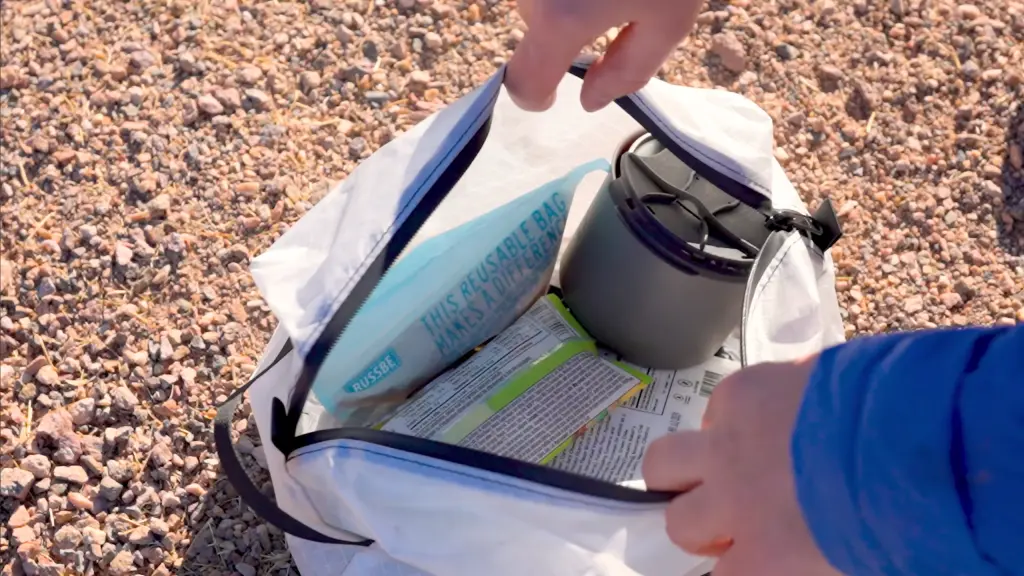
Backcountry Exposure Mesa Food Bag
Advantages
- ✓Fits nicely sideways in the pack as its own layer.
- ✓Lightweight.
- ✓A big opening that makes it easy to see everything inside.
A simple, light bag that keeps the food and the small cook items together in one place.
Electronics
Winter is hard on batteries. Cold can have a significantly negative impact on batteries while they are being used. Every electronic item here is chosen for how it handles the cold, and a battery bank keeps the important ones charged. If it is extremely cold, warm batteries and devices before using them or transferring power.
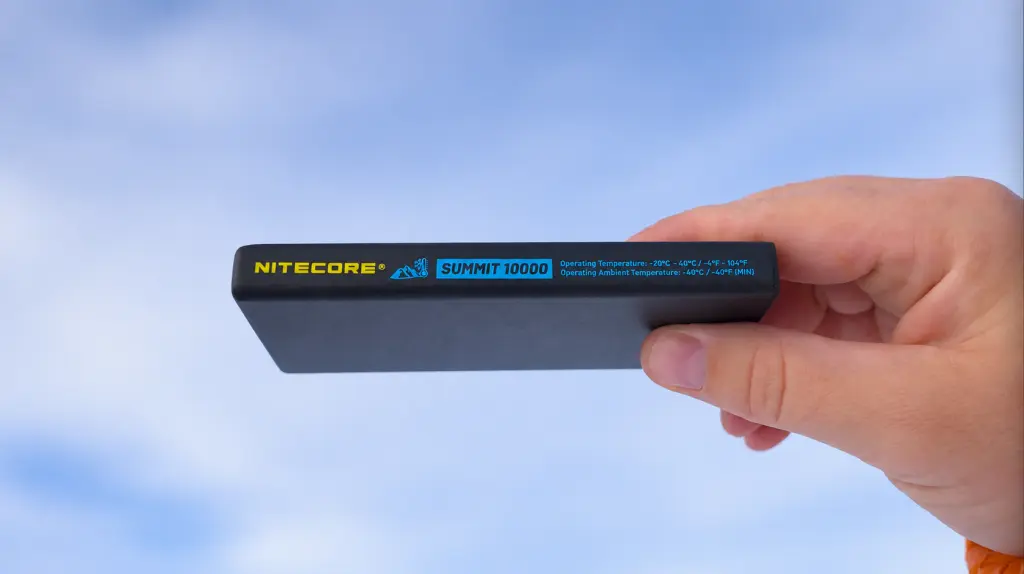
Nitecore Summit 10000 Power Bank
Advantages
- ✓Made for winter, with an internal heater that keeps the battery working down to -20°C (-4°F).
Compromises
- −Only one USB-C port.
The only battery bank with a built-in heater. It uses a little of its own power to warm the battery, so it delivers its full capacity when it is very cold.
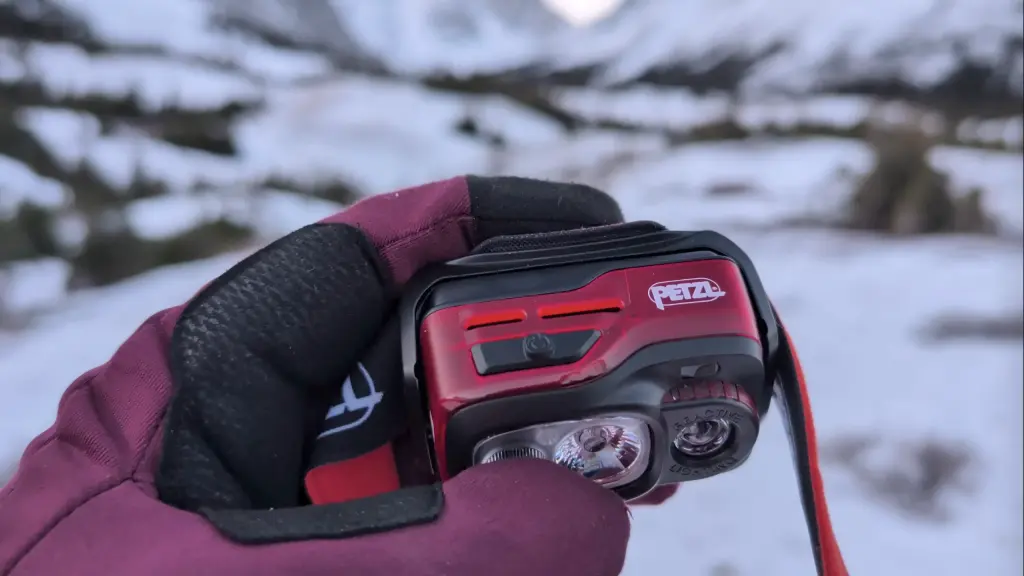
Petzl Swift RL Headlamp
Advantages
- ✓Very bright, up to 1,000 lumens.
- ✓Adaptive brightness gets brighter when you look far away and dimmer up close, which saves battery.
- ✓A replaceable battery with the USB-C port built right in, so a spare can be swapped in on the go.
- ✓Lightweight for the features and brightness.
Compromises
- −Only one button for brightness and for switching between white and red light.
A powerful headlamp with a smart battery system for the long nights of winter. One button doing every job is the one thing to dislike about it. A separate button for white light and red light is much easier to use.
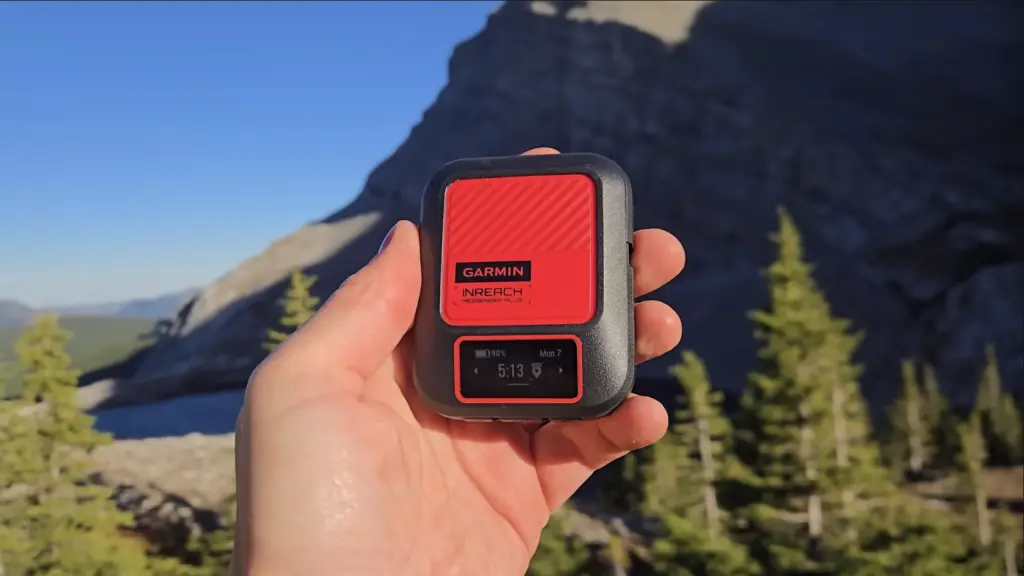
Garmin inReach Messenger Plus Satellite Communicator
Advantages
- ✓A bigger battery than the inReach Mini 3 Plus.
- ✓Has proven reliable on numerous winter trips.
- ✓Lets you message team members on a trip.
- ✓SOS if it is ever needed.
Winter is hard on batteries, so the bigger battery is why this one comes along instead of the inReach Mini 3 Plus. Rescue in winter can be slow or impossible, but being able to reach team members and home has been particularly useful on trips.
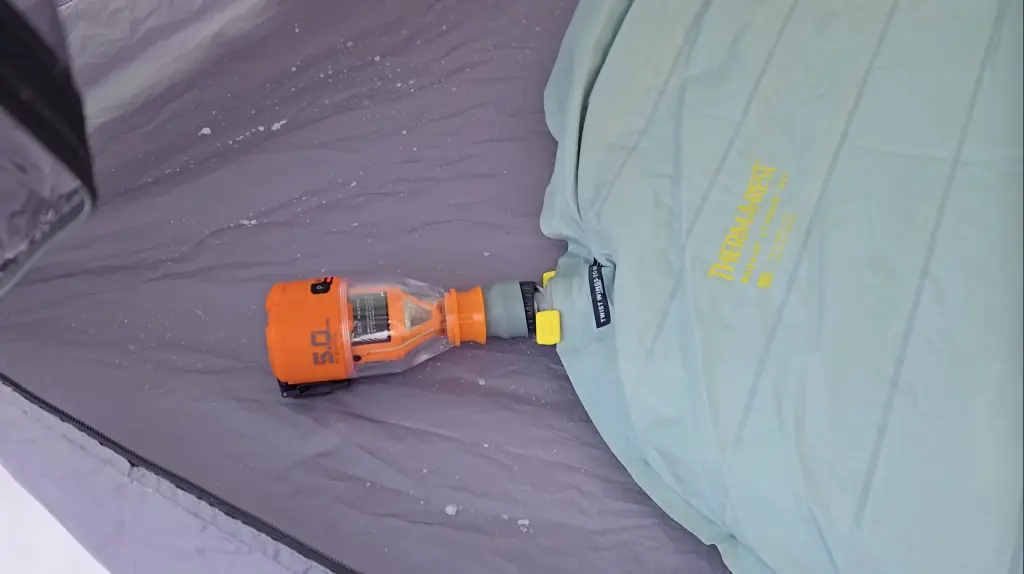
Flextail Max Pump 3
Advantages
- ✓Keeps warm breath out of the sleeping pad, so the pressure does not drop as the air cools.
- ✓Easier than inflating by mouth.
- ✓A built-in lantern for the long winter nights.
A pump matters more in winter than in summer. Warm air blown into a pad cools down and loses pressure, which results in needing to continuously add air to the pad. The lantern is a nice bonus when the sun sets early.
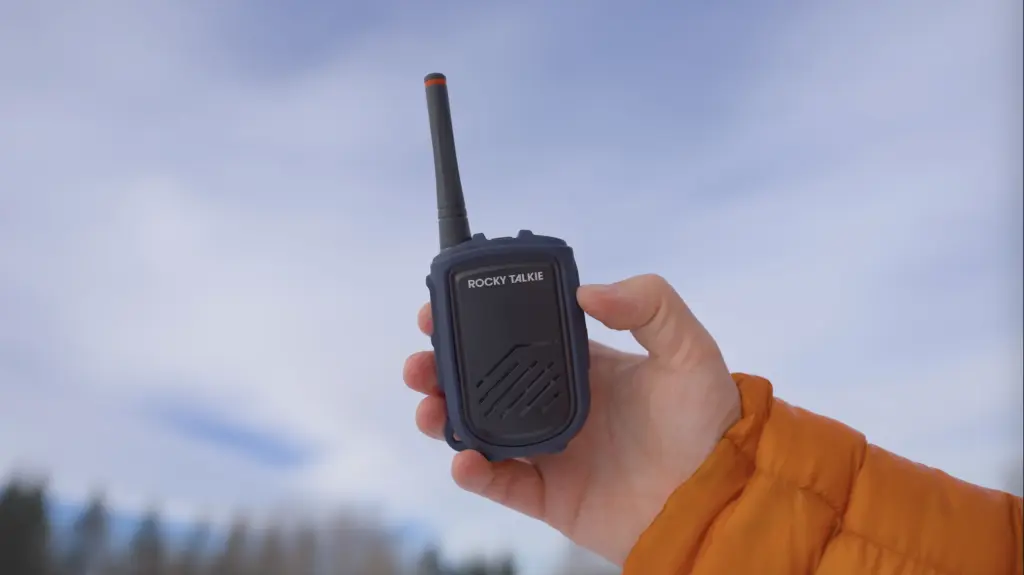
Rocky Talkie Radio
Advantages
- ✓Durable and reliable, so it works when it is needed.
- ✓Easy to use. A friend can pick one up and use it right away.
Compromises
- −Costs more than radios with more features.
On a group trip, a radio is close to a necessity for staying in touch. Cheaper radios have more functions, but being able to hand one to a friend who can use it right away is worth the extra cost.
Snow Tools
Moving snow is part of every winter camp. A flat spot for the tent, a place to sit, and a wall to block the wind all take some digging. The tool for that does not need to be heavy to do the job.
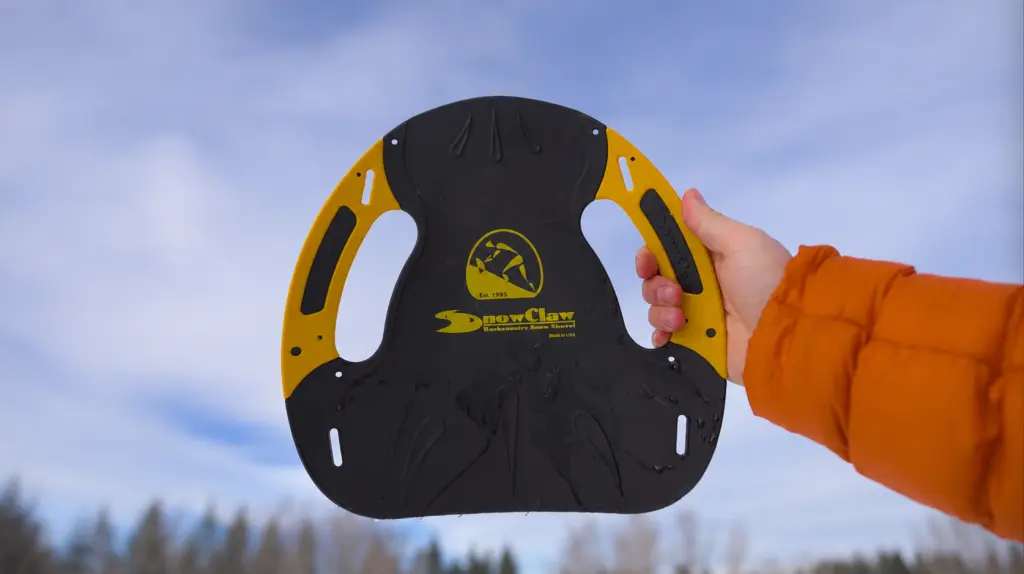
Snowclaw Snow Shovel
Advantages
- ✓Light, yet it moves a lot of snow.
- ✓Two handles make it easy to use.
A heavy-duty snow shovel is not needed on easier winter trips. The Snowclaw digs out a seating area, levels a tent spot, and piles a wind wall around the tent. If a more robust and heavy-duty shovel is needed, I use the Ortovox Pro Light shovel.
Clothing
Winter clothing is a system of layers and the key is managing moisture. Sweat next to the skin results in evaporation that can make you cold quickly in winter; so the base layers have to stay dry, the outer layers have to breathe, and the insulation has to be warm enough for long, still evenings at camp. This is not the full clothing list, just the key pieces for winter.
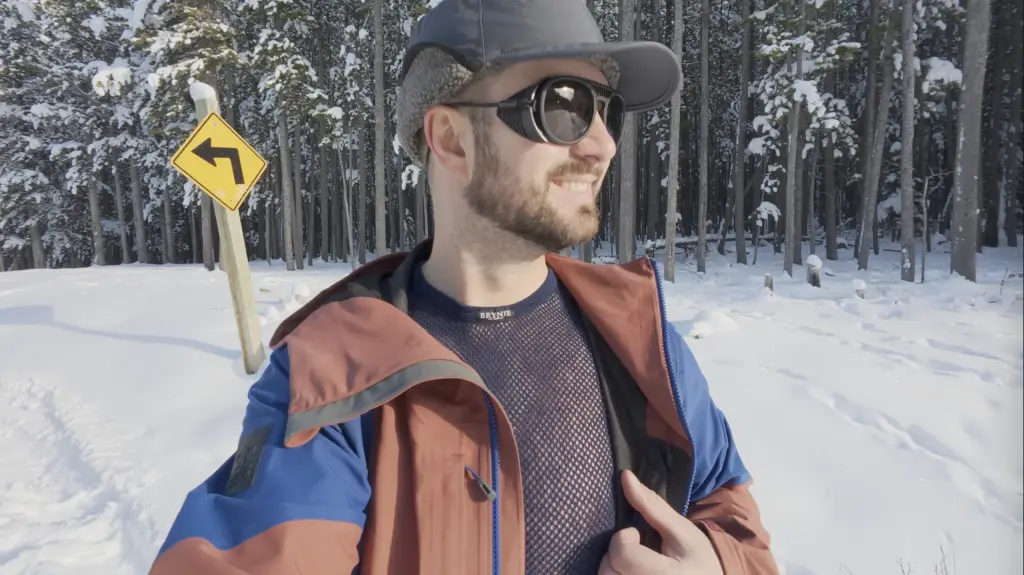
Brynje Mesh Base Layers
Advantages
- ✓Polypropylene holds no moisture, so you stay dry.
- ✓Very warm under a shell, since each hole in the mesh traps warm air.
- ✓Dumps heat fast when external air and movement are introduced to disrupt the pockets of warm air.
The one set of base layers worn for everything, from hiking and skiing to sitting at camp, to sleeping. Staying dry is what keeps you warm in winter, and mesh does that better than anything else. Down to about -20°C (-4°F), these are the only sleep layers needed inside the Zenbivy.
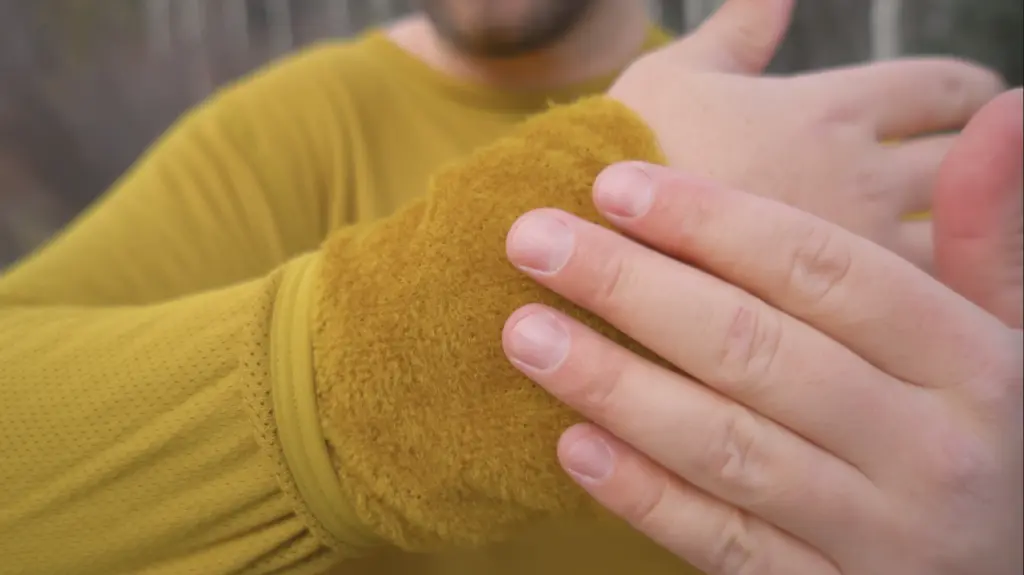
Octa Fleece Sweater and Pants
Advantages
- ✓A durable outer fabric.
- ✓A super fluffy inside for a great warmth to weight ratio.
- ✓The pants are made from the same Octa fleece as the sweater.
The mid layer that ties the system together. Over the mesh base layers and under the down, the sweater and pants keep you warm around camp. When it gets closer to -25°C (-13°F) or -30°C (-22°F), they are worn for sleeping too. The Mountain Hardwear Octa Fleece Sweater and Zpacks Octa Fleece Pants make the set.
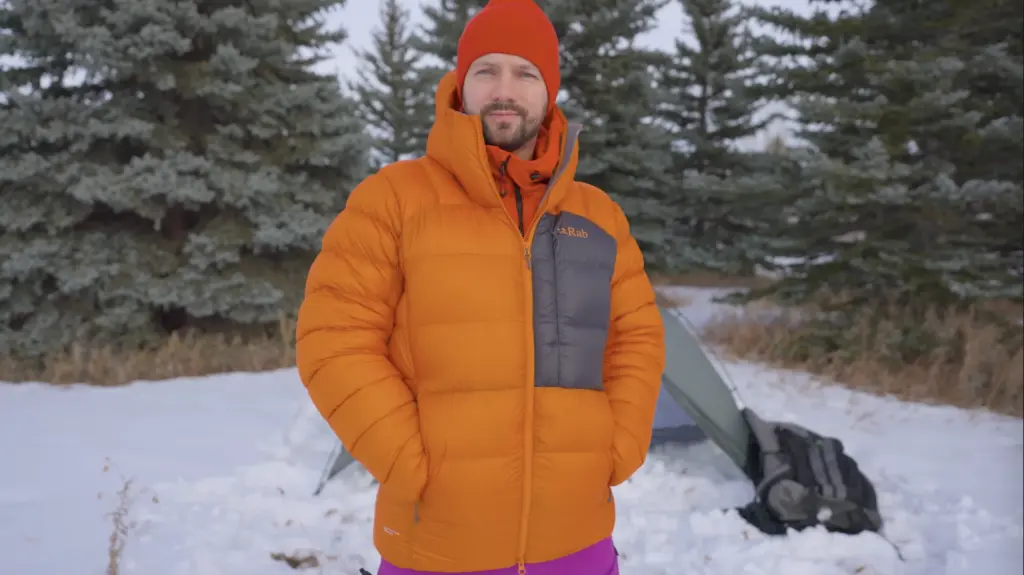
Rab Mythic Ultra Down Jacket
Advantages
- ✓The best warmth to weight ratio for a winter parka. Very light yet very warm.
- ✓Two hand pockets and a chest pocket for a phone.
Compromises
- −Very expensive.
The main insulation at camp, and the lightest way to get this much warmth. For something that performs as well or better, but is heavier and much less expensive, the Decathlon down parka is amazing.
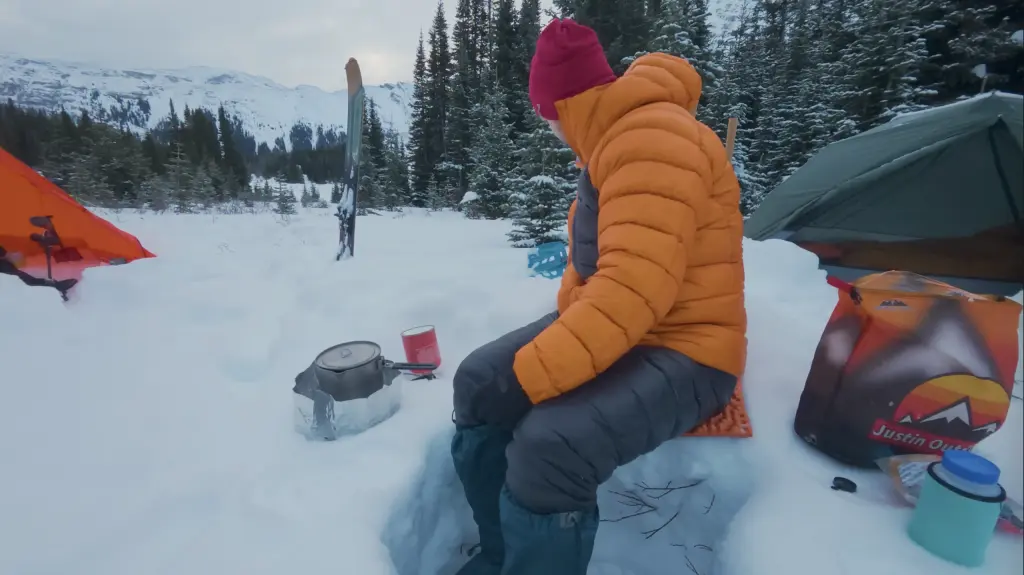
Naturehike Down Pants
Advantages
- ✓Very affordable for down pants.
- ✓Adequately warm for most conditions.
- ✓Light and fairly compact.
Compromises
- −Not as warm as the jacket.
Down pants are the piece most people skip, and the one that makes the biggest difference sitting around camp during winter conditions. These have a good balance of weight, packed size, and warmth without costing a lot. For a warmer option, the Cumulus Transition Down pants are warmer while weighing more and costing more.
The Bottom Line
That is the whole kit. Every piece has earned its place over a lot of winter nights down to -25°C (-13°F) on snow. Not everything is the lightest option and that is on purpose. Warmth, comfort, and ease come first when it is well below freezing. With this gear in the pack, winter is not something to get through, it is something to look forward to.