
NEMO Tensor Elite
The lightest inflatable pad on the market, with comfort that is better than the weight suggests.
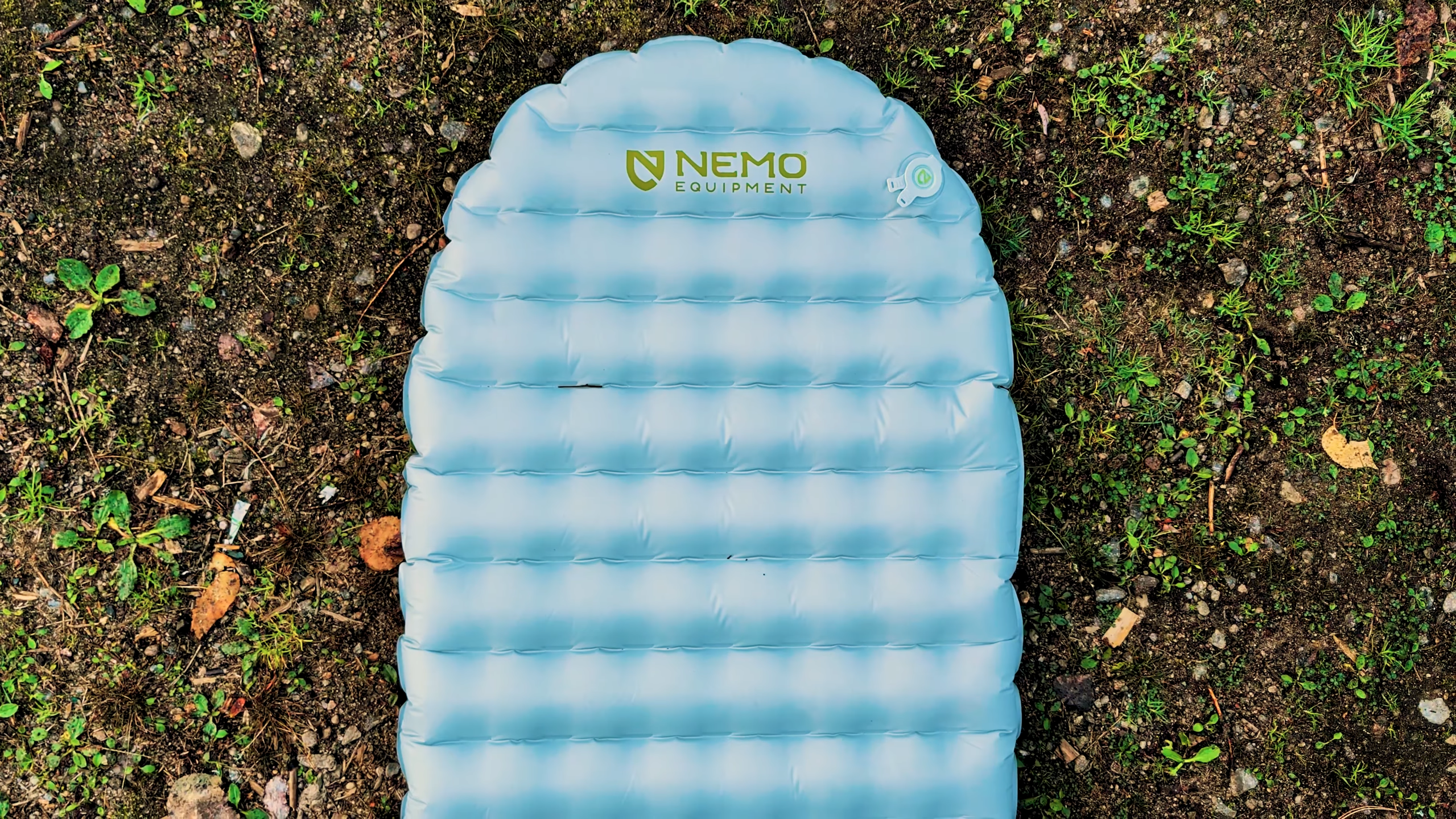

NEMO describes the Tensor Elite as a pad for hyper-streamlined hikers that remains stable and comfortable. After a year of testing and dozens of nights in the backcountry on both the regular and regular wide sizes, the claim is mostly accurate. The Tensor Elite is the lightest inflatable pad available in each of those sizes, and it is more comfortable than a pad this light has any reason to be. The tradeoff is warmth. This review covers where the pad performs well, where it does not, and who it is for.
Pros and Cons
Pros
- The lightest inflatable pad on the market in the regular and regular wide sizes.
- More comfortable than expected for its weight, with a slightly stretchy top and a very stable feel.
- Packs smaller than a one-litre water bottle in the regular size.
- The top-mounted valve makes firmness easy to adjust at night, and deflation is fast.
- Very quiet, with no leaks or failures after dozens of nights on two pads.
Cons
- A low R-value makes it a summer pad, and it is not warm enough for nights at or below freezing.
- The outer material is slippery and can slide on the tent floor, and it is not soft against bare skin.
- Thin 10-denier fabric and many weld points raise durability questions on paper.
Available Sizes
Scroll sideways to see every size.
Comfort score: 6/10
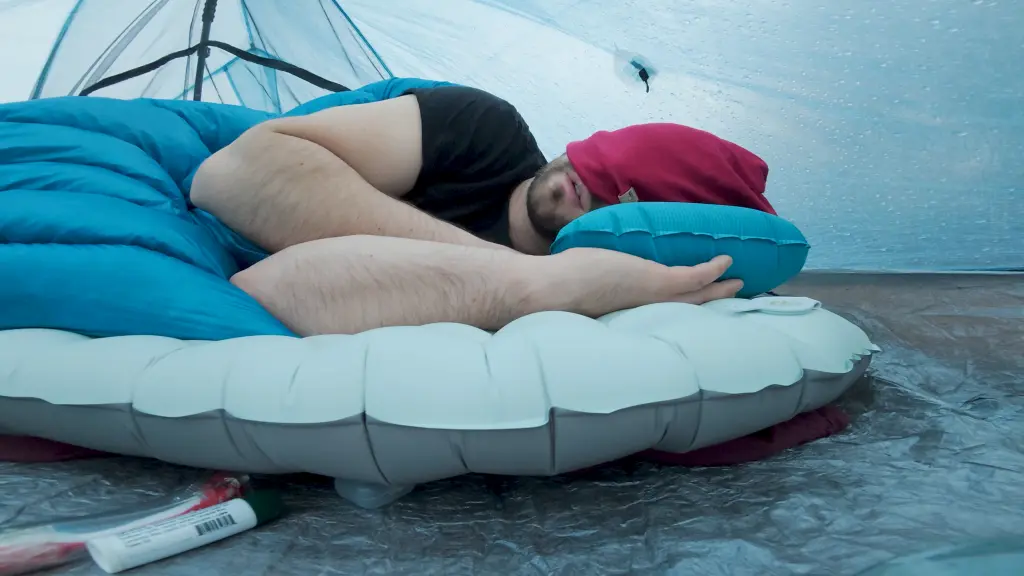
A surprisingly comfortable pad for how compact and lightweight it is.
Comfort is better than expected on the NEMO Tensor Elite for an ultralight pad.
The pad uses horizontal baffles with a dimpled pattern. I have found this baffle design on other NEMO pads to be moderately comfortable, not as good for pressure relief as vertical baffles, but adequate. On the Tensor Elite, the thin materials required to save weight give the top surface some stretch, and that stretch improves pressure relief over thicker NEMO pads such as the Tensor All-Season. Pressure relief is not best in class, but it is good for an ultralight pad.
All sizes are 7.6 cm (3 in) thick. That thickness allows me to release some air for added pressure relief without contacting the ground, and I have not bottomed out on either size. I also did not need to release much air to reach a comfortable firmness.
Stability is a strength for the Tensor Elite. The pad remains stable when changing positions, and because of that stability the regular width feels wider than its measured width. The regular wide size is a noticeable improvement for side sleeping with the knees pulled up, and on the regular wide I never felt as if I was running out of room. I have had consistently good sleeps on the regular wide.
The outer material is slightly slippery. It is not soft and is not the most comfortable to lay on directly with bare skin. The pad can slide on the tent floor and a sleeper wearing slippery clothing can slide on the pad. I have not found this to be a problem because I fall asleep and do not move much, but it will matter to some people.
The Tensor Elite comes in short, regular, and regular wide sizes, so it fits a range of body types. It is comfortable for side sleeping, and the stability and thickness make it usable for back and stomach sleeping as well. For an ultralight pad, most people would find it comfortable, and anyone who can carry the extra weight of the regular wide will find it the more comfortable of the two.
Warmth score: 4/10
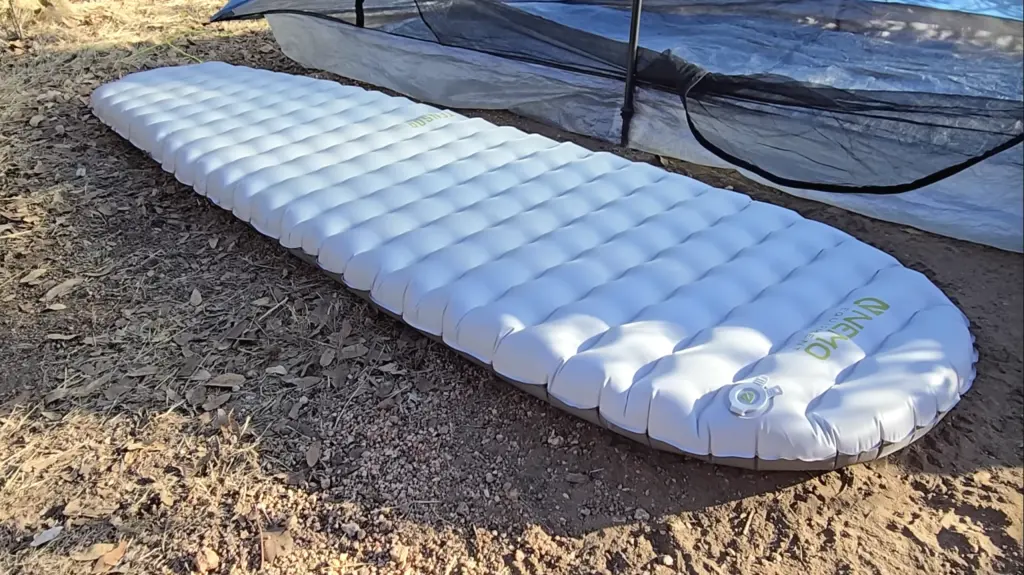
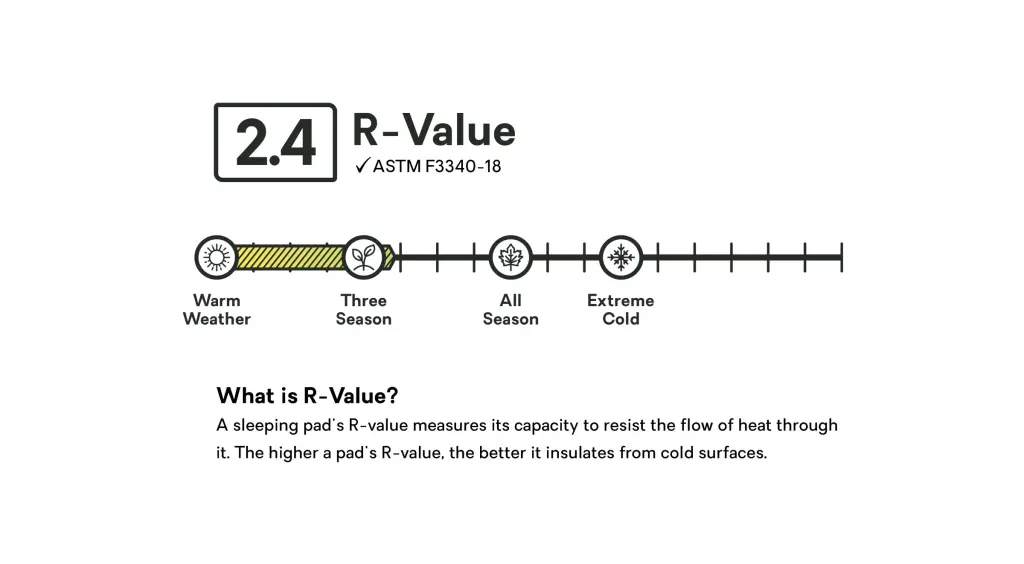
I stayed comfortably warm down to 5°C (41°F) on warm ground.
NEMO's warmth claim for the Tensor Elite puts it just at the beginning of the three-season use zone which I would agree with for mild climates.
Warmth is the weakness of the NEMO Tensor Elite. The pad has an ASTM-tested R-value of 2.4, which is low by current standards. NEMO rates the pad as a warm-weather pad that reaches the lower edge of three-season use on its R-value scale. Insulation comes from a single layer of NEMO's Thermal Mirror reflective film suspended inside the pad, positioned closer to the top surface than the bottom. Placing the film near the top is what allows it to reflect body heat; a film at the bottom of the pad would provide little benefit.
In my testing, the warmth matched the R-value. I was comfortable down to about 5°C (41°F) on warm ground and was able to use the pad at freezing (0°C (32°F)), but at that temperature I woke periodically feeling cold. The Tensor Elite is a summer pad, which matches the warm-weather end of NEMO's own rating. It is not a pad for shoulder season, for colder climates, or for higher elevations where overnight temperatures reach freezing. The warmth is in line with the R-value, but that R-value is low for a pad in the current market, and it limits where the pad can be used.
Weight and Packability score: 10/10
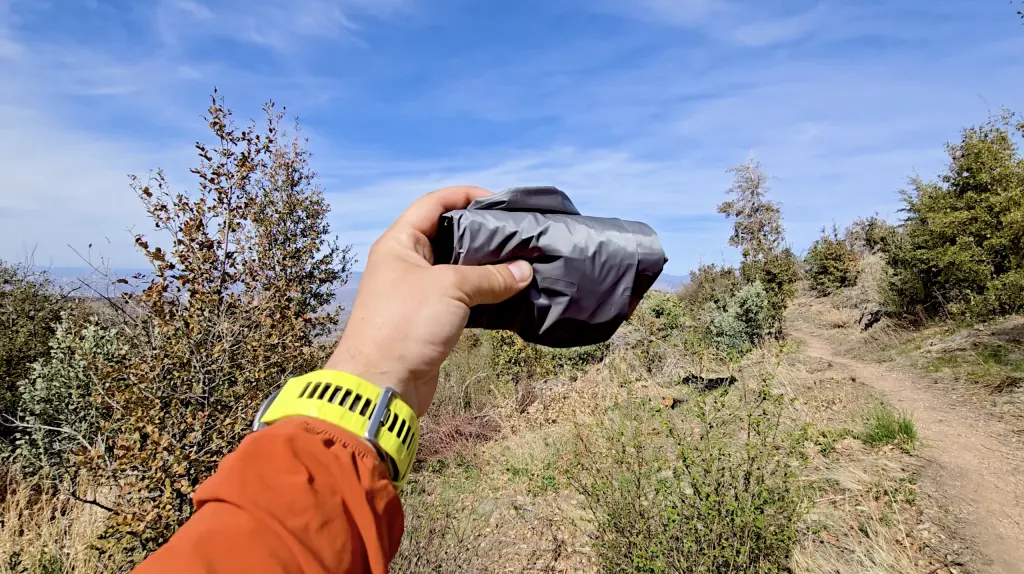
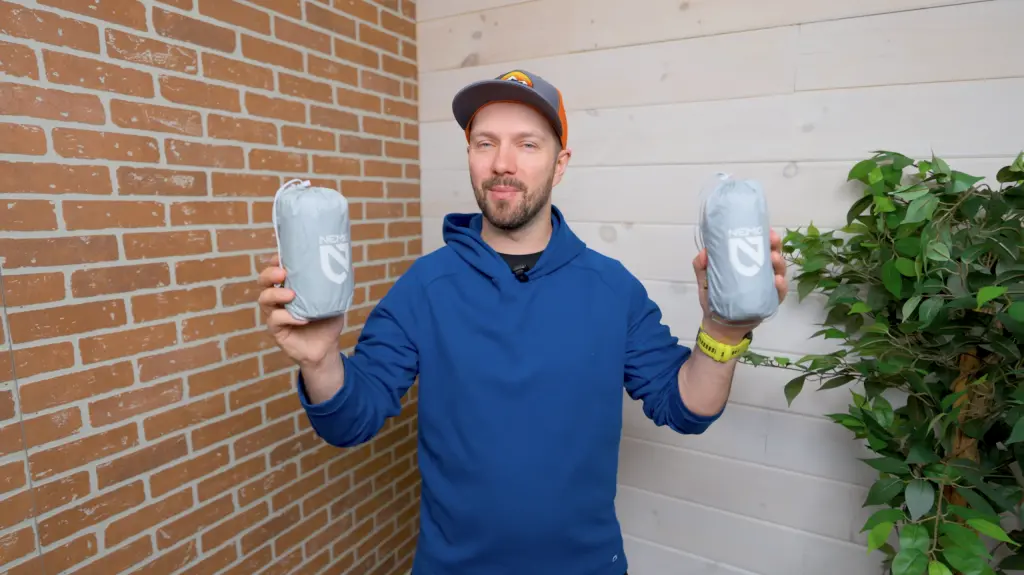
The Tensor Elite packs down so small!
The regular and the regular wide packed down inside their stuff sacks.
The NEMO Tensor Elite is the lightest inflatable pad on the market in both sizes I tested. The regular wide size weighs 301 g (10.6 oz) on my scale and the regular weighs 254 g (9 oz). Both are slightly heavier than advertised, by about 6 g (0.2 oz) for the regular wide and 14 g (0.5 oz) for the regular. Those measurements are of the pad alone.
For an ultralight pad, the Tensor Elite is at the very low end of the category. There is currently no direct competitor at this weight. The only comparable pad was the Therm-a-Rest UberLite, which has been discontinued. The weight savings come from the thin shell material, the single layer of reflective film, and the low R-value; each of those choices removes material from the pad.
The packed size is small. Folded into quarters and rolled, both sizes fit into the included stuff sack easily, and the regular wide packs only slightly larger than the regular. NEMO lists the packed size of the regular at 14 cm (5.5 in) by 8 cm (3.1 in), smaller than a one-litre water bottle.
Ease of Use score: 10/10
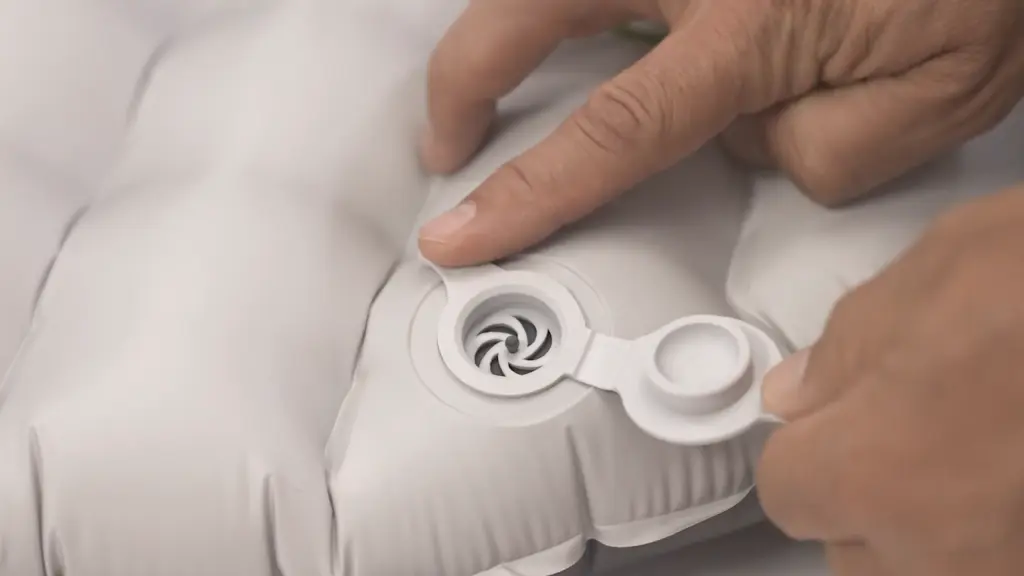
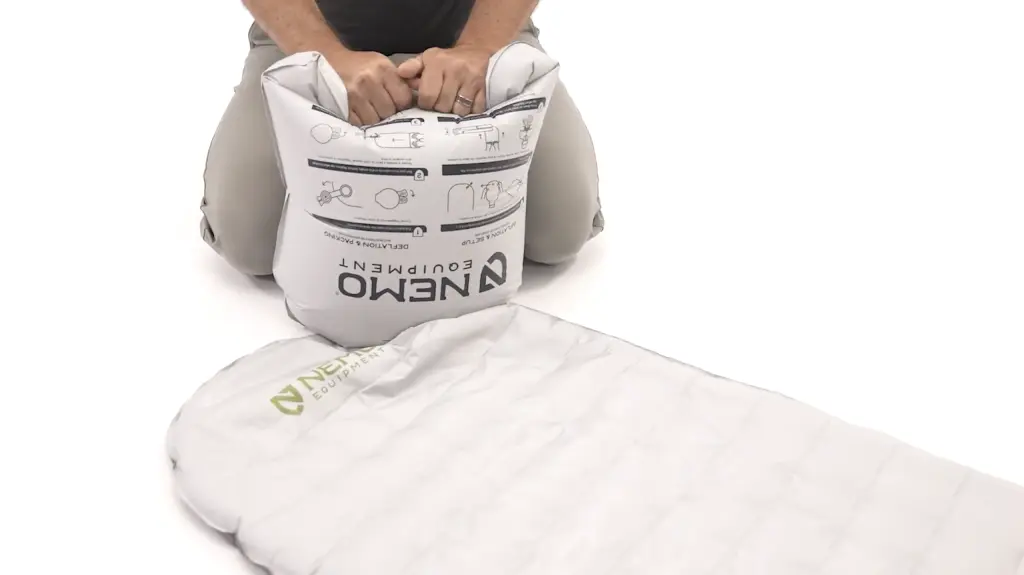
One way in valve makes for easy inflation.
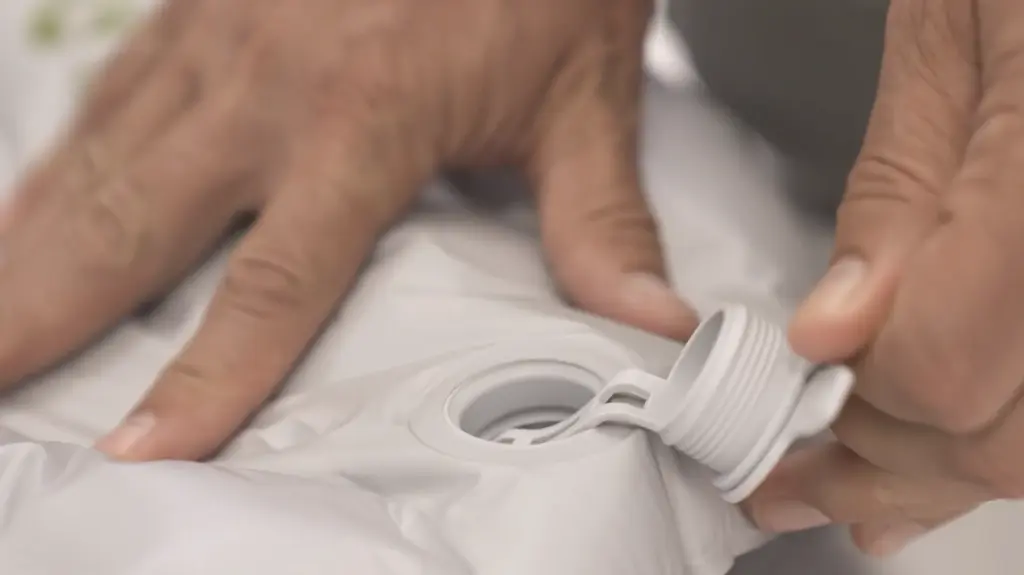
Dump valve makes for easy deflation.
The included pump sack is quite effective, but the pad also inflates quite quickly using just breath.
Ease of use is a strength for the NEMO Tensor Elite. The pad uses a single one-way valve with two flaps, located on the top surface of the pad. The first flap opens for inflation and the second flap opens to release air for packing. Because the valve is on the top of the pad, adding air during the night or releasing a small amount of air to reduce firmness is easy to do while lying on the pad.
The pad includes an inflation bag. The regular size inflates quickly by breath, so I do not use the bag for it. For the regular wide, where a few extra grams matter less, I use a small battery-powered pump, and the Tensor Elite is compatible with pumps that weigh as little as 8 g (0.3 oz).
Deflation is fast. Opening the second flap releases air quickly and the pad folds into quarters and rolls small enough to fit in its bag without effort.
Durability score: 4/10
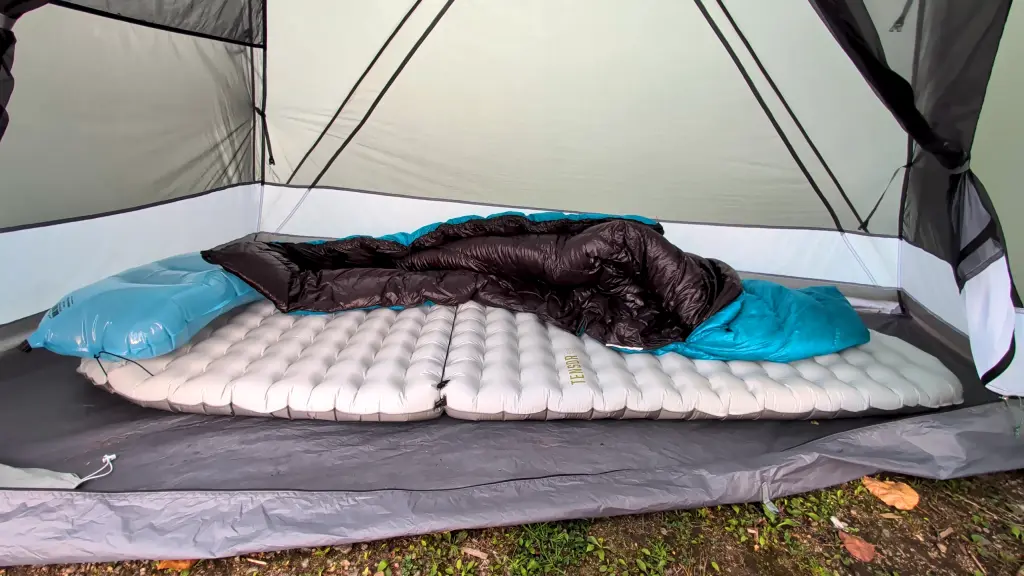
Being a lighter weight pad, the thinner materials could be a cause for concern. However, my own testing and online reviews currently show no issues.
Durability is a concern with the NEMO Tensor Elite based on its construction, but not based on my testing. The pad uses a custom 10-denier CORDURA ripstop nylon for both the top and bottom of the pad, which NEMO says was selected to protect against punctures at this weight. To save weight, the TPU film that creates the airtight barrier is likely thinner than on heavier pads, and every dimple in the baffle pattern is a weld point and a potential failure point. There is a lot working against this pad on paper.
In practice, I have two Tensor Elites, the regular and the regular wide, and after dozens of nights on each I have had no leaks or failures. Of the roughly 50 reviews on REI at the time of writing, none report durability problems, including reviews from people who thru-hiked on the Tensor Elite last summer. NEMO has a long track record with the Tensor line and its pads are covered by a lifetime warranty.
Noise score: 8/10
Noise is not a concern with the NEMO Tensor Elite. NEMO makes no noise claim for the Tensor Elite, although quiet insulation is a selling point across the Tensor line. The two components that usually make a pad noisy are internal reflective films, which can crinkle, and the outer material, which can squeak on tent floors. The Tensor Elite uses a single layer of reflective film, and it does not crinkle when I move on the pad. The outer material has a slightly rubbery texture that produces some squeaking against the tent floor, and the pad slides more than other NEMO pads because the material is more slippery. But overall, I found the Tensor Elite to be a very quiet pad.
Final Thoughts
The NEMO Tensor Elite excels at weight and packability and is more comfortable than any pad this light has been before. It is for the ultralight hiker who still wants an inflatable pad and the comfort that comes with one. The compromise is warmth. Because the pad is not suitable for temperatures below freezing, I do not see it as a thru-hiking pad. It is better suited to fastpacking and to trips of one to five days where the forecast is known, temperatures will stay above freezing, and the weight savings can be planned for.
More Sleeping Pad Reviews
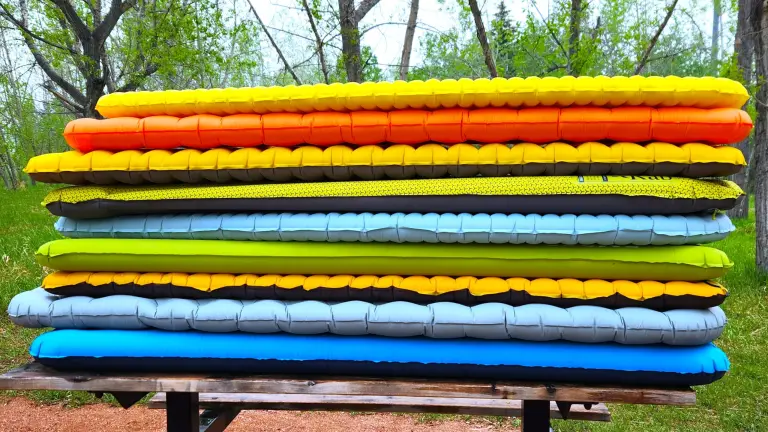
Best Backpacking Sleeping Pads – 2026 Awards
Seven categories. Seven winners.

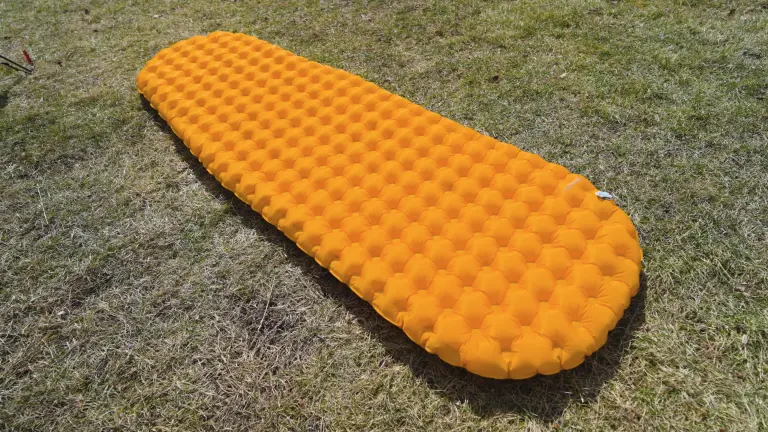
Bestway Ridgelite
Best budget pad on the market: warm, comfortable, and easy to use.
Bestway describes the Ridgelite as warm, comfortable, and light. During over 12 nights of testing, I have been warm below freezing and had comfortable sleeps on…
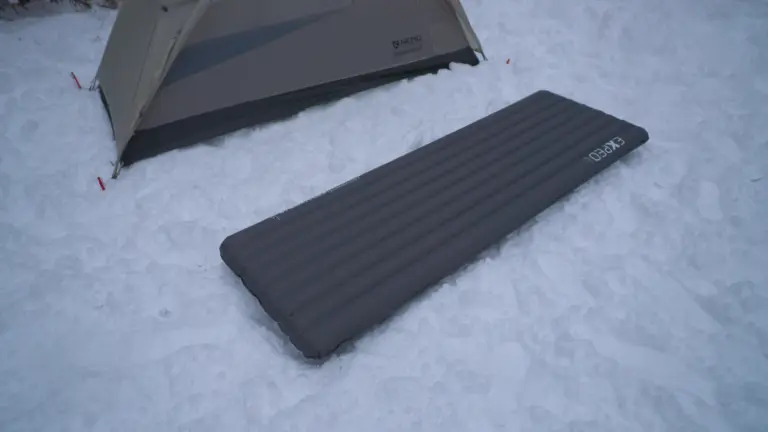
Exped Ultra 10R
Does one of the highest ASTM-tested R-values translate to real world warmth?
The Exped Ultra 10R has one of the highest ASTM-tested R-values ({{exped-ultra-10r:r-value}}) I have seen with a pad under [gp_measure value="1" unit="kg"]. Exped claims that the…