
Therm-a-Rest NeoAir XTherm NXT
Warmest pad I have used – with the best warmth-to-weight ratio on the market, at the cost of comfort.
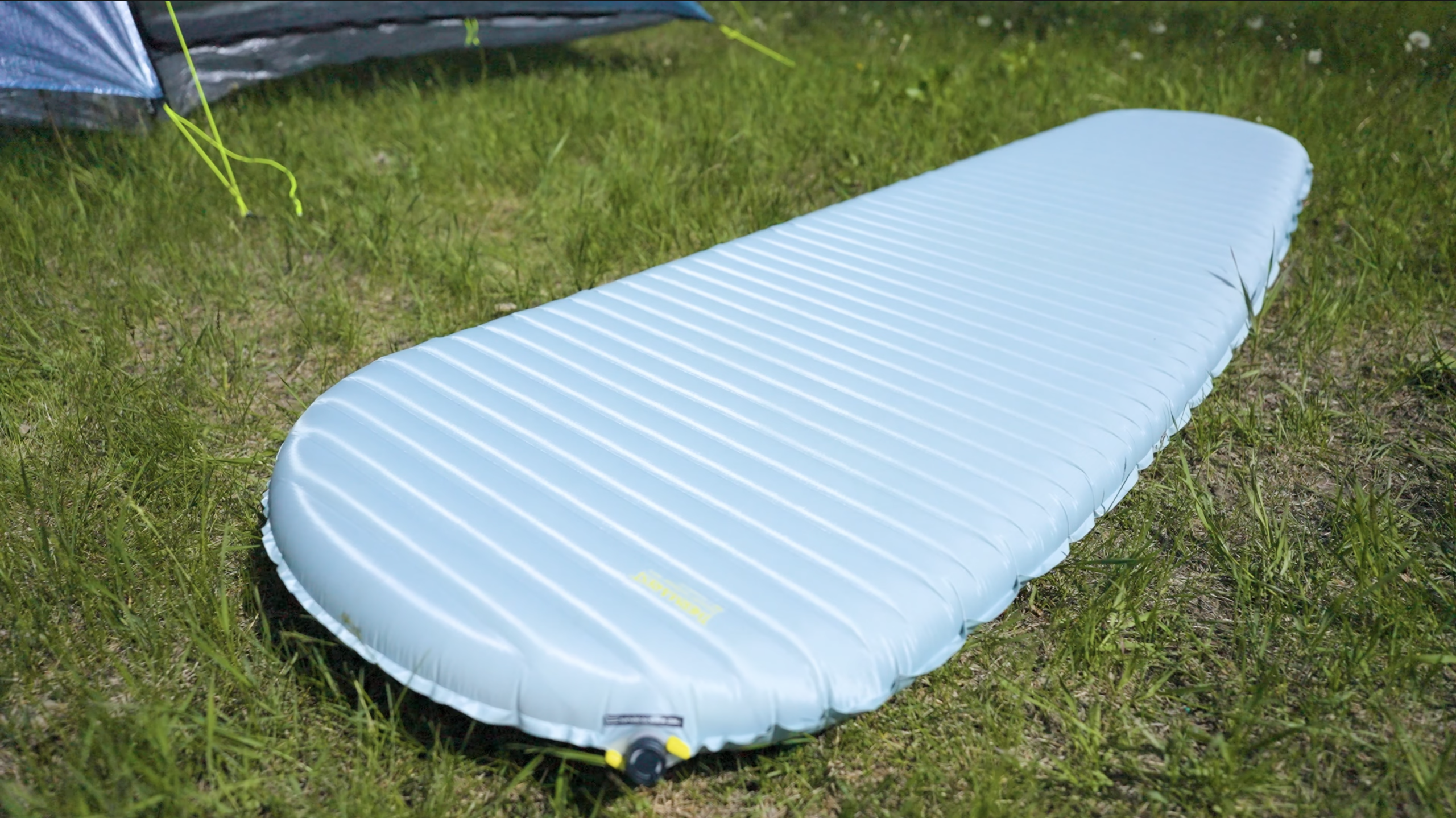
Therm-a-Rest claims the NeoAir XTherm NXT has the best warmth-to-weight ratio of any pad ever made, while still being comfortable and durable. After more than 50 nights of use, the warmth and durability claims have proven true. The comfort claim does not. The XTherm is the warmest pad I have used in the backcountry and one of the most durable, but it is not a comfortable pad.
Pros and Cons
Pros
- The best warmth-to-weight ratio on the market, staying warm on snow and frozen ground down to -30°C (-22°F) with no extra ground insulation.
- Very durable, with a tough 70-denier nylon bottom, strong welds, and very few reported failures.
- The WingLock valve works well in cold winter conditions and can be replaced if it ever fails.
- Remarkably light and compact for a pad this warm.
Cons
- Horizontal baffles give poor pressure relief, and side sleepers may get pressure points at the hip and shoulder.
- Feels firm and flat for back sleepers, and the top material is not soft or stretchy.
- Less stable when partly deflated, with little support near the edges on the regular width.
- The inflation sack often pops off the valve, and pushing the air out to pack the pad takes extra work.
- Moderately noisy when shifting positions.
Available Sizes
Scroll sideways to see every size.
Comfort score: 4/10

Horizontal baffles have never been my favourite, and it is still the case with the XTherm. Numb arms and reduced stability near the edges are among the comfort issues with this pad.
Comfort is the weak point of the Therm-a-Rest XTherm NXT. The pad uses horizontal baffles, which I do not find comfortable for pressure relief. When lying on my side with the pad fully inflated, I often get pressure points on my hip and shoulder and my arm goes numb. When lying on my back, the pad does not contour to my body and I occasionally get some lower back soreness - it feels like lying on a board. The top material of the pad is not soft or stretchy and is not very comfortable to lie on with bare skin. The top is also a little slippery to lie on and sleeping bags will slide around on the pad.
With some pads, I will not inflate the pad fully (usually to around 70-80%) to improve pressure relief and comfort. But the XTherm is a winter pad and it needs to be fully inflated to maximize warmth. If you are not needing to maximize the pad's warmth, letting a little air out adds some comfort. But even when slightly deflated, the XTherm is not a comfortable pad.
The pad has decent stability, especially when fully inflated. Lying in the middle of the pad on your side or back feels particularly stable. When moving to the edges of the pad, stability decreases and it can feel like you are falling off the pad (especially if the pad has been deflated). Because of the stability of the XTherm, I find the 63.5 cm (25 in) wide widths of the pad to be the most comfortable. The XTherm comes in three sizes: regular, regular wide, and long wide. All sizes are 7.6 cm (3 in) thick. There is also a Max version of the XTherm where the only difference is the two sizes are rectangular shaped.
Warmth score: 10/10
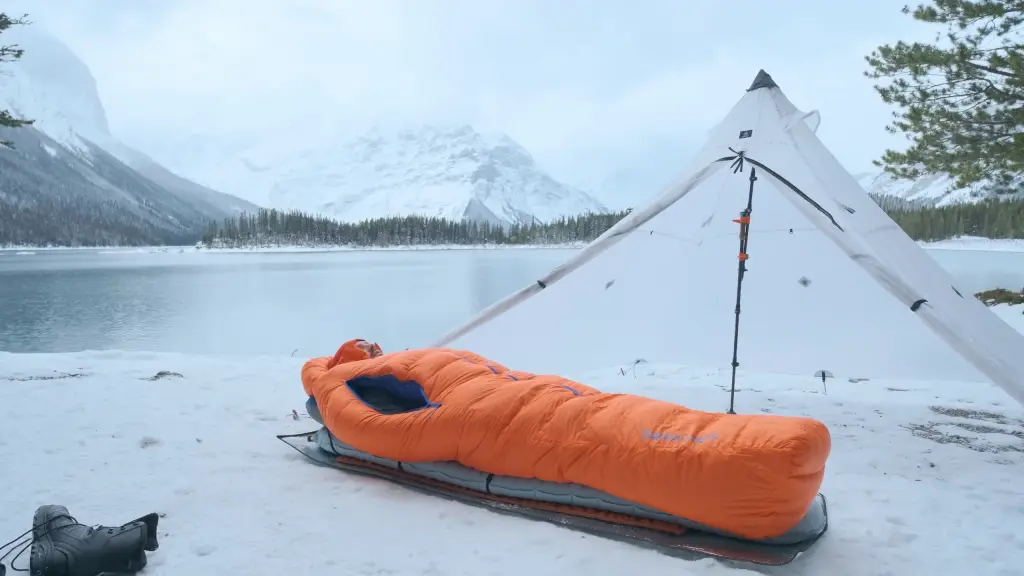
Testing in some serious cold in the Canadian Rockies.
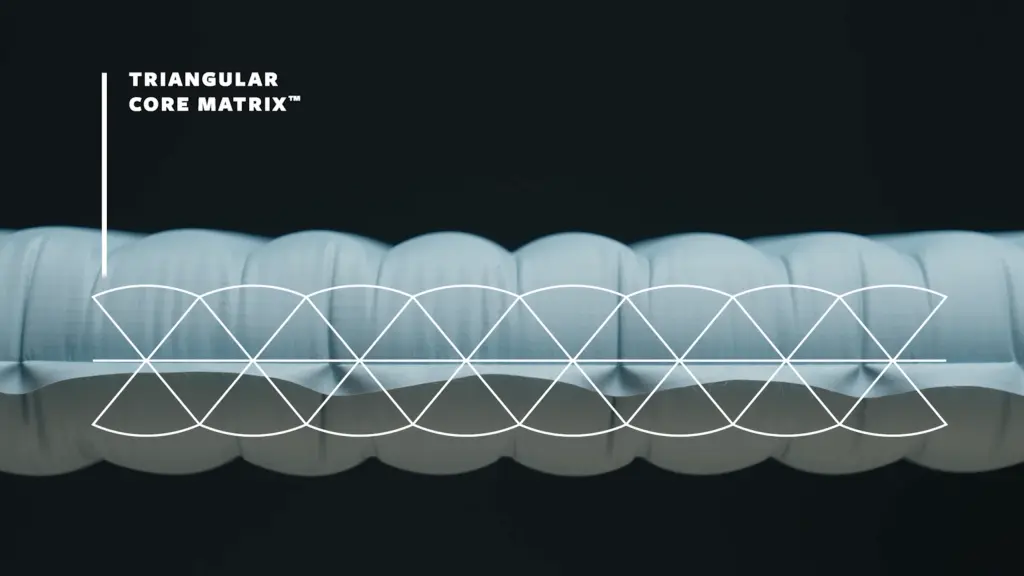
The triangular core matrix excels at reducing convective heat loss.
Therm-a-Rest's claimed warmth rating which I feel delivers strongly.
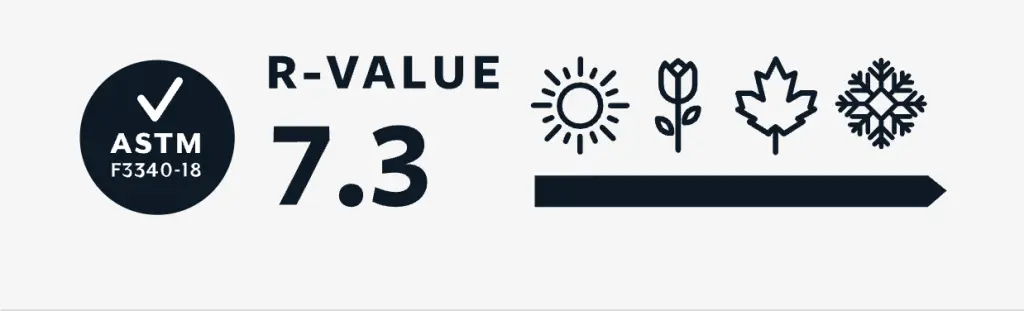
Warmth is where the Therm-a-Rest XTherm NXT is exciting. The XTherm has an ASTM-tested R-value of 7.3 and Therm-a-Rest positions it as a winter pad built for very cold conditions. The pad uses two technologies for insulation: layers of reflective film reflect heat back to the body (preventing radiative heat loss) and the Triangular Core Matrix creates triangular pockets of air, reducing air movement, preventing convective heat loss, and keeping a layer of warm air close to the body.
I have used the XTherm on glaciers, on snow, and on frozen ground down to -30°C (-22°F) with no additional ground insulation and stayed warm. With a foam pad underneath, I have gone down to -50°C (-58°F) and stayed warm. The insulation technologies Therm-a-Rest uses in the XTherm are very effective. This is the warmest pad I have used in the backcountry and it has by far the best warmth-to-weight ratio of any pad on the market.
Weight and Packability score: 7/10
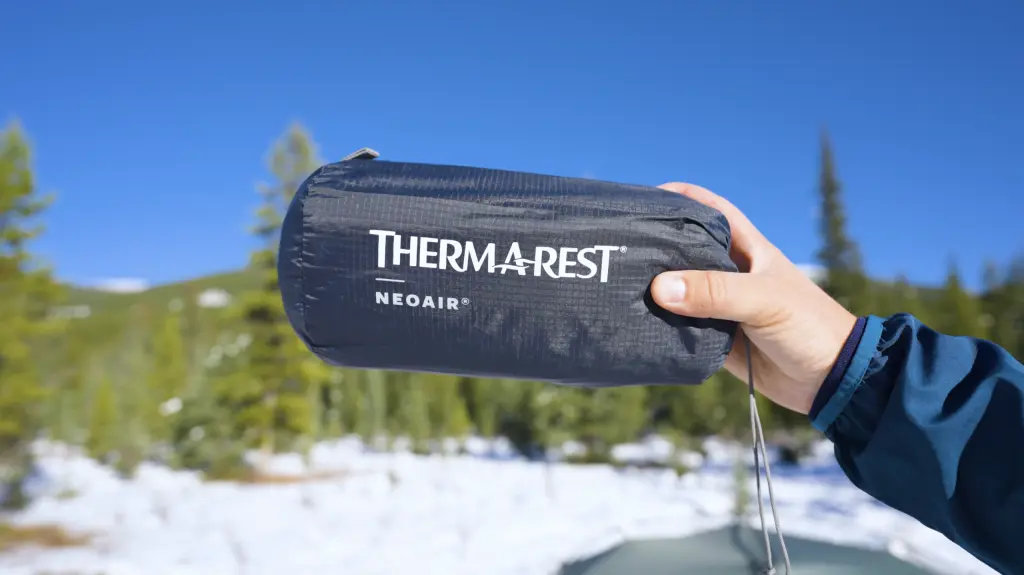
The XTherm packed down.
The Therm-a-Rest XTherm NXT weighs 567 g (1.3 lb) on my scale for the long wide size, which matches the advertised weight. The regular wide is listed at 539 g (1.2 lb) and the regular at 440 g (15.5 oz). For a pad that stays warm at -30°C (-22°F), that is remarkably light and it is the reason the XTherm has the best warmth-to-weight ratio on the market.
Therm-a-Rest lists the packed size of the long wide and regular wide at 28 cm (11 in) by 13 cm (5.1 in), and the regular at 23 cm (9.1 in) by 11 cm (4.3 in). Packing the pad away is harder than most, and that is covered under Ease of Use.
Ease of Use score: 4/10
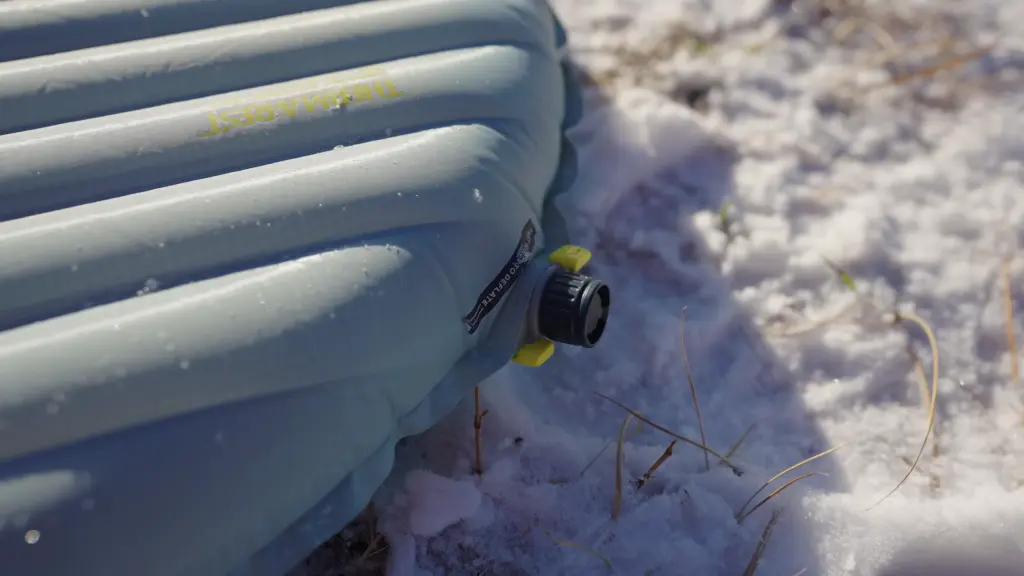
The WingLock valve has grown on me, and it is a particularly strong valve for winter use. But the pump sack and deflation process are what pull the score down.
The Therm-a-Rest XTherm NXT uses Therm-a-Rest's proprietary WingLock valve, a twist valve for both inflation and deflation that sits off the side corner of the pad at the head end. I like it, but it is not the best valve on the market. There are easier valves to use. It does allow fairly easy inflation and fairly easy deflation. Getting air into the pad is easy but deflating the pad to pack away is more difficult because of the Triangular Core Matrix. Air movement is slowed down, so the pad has to be rolled first to push the air out, then folded and rolled again to fit in its bag.
The pad comes with an inflation sack, a stuff sack, and a field repair kit. The inflation sack is pretty useless because the seams are not sealed and the material is air permeable, so a lot of air escapes the bag as you try to push air into the pad. The bag often pops off the valve mid-inflation as well. I almost always use a pad pump instead to inflate the XTherm and most pad pump manufacturers have an attachment compatible with the WingLock valve.
Durability score: 10/10
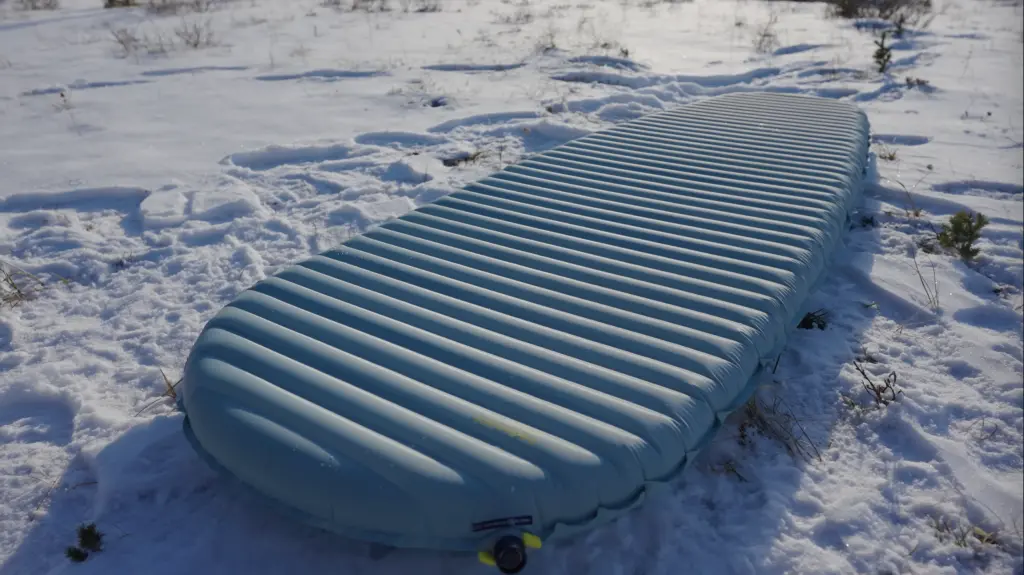
A valve that can be replaced in the field and the reputation and warranty of Therm-a-Rest are what give the XTherm top marks in durability.
Durability is a strength of the Therm-a-Rest XTherm NXT. The common failure points on a sleeping pad are valve failures, delamination, baffles blowing out, and punctures. The XTherm uses a 70-denier nylon on the bottom, which is very effective at preventing punctures, and a 30-denier ripstop nylon on the top, where less puncture resistance is needed. The welds on the seams and baffles are very strong and I have seen very few instances of baffles blowing out on this pad.
The valve is robust, works well in cold winter conditions, and is replaceable. If the valve fails, the valve can be replaced and the pad kept in use, which is rare for sleeping pads today.
I have had no issues across multiple XTherm pads over the years and reviews online show very few durability problems. Therm-a-Rest covers the XTherm with the same limited lifetime warranty as its other pads.
Noise score: 6/10
Noise is the one area where the Therm-a-Rest XTherm NXT still lags behind other pads. Therm-a-Rest claims the newest XTherm version is quieter than earlier versions and I found that to be true. The XTherm will probably not wake anyone else in the tent or at the campsite, but the crinkle noise of the internal reflective film is noticeable when shifting positions. It is a moderately noisy pad.
Final Thoughts
The Therm-a-Rest XTherm NXT is for anyone who needs a very warm pad for extreme conditions and a winter pad that simply works. I go on many remote winter expeditions and, when I need something that is going to work, I take the XTherm - no other pad compares. It is not for anyone who prioritizes comfort, since it is not a comfortable pad. But if warmth-to-weight is your top priority, the XTherm is an amazing choice.
How it compares
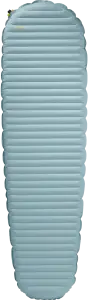 Therm-a-Rest NeoAir XTherm NXT Therm-a-Rest NeoAir XTherm NXT |
 Sea to Summit Ether Light XR Pro Sea to Summit Ether Light XR Pro |
 NEMO Tensor Extreme Conditions NEMO Tensor Extreme Conditions |
|
|---|---|---|---|
| R-value | 7.3 | 7.4 | 8.5 |
| Weight | 567 g (1.3 lb) (Long Wide, Mummy, as tested) | 726 g (1.6 lb) (Long Wide, Mummy, as tested) | 658 g (1.5 lb) (Long Wide, Rectangular, as tested) |
| Thickness | 7.6 cm (3 in) | 10 cm (3.9 in) | 9 cm (3.5 in) |
| Overall Rating | B+ | A- | A+ |
| Comfort score | 4/10 | 7/10 | 7/10 |
| Warmth score | 10/10 | 10/10 | 10/10 |
| Weight score | 7/10 | 5/10 | 6/10 |
| Ease of Use score | 4/10 | 10/10 | 10/10 |
| Durability score | 10/10 | 6/10 | 8/10 |
| Noise score | 6/10 | 4/10 | 8/10 |
| Check price | Check price | Check price |
Compared to other winter pads such as the Sea to Summit Ether Light XR Pro and the NEMO Tensor Extreme Conditions, the XTherm is both warmer and lighter - even though some of those pads have higher R-values. My testing has shown that R-value is not a good predictor of real-world warmth. The number is not wrong, but the lab test does not reflect real conditions well. The only pad that might challenge the XTherm is the Exped Ultra 10R. It is a more comfortable pad and might be warmer, but it is quite a bit heavier, and I still need to push it to its lower limits.
More Sleeping Pad Reviews
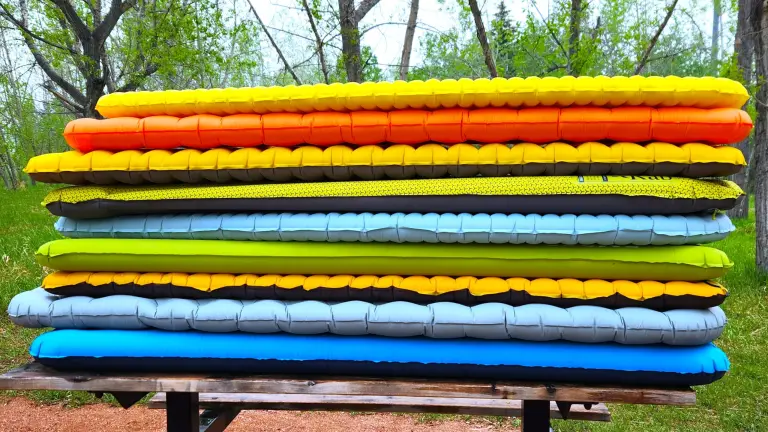
Best Backpacking Sleeping Pads – 2026 Awards
Seven categories. Seven winners.

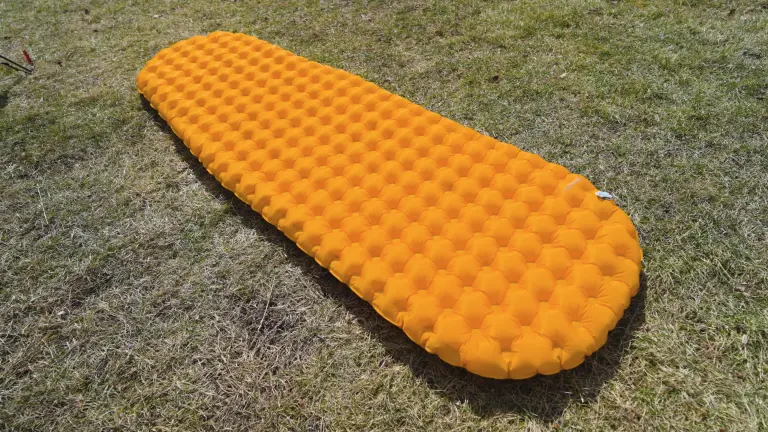
Bestway Ridgelite
Best budget pad on the market: warm, comfortable, and easy to use.
Bestway describes the Ridgelite as warm, comfortable, and light. During over 12 nights of testing, I have been warm below freezing and had comfortable sleeps on…
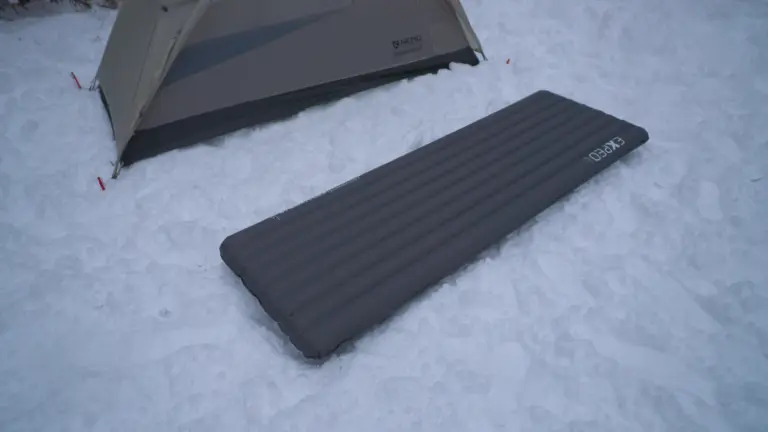
Exped Ultra 10R
Does one of the highest ASTM-tested R-values translate to real world warmth?
The Exped Ultra 10R has one of the highest ASTM-tested R-values ({{exped-ultra-10r:r-value}}) I have seen with a pad under [gp_measure value="1" unit="kg"]. Exped claims that the…