
Exped MegaMat Ultra
The most comfortable pad you can still fit in a backpack.

Exped describes the Exped MegaMat Ultra as a pad that improves sleep quality without giving up portability. After dozens of nights sleeping on it in the backcountry, the claim is mostly accurate. The pad is built for comfort. It is thick, it is stable, and it is the most comfortable pad I have used for backpacking. The tradeoff is weight. This review covers where the pad performs well, where it does not, and who it is for.
Available Sizes
Scroll sideways to see every size.
Comfort score: 9/10
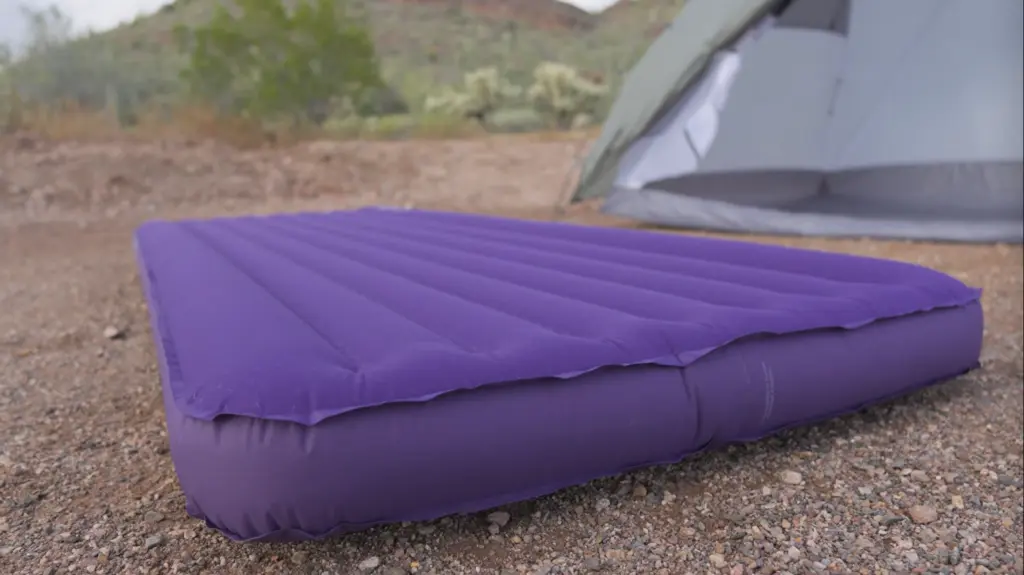
The MegaMat Ultra fully inflated. Vertical baffles and raised sidewalls keep you stable and centered.
Comfort is the strength of the Exped MegaMat Ultra, and several design features are responsible.
The pad is advertised as 10 cm (3.9 in) thick, but once inflated it feels closer to 11.4 cm (4.5 in), partly because its sidewall construction does not taper at the edges the way many pads do. That thickness means I do not bottom out, and there is enough thickness to release some air to make the pad less firm and add pressure relief without contacting the ground.
The MegaMat Ultra uses vertical baffles, one of the most stable baffle systems available, with raised outer tubes that keep me centred on the pad. When changing positions, moving toward the edge, or lying on the pad with a large amount of air released, it remains stable and does not feel like I am laying on a balloon. Stability matters most on a pad this wide, particularly in the 76.2 cm (30 in) extra wide size, where pads without sidewalls or stable baffling feel unstable near the edges.
The 20-denier tricot polyester top material has some stretch and is soft. The stretch allows me to sink into the pad slightly. Combined with the vertical baffles, the stretchy top material provides some of the best pressure relief I have felt on any pad. I have never felt any pressure points and my arm has never gone numb while laying on the pad (a common problem with pads that have poor pressure relief). The MegaMat Ultra comes in regular wide, long wide, and long extra wide sizes, so it fits a range of body types and preferences. The pad is comfortable for back, side, and stomach sleeping.
This is the most comfortable pad I have used for backpacking and is comfortable enough that I also use it as my go-to car camping pad - choosing it over larger and heavier pads.
Warmth score: 6/10
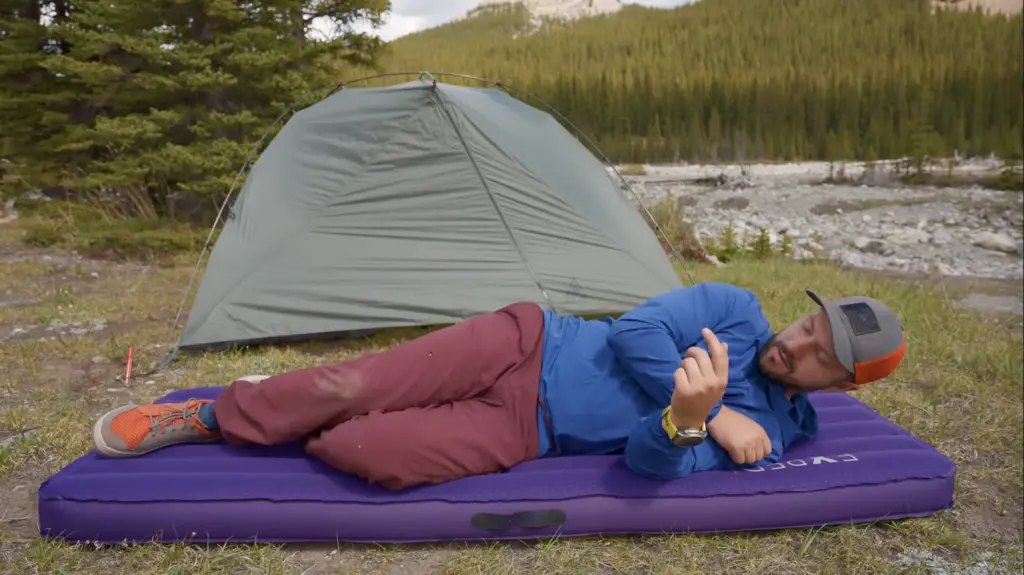

Synthetic insulation welded top and bottom handles temps down to just below freezing.
Exped's season rating scale puts the MegaMat Ultra in cold weather territory which is a little generous from our testing.
Warmth is adequate on the Exped MegaMat Ultra considering its size. It has an ASTM tested R-value of 4.4 and, in my testing, the R-value has been a good predictor of how warm the pad sleeps in the backcountry. The insulation is a synthetic fill welded to both the top and bottom of the pad that primarily prevents convective heat loss and is an insulation approach that has performed well on other Exped pads I have used.
Generally, increasing the size and surface area of a sleeping pad reduces its ability to reduce heat loss. Because the MegMat Ultra is a large pad, especially in the wider sizes, it loses more heat to the surrounding air than a smaller and thinner pad that has the same lab R-value test results. I have used the MegaMat Ultra just below freezing on warm ground and stayed warm but started to feel heat loss around -4°C (25°F). In my testing, the MegaMat Ultra’s warmth performance is consistent with what I would expect from a three-season pad rather than an all-season pad like Exped's rating suggests. For a pad this large, that is a reasonable result. Making the MegaMat Ultra warmer would require denser insulation and, on a pad this size, that would add considerable weight.
Weight and Packability score: 3/10
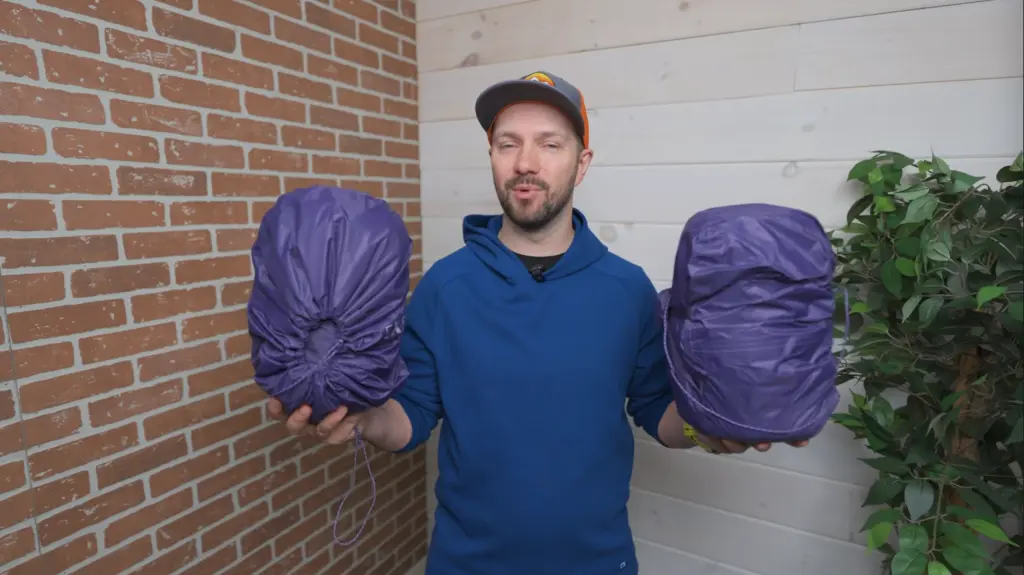
Heavier than most backpacking pads, but far more packable than a car-camping mattress.
The Exped MegaMat Ultra is a heavy and bulky pad for backpacking. The regular wide size weighs 880 g (1.9 lb) on my scale, 30 g (1.1 oz) less than the advertised weight. That is more than most backpacking pads weigh. The weight is the cost of the comfort and whether it is acceptable depends on the trip and your priorities.
For a comfort-focused pad, the MegaMat Ultra is on the heavier end of the category. Its two closest competitors are the Therm-a-Rest NeoLoft, which weighs 833 g (1.8 lb), and the Big Agnes Campmeister Deluxe Insulated, which has an advertised weight of 907 g (2 lb) (in the regular wide sizes). All three are close enough in weight that they compete on comfort rather than weight. For the MegaMat Ultra, most of the weight comes from the features that provide comfort: the thickness and sidewalls both require more material than a thinner sandwich-construction pad. The size of the pad also means it needs more insulation weight to prevent heat loss.
The packed size is large for a backpacking pad. The regular wide packs to 26.9 cm (10.6 in) by 16 cm (6.3 in) according to Exped. The MegaMat Ultra is one of the bulkiest 3-season pads on the market and will take up considerable room in your pack.
The MegaMat Ultra is a purely comfort-focused pad. It is one of the most comfortable backpacking pads on the market but is also comfortable enough to consider for car camping. It packs smaller and lighter than a dedicated car camping mattress while being as comfortable. For shorter trips, group trips, or any trip where low weight is not the top priority, the weight is easy to justify.
Ease of Use score: 6/10
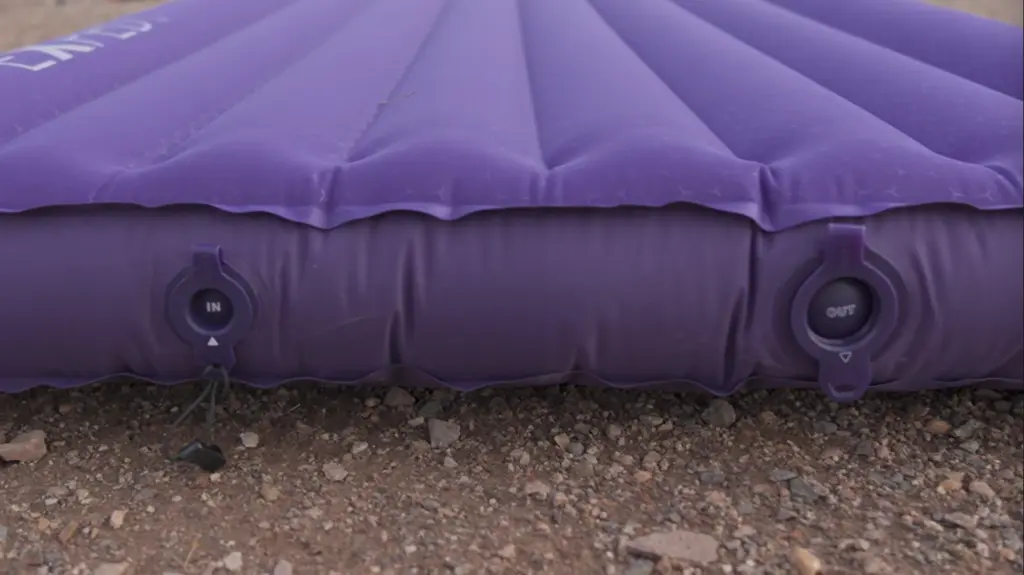
The sidewall valve setup, better than on the bottom.
The Exped MegaMat Ultra is easy to use because of its valve placement. The pad uses two valves for inflation/deflation: one one-way valve that can be used for inflation and then fully opened for deflation and a dedicated one-way deflation valve. On several Exped models, the valves are on the bottom of the pad, which requires flipping the pad over to add or release air. On the MegaMat Ultra, both valves are on the sidewall, so there is no need to flip the pad after inflating and air can be added or released during the night by pressing on the valve flipping the pad. The pad includes a pump sack; but, with a pad this large, inflating with it takes a long time. I prefer to use a battery-powered inflation pump and the MegaMat Ultra is compatible with most pumps available.
Deflating using the dedicated deflation valve makes rolling air out of the pad easy because it prevents air from re-entering each time I pause and allows me to get almost 100% of the air out of the pad, which reduces pack size.
The tradeoff with two valves is that the MegMat Ultra has more parts and more weight and I would prefer the main inflation valve to be on the top surface of the pad for easier access. Sidewall placement is an improvement over the bottom-mounted valves on other Exped pads but it is still not optimal.
Durability score: 10/10
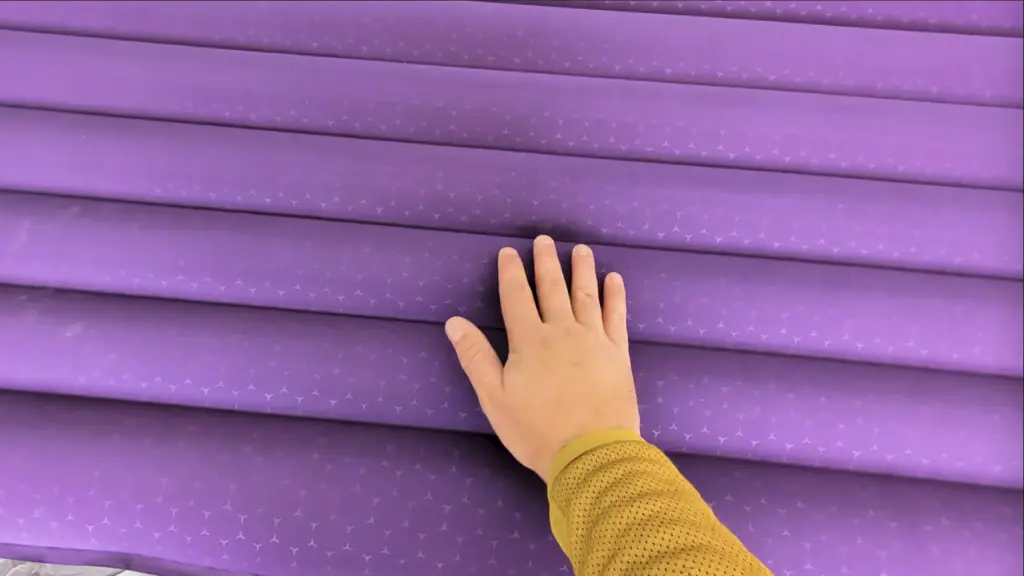
The long-term question is how this stretchy top's welds hold up.
Durability is a strength for the Exped MegaMat Ultra, with one area to monitor. The pad uses a 20-denier polyester top and a thicker 30-denier polyester bottom with both materials feeling durable. Both fabrics are laminated with a TPU film so the pad holds air.
The area to monitor, on this pad, and on any pad with a stretchy top material, is how the welds perform over time. I had a leak on my Therm-a-Rest NeoLoft that I could not locate and suspect it was an issue with the stretchy material that the NeoLoft uses. Exped had a reputation for weld failures five to ten years ago; but current Exped pads seem to have resolved that problem and I have not had a failure on any of the recent Exped pads I have used. I have not had any problems with my MegaMat Ultra over the last year and dozens of nights of use. There are not a lot of reviews available for the MegMat Ultra and none where durability has been an issue.
Exped pads have a five-year warranty and Exped has repaired or replaced damaged pads outside the warranty period at no cost in some cases, though that is not guaranteed.
Noise score: 10/10
Noise is not a concern with the Exped MegaMat Ultra. Exped makes no claims about the pad's noise level but it is one of the quietest pads I have used. The two components that usually make a pad noisy are the use of internal reflective film for insulation (which can crinkle) and the outer material (which can squeak on tent floors). The MegaMat Ultra uses synthetic insulation rather than a reflective film, so there is no crinkle, and the top and bottom materials are soft and do not squeak on tent floors. There is no rubbery sound and no rustling when I roll over. Overall, I give the MegaMat Ultra the quietest possible rating for noise.
Final Thoughts
The Exped MegaMat Ultra excels at comfort, stability, and noise. It is for anyone who wants the best possible night of sleep and can accept the weight compromise. It is easy to recommend for shorter trips, group trips, or any trip where low weight is not the priority and it can serve as a pad for car camping as well.
But the MegaMat Ultra is not for everyone. Anyone hiking long distances or prioritizing a light pack should avoid the MegaMat Ultra. But as a comfort-focused pad that can still be carried in a backpack, the MegaMat Ultra is one of the best available.
How it compares
 Exped MegaMat Ultra Exped MegaMat Ultra |
 Therm-a-Rest NeoLoft Therm-a-Rest NeoLoft |
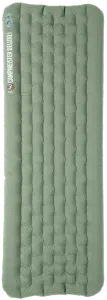 Big Agnes Campmeister Deluxe Insulated Big Agnes Campmeister Deluxe Insulated |
|
|---|---|---|---|
| R-value | 4.4 | 4.7 | 7 |
| Weight | 880 g (1.9 lb) (Regular Wide, Rectangular, as tested) | 833 g (1.8 lb) (Regular Wide, Rectangular, as tested) | 992 g (2.2 lb) (Long Wide, Rectangular, as tested) |
| Thickness | 10 cm (3.9 in) | 11.7 cm (4.6 in) | 8.9 cm (3.5 in) |
| Overall Rating | A- | B- | B- |
| Comfort score | 9/10 | 8/10 | 7/10 |
| Warmth score | 6/10 | 5/10 | 7/10 |
| Weight score | 3/10 | 3/10 | 1/10 |
| Ease of Use score | 6/10 | 4/10 | 6/10 |
| Durability score | 10/10 | 6/10 | 8/10 |
| Noise score | 10/10 | 10/10 | 8/10 |
| Check price | Check price | Check price |
The closest comparison to the Exped MegaMat Ultra is the Therm-a-Rest NeoLoft. These are the two large, thick, and comfort-focused pads on the market. Choosing between them comes down to personal preference. The NeoLoft's top material is stretchier, so some people sink into it more and find it more comfortable. I prefer the stability of the MegaMat Ultra over the more balloony feeling of the NeoLoft. Body weight is a useful guide. Lighter sleepers may prefer the NeoLoft, since they can sink into the stretchier top while heavier sleepers may prefer the more stable feel of the MegaMat Ultra.
If weight is a consideration, the NEMO Eclipse All-Season provides excellent comfort but weighs much less than both the MegaMat Ultra and the NeoLoft.
More Sleeping Pad Reviews
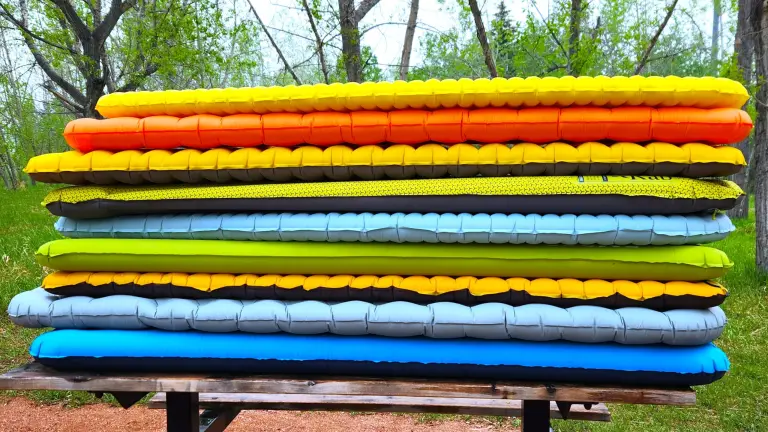
Best Backpacking Sleeping Pads – 2026 Awards
Seven categories. Seven winners.

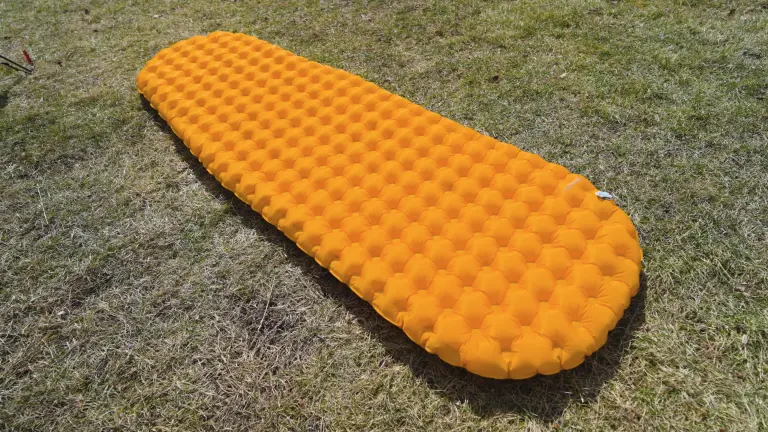
Bestway Ridgelite
Best budget pad on the market: warm, comfortable, and easy to use.
Bestway describes the Ridgelite as warm, comfortable, and light. During over 12 nights of testing, I have been warm below freezing and had comfortable sleeps on…
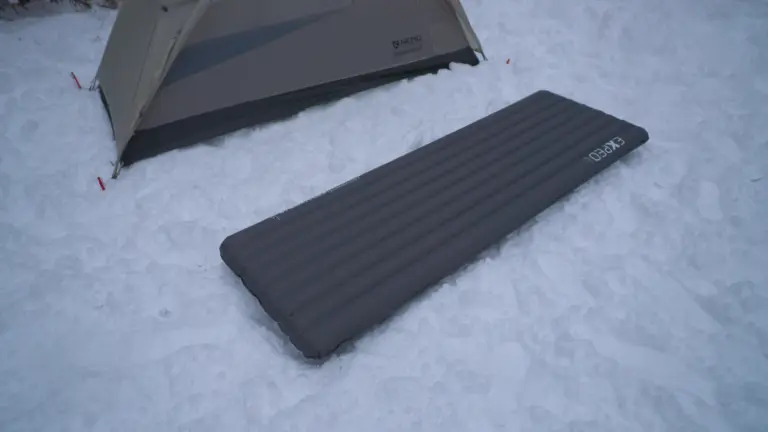
Exped Ultra 10R
Does one of the highest ASTM-tested R-values translate to real world warmth?
The Exped Ultra 10R has one of the highest ASTM-tested R-values ({{exped-ultra-10r:r-value}}) I have seen with a pad under [gp_measure value="1" unit="kg"]. Exped claims that the…