
Sea to Summit Ether Light XR
Does the comfort pedigree continue in a lighter and more compact package?
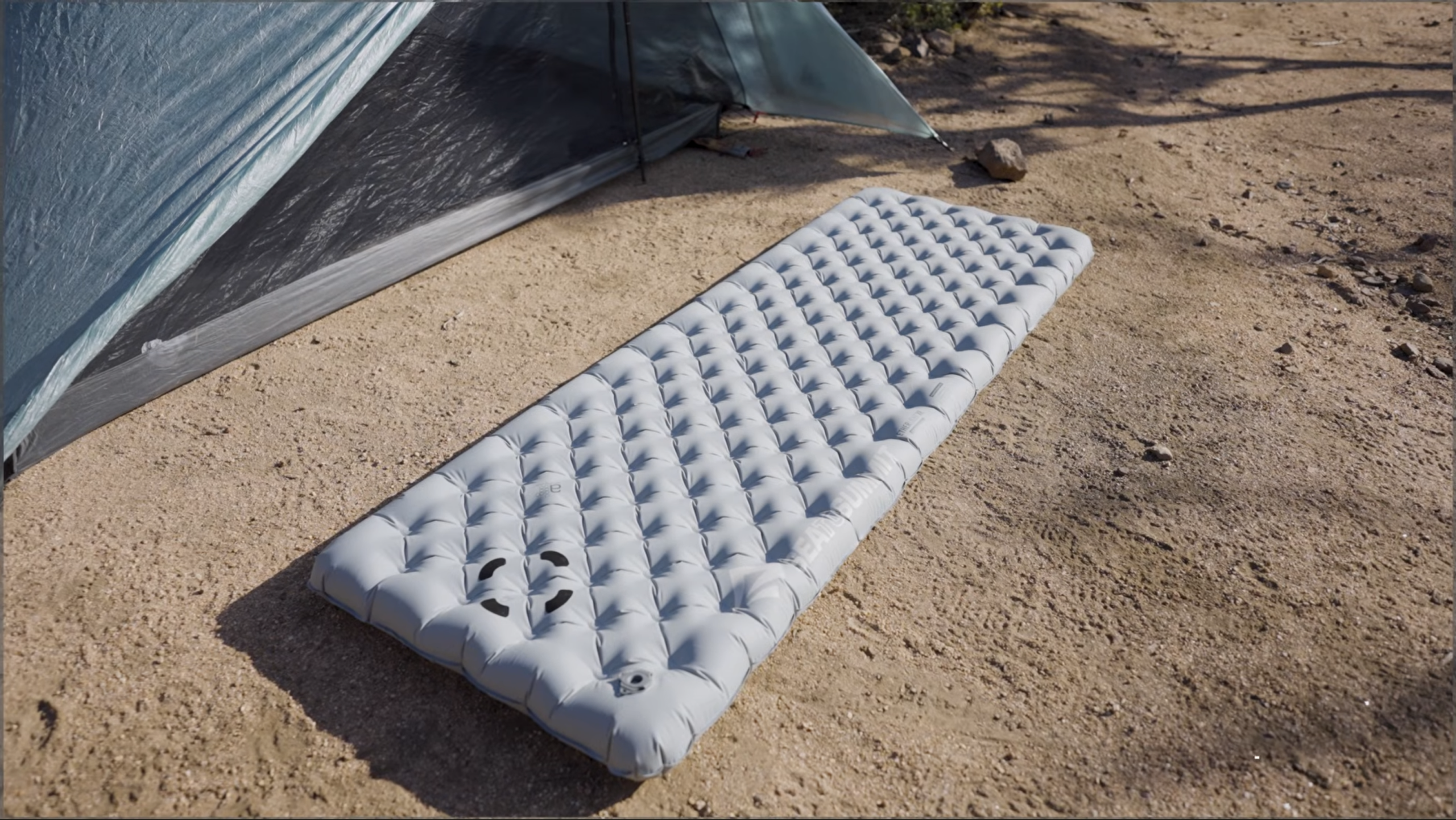
The Sea to Summit Ether Light XR is an inflatable sleeping pad meant for 3-season backpacking. The design of the pad focuses on comfort while improving on weight and size compared to previous models. I am excited for a comfort-focused pad that is a comparable weight to other lightweight pads on the market. I have tested the pad in a variety of conditions, including down to its lower warmth limit, over dozens of nights in the backcountry to determine how it actually performs and how it stacks up to the competition.
Pros and Cons
Pros
- Very stable, with a connection point at every dimple.
- Thick enough that I have not bottomed out on my side or my back.
- One-way valve on top of the pad makes inflating, adjusting, and dumping air easy.
- Stuff sack has an integrated pump sack for inflating the pad.
Cons
- Heavy for its warmth compared to similar pads.
- Top fabric feels plasticky and is not soft or stretchy.
- Outer material makes noise and squeaks on tent floors.
- Many weld points that can be weak points for leaking.
Available Sizes
Scroll sideways to see every size.
Comfort score: 7/10
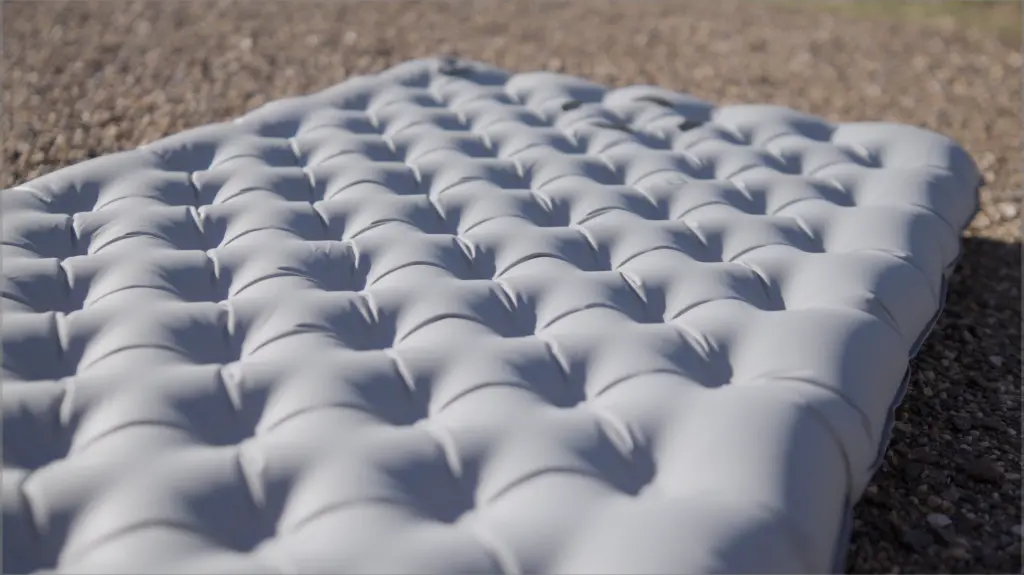
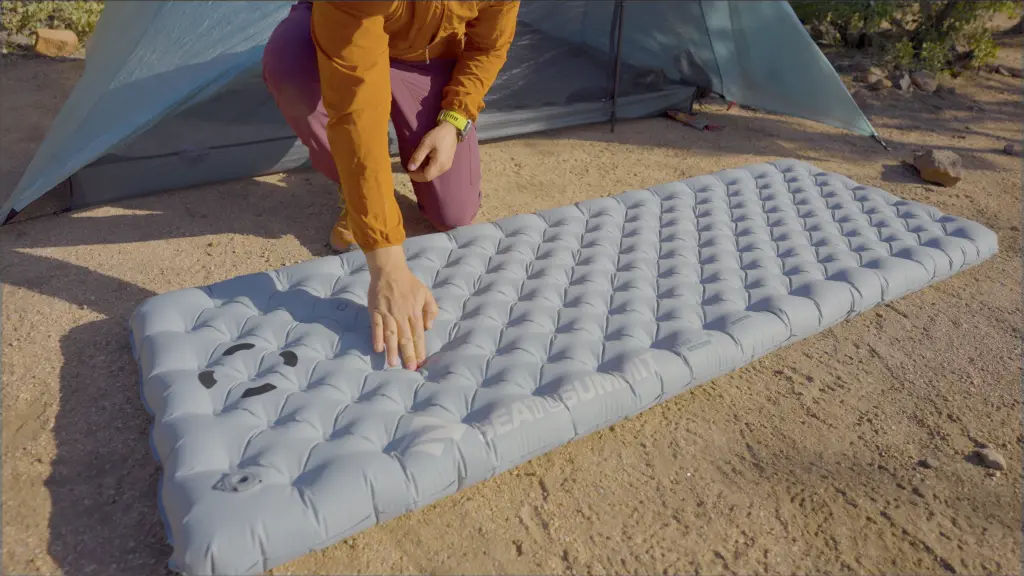

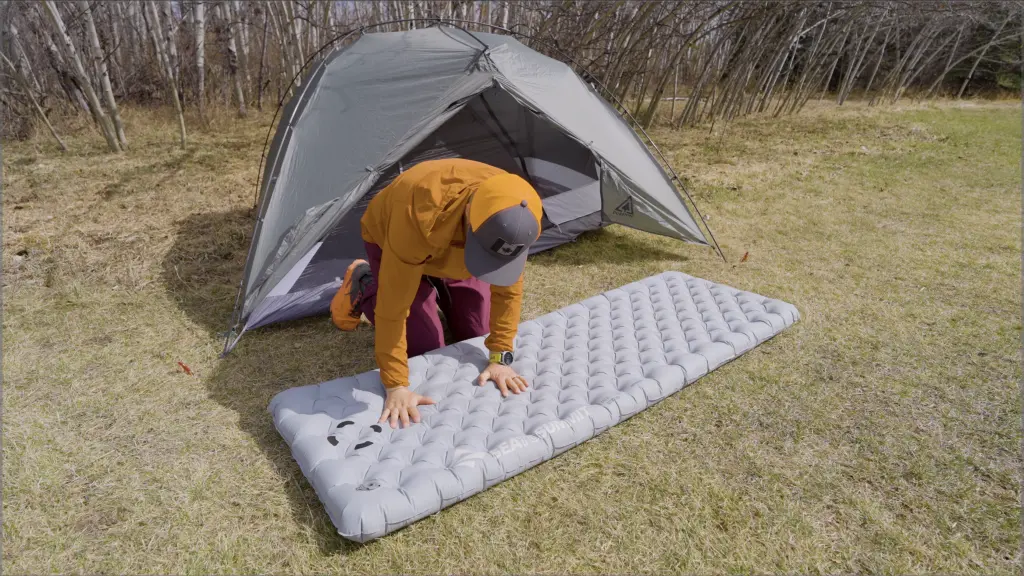
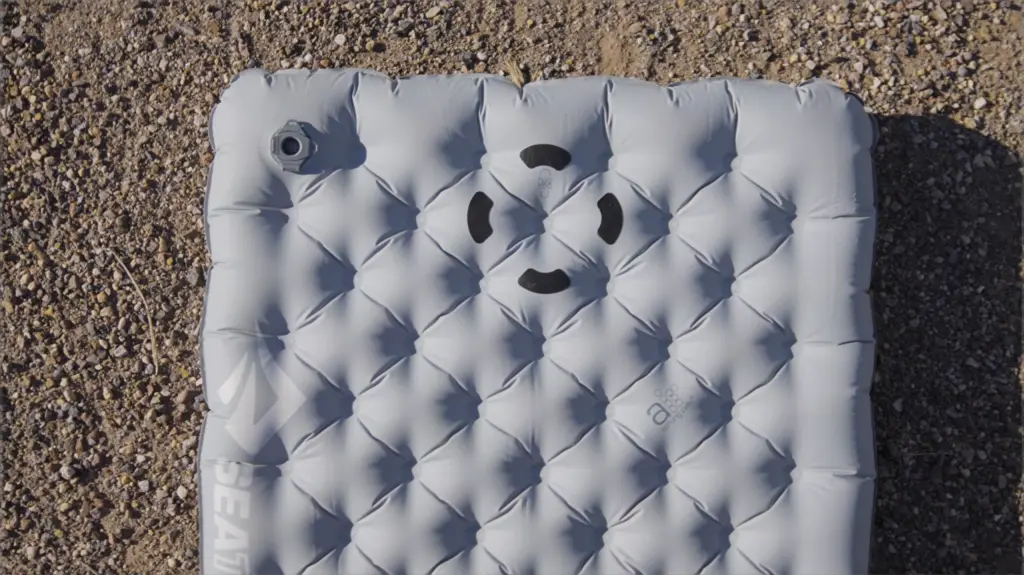
The dimpled baffles create raised areas across the whole top of the Ether Light XR.
Each raised area on the Ether Light XR compresses under pressure, but the top fabric does not stretch.
Even close to the edge, the Ether Light XR feels stable, so I can use the full width of the pad.
The Ether Light XR is 10 cm (3.9 in) thick, which makes it hard to bottom out.
The dimpled baffles on the Sea to Summit Ether Light XR keep the pad very stable from the middle to the edge.
The two things I look at when it comes to the comfort of the Sea to Summit Ether Light XR are pressure relief and stability. Three design features affect both.
The first design feature that affects comfort is the baffling. The Ether Light XR uses a dimpled baffling pattern, with raised areas and lowered areas across the top of the pad. Each raised area compresses under the part of the body that presses on it and the compression relieves pressure. Every dimple is also a connection point between the top of the pad and the bottom; those connection points make the pad very stable. Lying in the middle of the pad or close to the edge, I never feel as if I will roll off. The stability lets a sleeper use the full width of the pad.
The second design feature is the thickness of the pad. The Ether Light XR is 10 cm (3.9 in) thick and makes it hard to bottom out even after releasing some air to improve pressure relief. I tested the pad sleeping on my side and on my back and, due to the thickness of the pad, I never touched the ground. The outer edge of the pad is slightly thicker than the middle and it helps keep you centred when getting close to the edge. Releasing some air helps a little with pressure relief for anyone who feels pressure points but it also reduces warmth and makes the pad less stable.
The third design feature is the top material, which is a slightly plastic-feeling fabric that is not soft and not stretchy. It does not add to the pressure relief the way a stretchy top material does, like with the Therm-a-Rest NeoLoft or Exped Ultra 6.5R pads. As more pads have been released with stretchy top materials, I have started to think that the stretchiness of the top material is more important than baffle design when it comes to pressure relief.
Side sleepers will find the Ether Light XR more comfortable than most pads from ten years ago but back sleepers will get the most out of the pad because the stability and the pressure relief together suit that position best. Overall, the Ether Light XR is a comfortable and very stable pad and back sleepers will find it one of the most comfortable while there are more comfortable options available for side sleepers.
Warmth score: 5/10
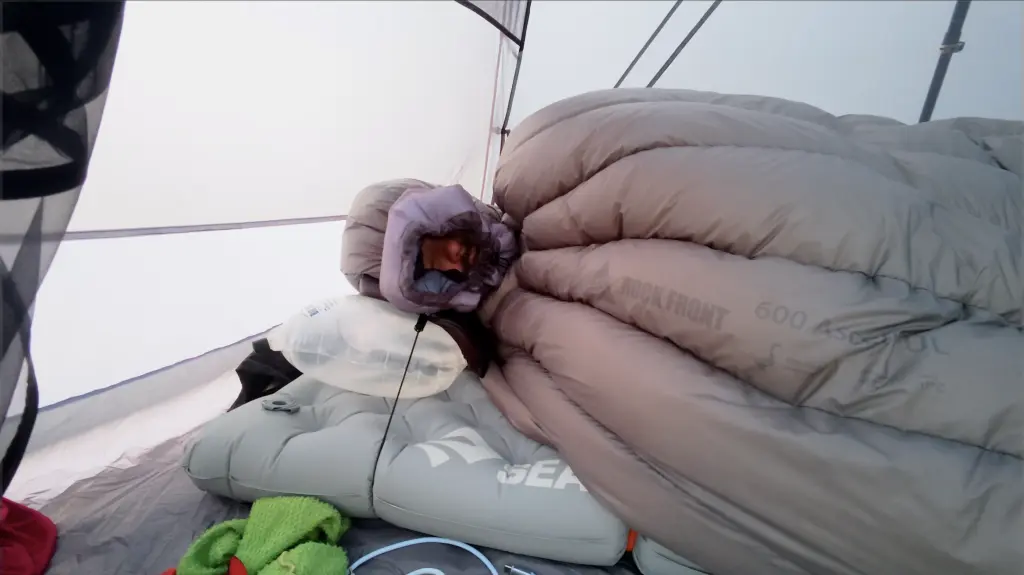
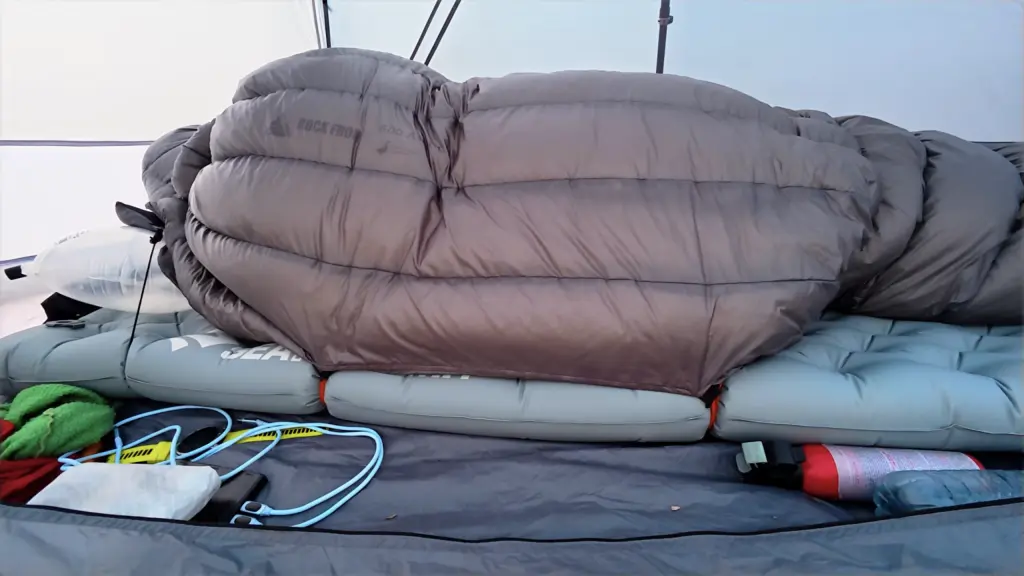
Three layers of reflective film inside the Ether Light XR reflect heat back to the body.
The Ether Light XR stays warm to about 0°C (32°F) on warm and dry ground.
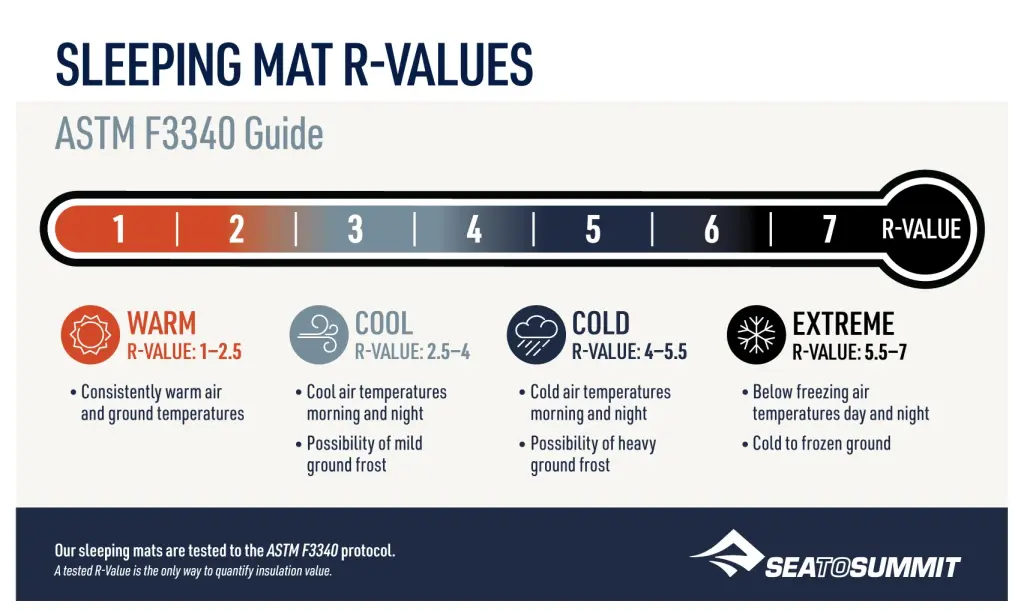
With an R-value of 4.1, the Ether Light XR lands at the start of the cold range on Sea to Summit's own scale, but in my testing it stays warm only to about 0°C (32°F) on warm and dry ground.
The Sea to Summit Ether Light XR has an ASTM-tested R-value of 4.1 and Sea to Summit rates it for three-season use. The three-season rating matches my testing. An R-value is usually a poor predictor of real-world warmth but, with the Ether Light XR, I can sleep down to about 0°C (32°F) on warm and dry ground and stay warm, which is what I consider three-season use.
To provide insulation, the Ether Light XR uses three layers of reflective film inside the pad, which reflect heat back to the body and reduce radiative heat loss. Sea to Summit calls this ThermalCore. Three layers of reflective film would normally result in a pad being able to be warm below freezing on cold ground, but there are two design aspects that lead the pad to sleep colder. The first is that, at each dimpled weld point, there is a hole through the insulation and each hole is a channel for faster heat loss. Instead of one continuous layer of insulation, the pad has many small spots with almost no insulation. The second reason is thickness. A thick pad has more surface area exposed to the air around it, so it generally sleeps colder than a thinner pad with the same R-value when the air temperature approaches freezing or below.
Overall, the warmth of the Ether Light XR is good for a three-season pad and the R-value predicts its real-world warmth better than it does for most pads. If you want to sleep in conditions colder than freezing, you will need a warmer pad than the Ether Light XR.
Weight and Packability score: 5/10
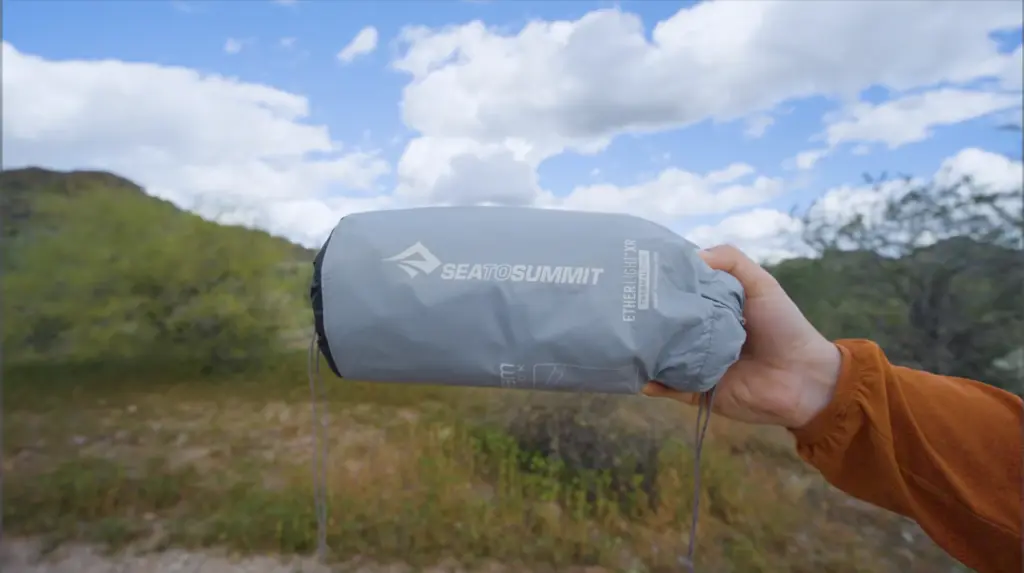
The regular wide Ether Light XR weighs 625 g (1.4 lb) on my scale.
The regular wide rectangular Sea to Summit Ether Light XR weighs 625 g (1.4 lb) on my scale, which is 20 g (0.7 oz) heavier than the advertised weight of 605 g (1.3 lb). There are five Ether Light XR sizes with advertised weights ranging from 445 g (15.7 oz) for the short mummy version to 665 g (1.5 lb) for the long wide rectangular version.
For a pad of this warmth and size, the weight is on the high end. Pads with similar or slightly better warmth in this size usually weigh in the mid 500 g (1.1 lb) range. The NEMO Eclipse All-Season weighs 558 g (1.2 lb) on my scale and is warmer. Part of the weight on the tested pad comes from its shape. A mummy pad saves about 20 percent of the weight of a rectangular pad but Sea to Summit does not make a regular wide mummy. The regular wide comes only in the rectangular shape.
The Ether Light XR packs to about 24 cm (9.4 in) by 12 cm (4.7 in) in the regular wide, which is comparable to similar pads.
Ease of Use score: 10/10
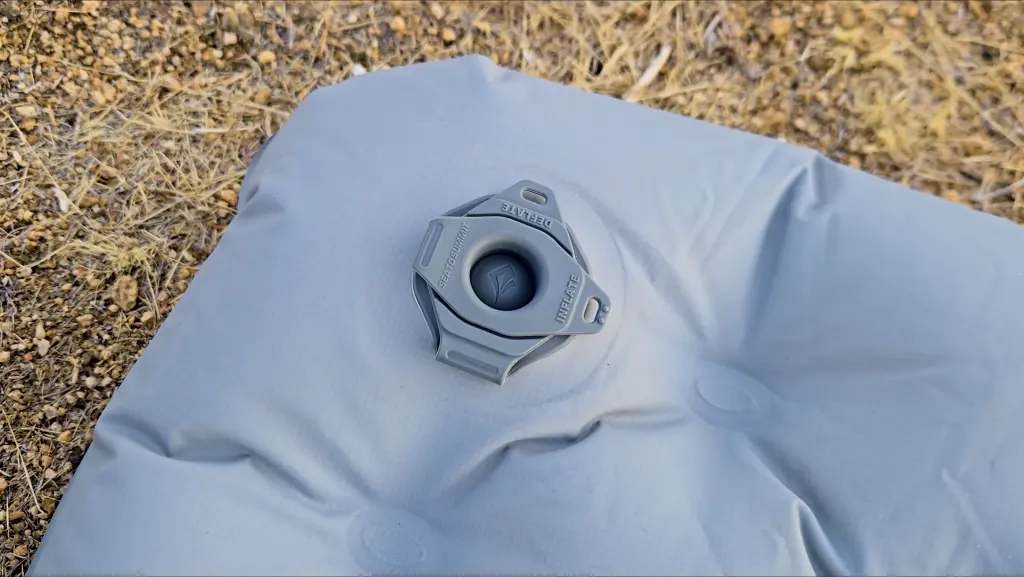
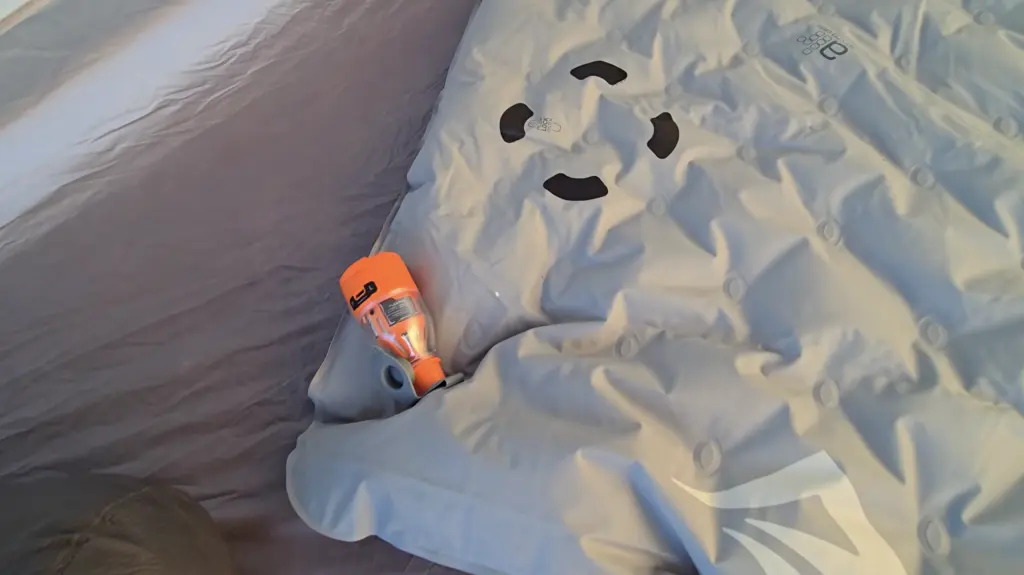
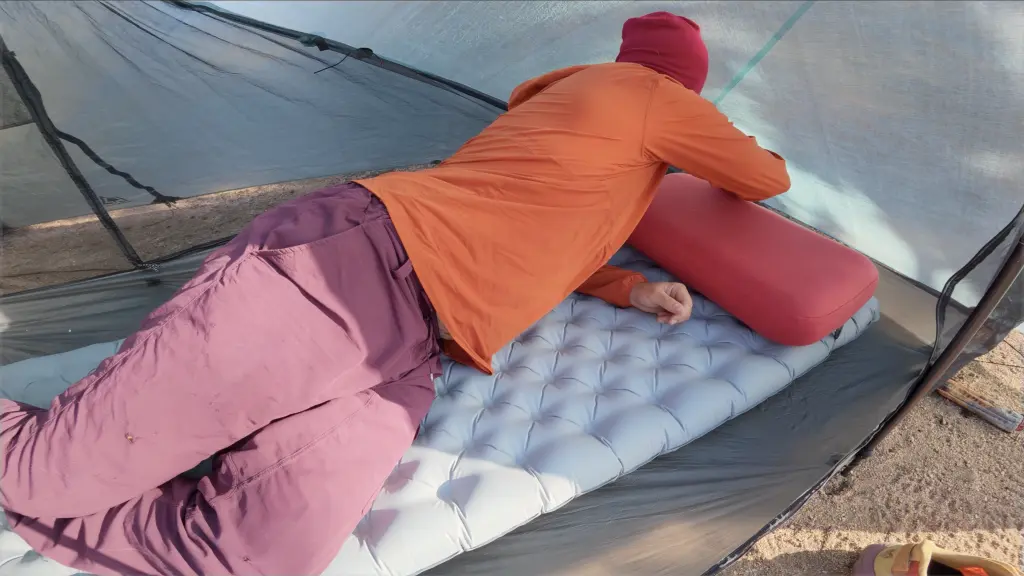
The one-way valve sits on top of the Ether Light XR, with one flap for inflating and a second part for dumping air.
The top-mounted valve on the Ether Light XR makes it easy to add or release air while lying on the pad and is compatible with most pad pumps.
With the valve on top of the Ether Light XR, I can add or release air while lying on the pad.
The valve on the Sea to Summit Ether Light XR is a one-way valve with two parts. Opening the first flap allows air in for inflation but does not let it out while opening the second part of the valve dumps air out of the pad. The valve sits on the top of the pad, which makes it easy to reach with the pad inside a tent. There is no need to inflate the pad and then flip it over, which can be difficult in a one-person tent or when sharing a tent.
The top-mounted valve also makes it easy to adjust the pad during the night. When the temperature drops after inflation, the pressure inside the pad drops and it needs a little more air. Air can also be easily released from the pad, to improve pressure relief, by opening the first flap of the valve and pressing on the “button” that is visible. With the valve on top, adding and releasing air are both easy to do while lying on the pad.
The Ether Light XR comes with a pump sack that is built into the stuff sack. Take the pad out of the sack, open a second cinch on the bottom of the sack, and the inflation bag comes out of the same sack. The built-in pump sack saves a little weight over a separate pump sack and it works well. Blow into the narrow end to fill the sack, then push the air into the pad. I usually do not use the pump sack though and instead use an electric pump to inflate my pads. The Ether Light XR works with most electric pumps. Packing up is easy since air dumps out of the pad quickly and the pad goes back into its sack without trouble.
Durability score: 6/10
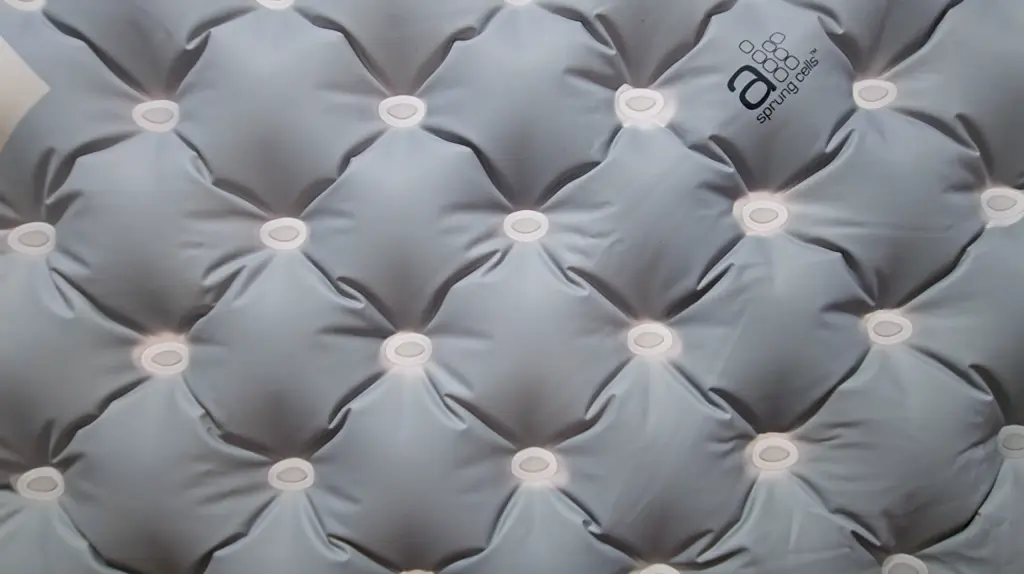
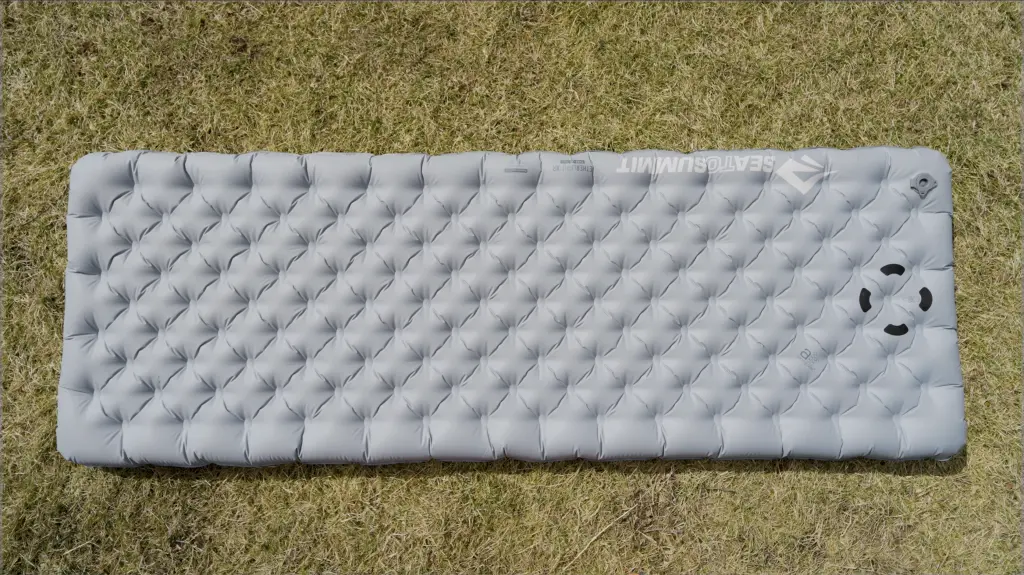
Every dimple on the Ether Light XR is a weld point, and Sea to Summit made the welds oval on this version for added strength.
With a weld at every dimple, the Ether Light XR has many more welds than a pad with horizontal or vertical baffles.
The top of the Sea to Summit Ether Light XR is 30-denier nylon and the bottom is 40-denier nylon, both with a TPU lamination on the inside to make the pad airtight. Every dimple in the baffle pattern is a weld point, so the pad has many more welds than a pad with horizontal or vertical baffles.
Sea to Summit uses oval welds on the Ether Light XR to increase their surface area and it claims greater weld strength. I have not had any problem with my pad and I have not seen owners online reporting failed welds either. The pad has only been on the market for about a year, so it will take another year or two to know how well the welds hold up.
The best way to judge durability for a product is to read reviews and see if the same problem is continuously reported. At the time of writing, the Ether Light XR has about 57 reviews on REI with an average rating of 4.5 out of 5. None of them report leaks or weld failures. The complaints that appear are about the pad sleeping colder than expected, noise from the outer material, and a firm, plastic feel to the top fabric. If you do have any issues with the pad, Sea to Summit has a lifetime warranty against defects in materials and workmanship. In my experience the company stands behind their products.
Noise score: 4/10
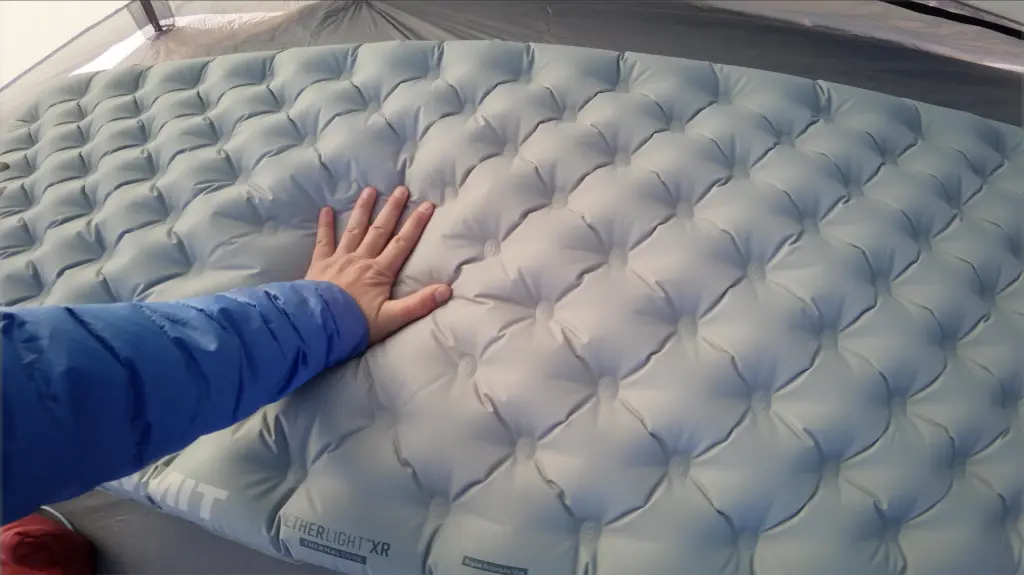
The outer material of the Ether Light XR makes noise when I move on it and squeaks on tent floors.
The Sea to Summit Ether Light XR has insulation that Sea to Summit describes as quiet but makes no larger claim about noise. The two components of a sleeping pad that usually lead to the pad sounding noisy are the internal insulation (reflective film can sound crinkly) and the outer material (which can squeak on tent floors). The reflective film in the Ether Light XR does not crinkle when I lie on the pad or move around. The outer material is noisy due to the plastic, slightly rubbery feel; it makes noise when I move on it and it squeaks on tent floors. Overall, the Ether Light XR is a slightly loud pad.
Final Thoughts
The Sea to Summit Ether Light XR excels at stability and ease of use and its warmth matches its rating. It is hard to recommend over the other pads available though, which are warmer, lighter, more comfortable, just as easy to use, and cost the same or less. Comfort is different from person to person and some people will find the Ether Light XR the most comfortable pad they have used, so I recommend trying a pad before buying it and spending a full night on a borrowed one if possible. The pad makes the most sense for back sleepers, especially heavier back sleepers who need the most stability, firmness, and thickness. For side sleepers between 68 kg (150 lb) and 99.8 kg (220 lb), there are better options that are warmer and more comfortable.
How it compares
 Sea to Summit Ether Light XR |
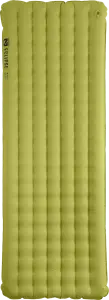 NEMO Eclipse All-Season |
|
|---|---|---|
| R-value | 4.1 | 6.2 |
| Weight | 625 g (1.4 lb) (Regular Wide, Rectangular, as tested) | 558 g (1.2 lb) (Regular Wide, Rectangular, as tested) |
| Thickness | 10 cm (3.9 in) | 10.2 cm (4 in) |
| Overall Rating | B | A |
| Comfort score | 7/10 | 8/10 |
| Warmth score | 5/10 | 6/10 |
| Weight score | 5/10 | 7/10 |
| Ease of Use score | 10/10 | 10/10 |
| Durability score | 6/10 | 8/10 |
| Noise score | 4/10 | 8/10 |
| Check price | Check price |
The pad I would choose over the Sea to Summit Ether Light XR is the NEMO Eclipse All-Season. It is one of the most comfortable pads I have used, it weighs in the mid 500 g (1.1 lb) range in the regular wide, and it stays warm below freezing to about -2°C (28°F). For anyone other than a heavy back sleeper who wants a firm and stable pad, the Eclipse All-Season is the better pad.
More Sleeping Pad Reviews
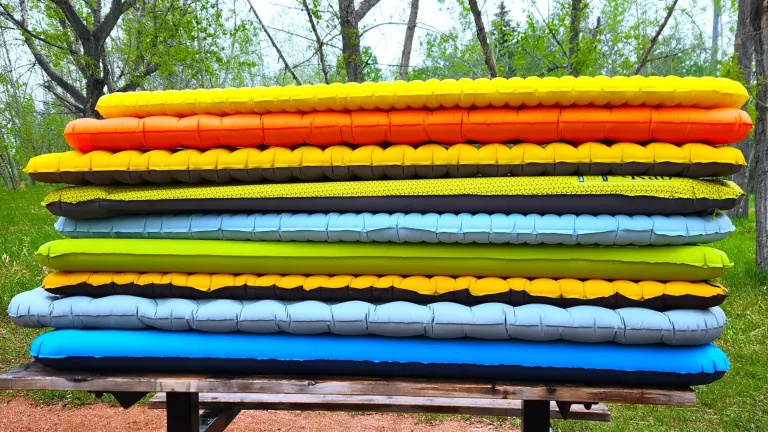
Best Backpacking Sleeping Pads – 2026 Awards
Seven categories. Seven winners.

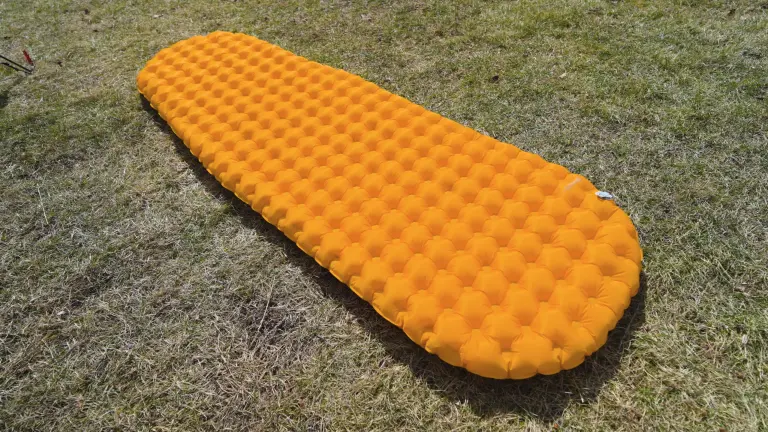
Bestway Ridgelite
Best budget pad on the market: warm, comfortable, and easy to use.
Bestway describes the Ridgelite as warm, comfortable, and light. During over 12 nights of testing, I have been warm below freezing and had comfortable sleeps on…
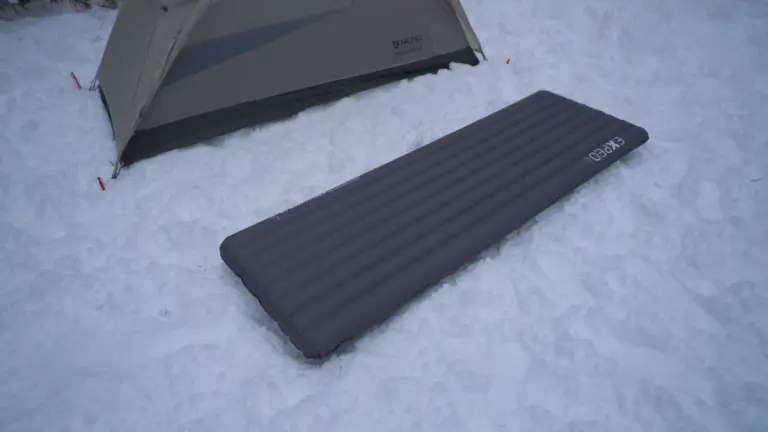
Exped Ultra 10R
Does one of the highest ASTM-tested R-values translate to real world warmth?
The Exped Ultra 10R has one of the highest ASTM-tested R-values ({{exped-ultra-10r:r-value}}) I have seen with a pad under [gp_measure value="1" unit="kg"]. Exped claims that the…