
Therm-a-Rest NeoAir XLite NXT
The best warmth-to-weight ratio on the market, if you can live with the comfort tradeoff.

The Therm-a-Rest NeoAir XLite is one of the most popular pads that has ever been made – and the updated NXT version improves on several key issues that previous versions had. I have tested this pad in real-world conditions on cold ground, and it performs up to its rated warmth. But the pad has tradeoffs and one of them is significant enough that it will not be the right pad for everyone.
Available Sizes
Scroll sideways to see every size.
Comfort score: 4/10
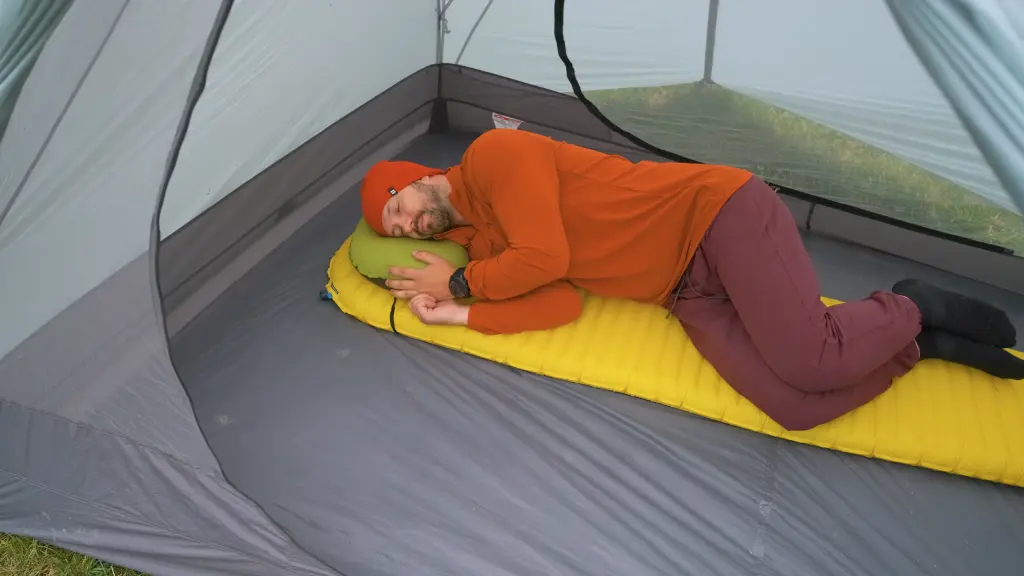
Testing the XLite NXT's edge support on my side, the setup that exposes its biggest weakness.
Comfort is a weak point for the Therm-a-Rest NeoAir XLite NXT. The pad is 7.6 cm (3 in) thick and bottoming out and touching the ground with your shoulder or hip when side sleeping or butt when back sleeping is generally not an issue. The pad uses a ripstop nylon shell material that is not stretchy or soft - both features that would add to comfort if they were present on the Xlite. The Therm-a-Rest NeoAir XLite NXT uses horizontal baffles and, in my experience, that is one of the least comfortable baffle systems available. Horizontal baffles do not provide much edge support and does not have good pressure relief.
Especially for side sleepers, pressure points on your arm may lead to your arm going numb or feeling sore, which leads to needing to shift positions and waking moments. With pads that have a dimpled or vertical baffle system, I can often sleep through an entire night without waking up. On the XLite NXT, I pretty much never make it through a full night without waking up to toss and turn due to pressure points. Letting some air out of the pad does improve comfort slightly but does not completely alleviate the pressure issues. Due to the pressure point issues, back sleepers will likely sleep better on the Xlite than side sleepers. If comfort is the top priority, this pad is probably not the best choice for you.
Warmth score: 9/10
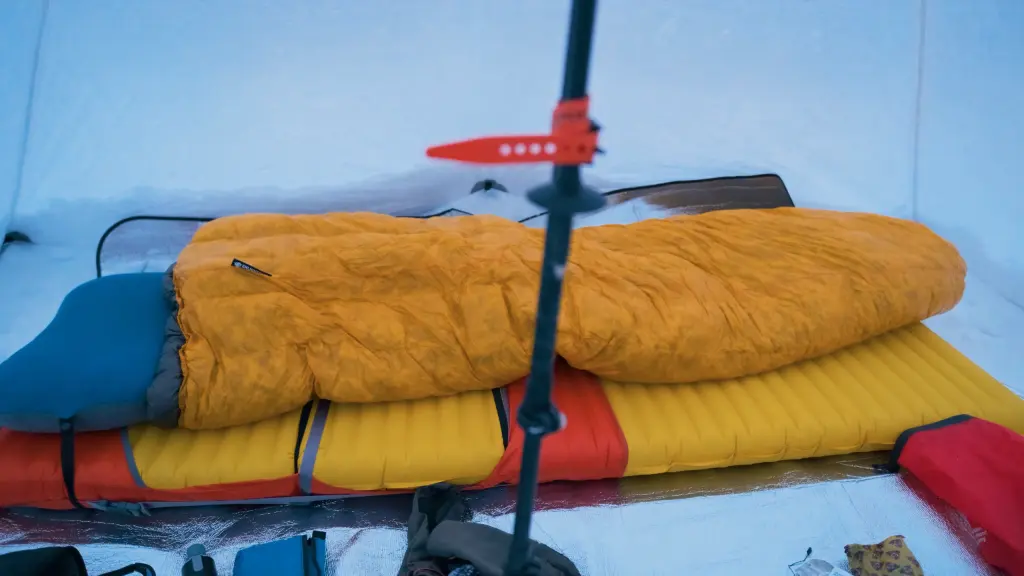
R-value tested on cold ground.
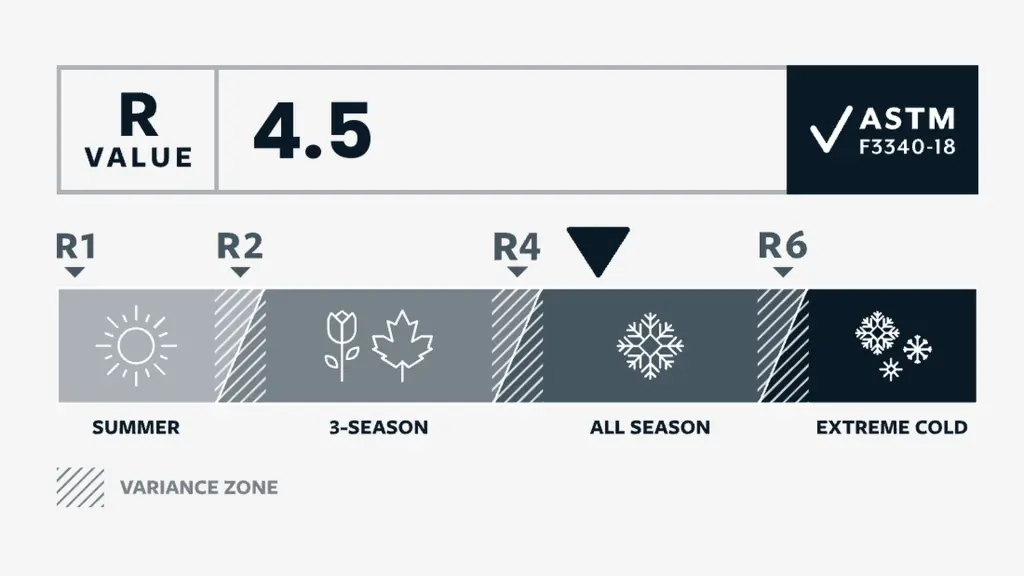
Therm-a-Rest's season scale puts this pad in the low end of all season use which I agree with in mild winter climates.
Warmth is a strength of the Therm-a-Rest NeoAir XLite NXT's. It has an ASTM tested R-value of 4.5 (a slight increase over the previous version) and is warm for all-season use. The Xlite uses two technologies to provide insulation: ThermaCapture and Triangular Core Matrix. ThermaCapture is a reflective film suspended inside the pad that reduces radiative heat loss. The Triangular Core Matrix is a baffle structure that limits air movement inside the pad and reduces convective heat loss. Convective heat loss is usually the main reason pads underperform during real-world testing when compared to the lab-tested R-value. I have tested the Xlite NXT on frozen ground at -8°C (17.6°F) and it was warm. It is not a pad for winter unless the climate is mild, but for spring through fall, it keeps me plenty warm and is impressively warm for its weight.
Weight and Packability score: 7/10
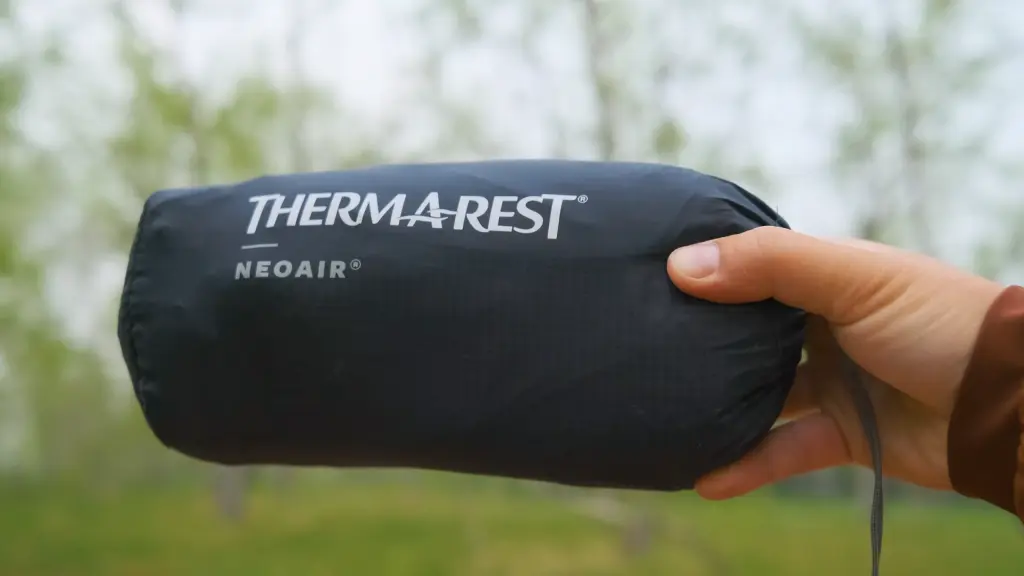
The whole pad, packed down to about the size of a Nalgene.
The Regular Wide rectangular version of the Xlite weighs 542 g (1.2 lb) on my scale, close enough to the advertised 540 g (1.2 lb) to fall within margin of error, a good sign for Therm-a-Rest's accuracy on their spec sheet. The lighter mummy-shaped Regular size, 51 cm (20.1 in) wide, is advertised as weighing 370 g (13.1 oz). For all sizes of the XLite, it is one of the lightest pads on the market, especially considering how warm it is. In comparable shapes and sizes, the XLite is around 20% lighter than other pads that can keep you warm below freezing - like the Exped Ultra 6.5R and Nemo Eclipse All-Season. While lightweight, the pack size of the XLite is average - packing down to slightly large than a Nalgene for the tested regular/wide rectangular shaped pad.
Ease of Use score: 4/10
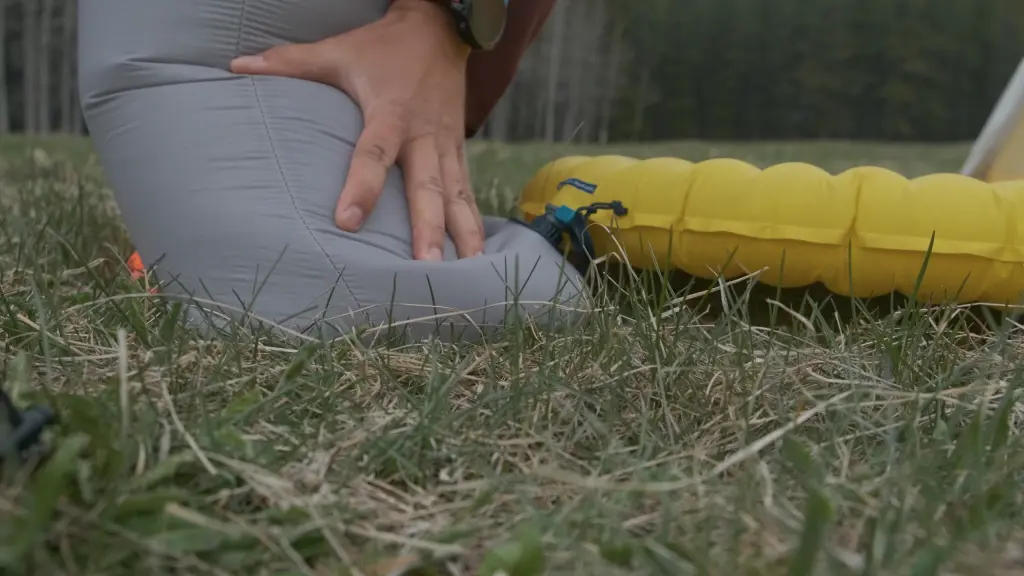
The pump sack in action, before it started slipping off mid-inflation.
Valves tend to be the biggest factor in terms of ease of use. The XLite uses a proprietary WingLock valve that allows for inflation and deflation. The valve allows for quick inflation of the pad but deflation is slowed by the Triangular Core Matrix reducing air movement. The XLite comes with an inflation sack that can be used for inflation, but the air-permeable seams and fabric of the inflation sack make inflation of the pad using it very slow. But the XLite is compatible with most battery-powered inflation pumps, which is my preferred way to inflate sleeping pads. The position of the valve at the top right edge of the pad makes it easy to adjust the pad's firmness level while lying on the pad. If the valve does fail, it is replaceable. Pull the valve out, push in a replacement, and there is no need to retire the whole pad.
Durability score: 10/10
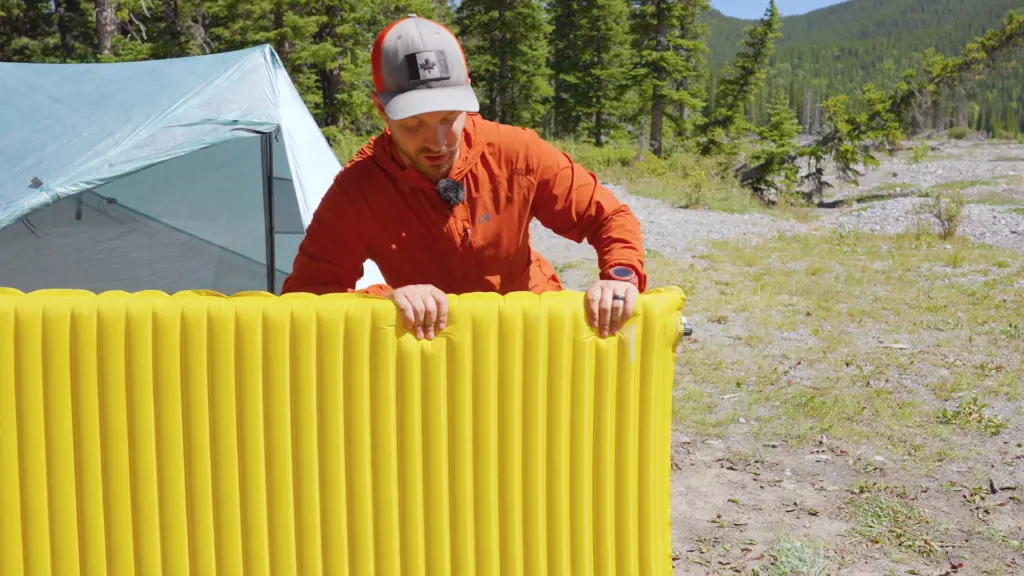
Still holding up after plenty of nights in the field.
For durability, I have never had an XLite fail after hundreds of nights of use. The Xlite uses 30-denier ripstop nylon for the shell material, robust lamination on the inside for making the pad hold air, and solid welds. There are occasional manufacturing defects, and a small number of people have reported baffle blowouts, but that is rare. I keep an eye on reviews and forums to track how gear actually holds up over time, and the Therm-a-Rest NeoAir XLite NXT is one of the sleeping pads with the fewest reported problems. If you do have any issues with the pad, Therm-a-Rest has a lifetime warranty.
Noise score: 6/10
Noise for the NXT version of the XLite has improved compared to the previous version. Therm-a-Rest claims the NeoAir XLite NXT is 80% quieter than the previous version and it is likely close to accurate. The old XLite sounded like sleeping on a bag of chips, loud enough to annoy a tent-mate or even someone camped nearby. The new NXT version still has a slight crinkle noise when moving around on it, but the sound is not as sharp or loud. The material of the XLite is quiet on tent floors and there is no rubbery or squeaky sound when using the pad. Overall, the XLite is moderately quiet and any noise should be tolerable for most people.
Final Thoughts
The Therm-a-Rest NeoAir XLite NXT has the best warmth to weight ratio out of any 3-season or all-season pad on the market. If those two things are a priority, then the XLite is an excellent pad to consider. For side sleepers, or for anyone who values comfort more than shaving weight, that is the one category where the XLite is lacking.
How it compares
 Therm-a-Rest NeoAir XLite NXT Therm-a-Rest NeoAir XLite NXT |
 Big Agnes Zoom UL Insulated Big Agnes Zoom UL Insulated |
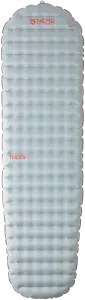 NEMO Tensor All-Season NEMO Tensor All-Season |
|
|---|---|---|---|
| R-value | 4.5 | 4.3 | 5.4 |
| Weight | 542 g (1.2 lb) (Regular Wide, Rectangular, as tested) | 482 g (1.1 lb) (Regular Wide, Rectangular, as tested) | 541 g (1.2 lb) (Regular Wide, Rectangular, as tested) |
| Thickness | 7.6 cm (3 in) | 9 cm (3.5 in) | 9 cm (3.5 in) |
| Overall Rating | B+ | B | A |
| Comfort score | 4/10 | 6/10 | 7/10 |
| Warmth score | 9/10 | 4/10 | 8/10 |
| Weight score | 7/10 | 8/10 | 7/10 |
| Ease of Use score | 4/10 | 6/10 | 10/10 |
| Durability score | 10/10 | 8/10 | 8/10 |
| Noise score | 6/10 | 8/10 | 8/10 |
| Check price | Check price | Check price |
Against the closest comparable pads by weight, warmth, and price, the two clearest competitors are the NEMO Tensor All-Season and the Big Agnes Zoom UL. The Big Agnes Zoom UL is lighter, and the NEMO Tensor All-Season lands at essentially the same weight but with a notably higher R-value on paper. Regardless, the Therm-a-Rest NeoAir XLite NXT sleeps warmer than either pad in real-world testing, while both edge it out slightly on comfort. That is the real tradeoff with this pad: proven real-world warmth, at the cost of comfort relative to pads built around a different baffle system.
More Sleeping Pad Reviews
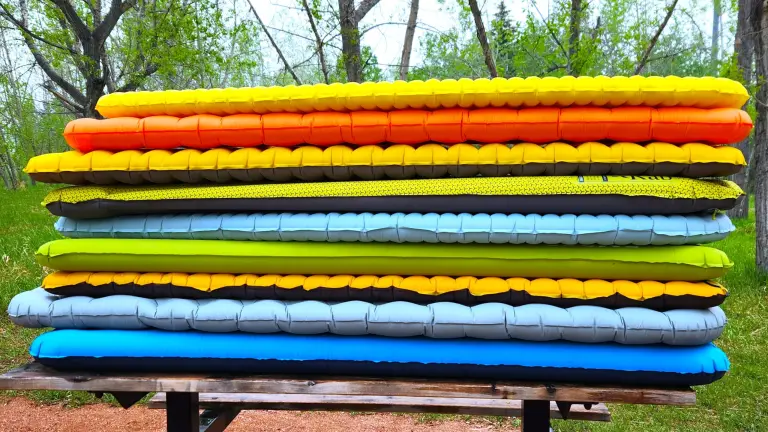
Best Backpacking Sleeping Pads – 2026 Awards
Seven categories. Seven winners.

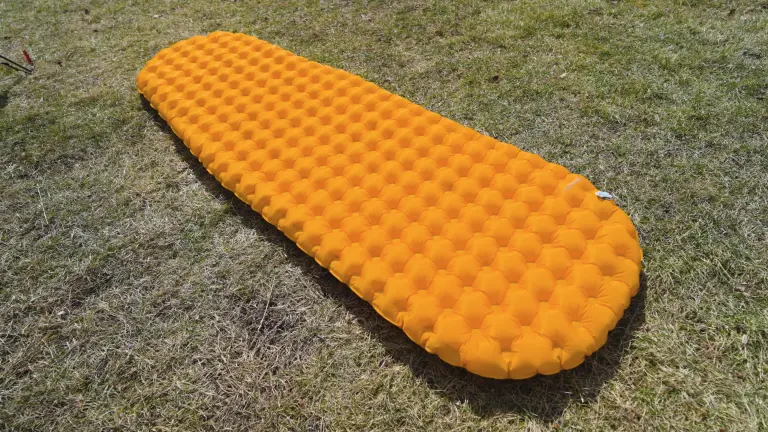
Bestway Ridgelite
Best budget pad on the market: warm, comfortable, and easy to use.
Bestway describes the Ridgelite as warm, comfortable, and light. During over 12 nights of testing, I have been warm below freezing and had comfortable sleeps on…
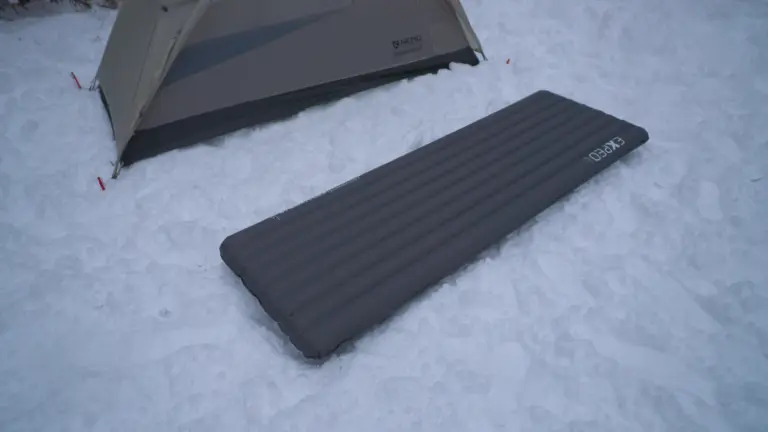
Exped Ultra 10R
Does one of the highest ASTM-tested R-values translate to real world warmth?
The Exped Ultra 10R has one of the highest ASTM-tested R-values ({{exped-ultra-10r:r-value}}) I have seen with a pad under [gp_measure value="1" unit="kg"]. Exped claims that the…