
SLEEPING PADS
Guide to Sleeping Pad Warmth & R-Value
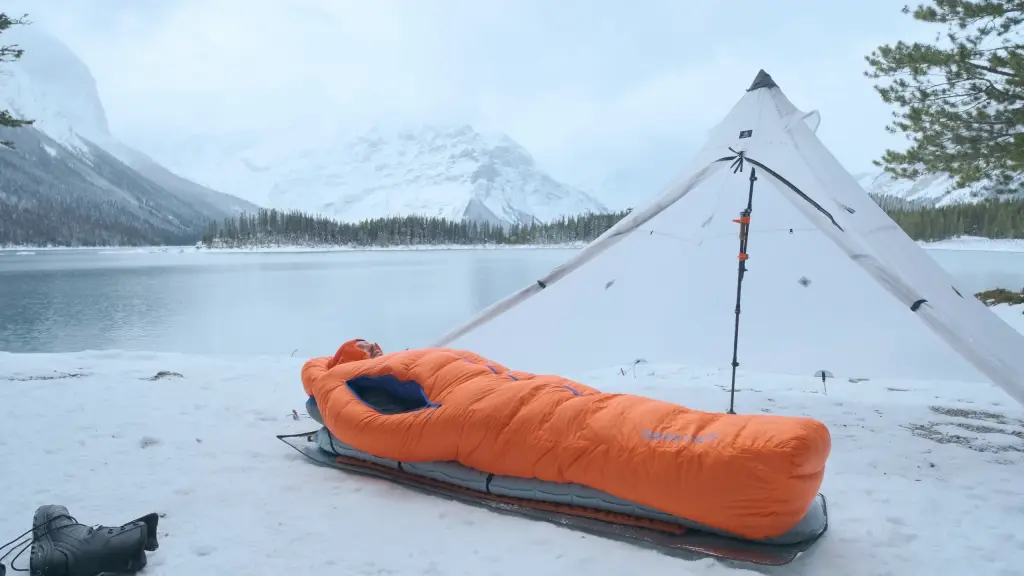
Most sleeping pad warmth claims come down to a single lab-tested number: R-value. But a lab test doesn’t always match a night out in the backcountry. We field-test every pad we review and record the coldest real-world conditions where it kept us warm – factoring in both the air temperature and the ground conditions underneath. Below, you can see how all of our tested pads stack up for warmth-to-weight, compare any two pads head-to-head, and see which pads actually sleep warmer or colder than their R-value predicts. We update this data every time we finish testing a new pad.
What’s the Warmest Sleeping Pad for Its Weight?
This chart plots each pad’s field-tested warmth score against its weight (measured on our scale) to show its real-world warmth-to-weight ratio. The top-left quadrant is the sweet spot for ultralight warmth, while heavy, cold-sleeping pads are in the bottom right quadrant.
Hover over or click a pad for its numbers. Zoom in on a crowded spot, then drag to move around.
What Is Sleeping Pad R-value?
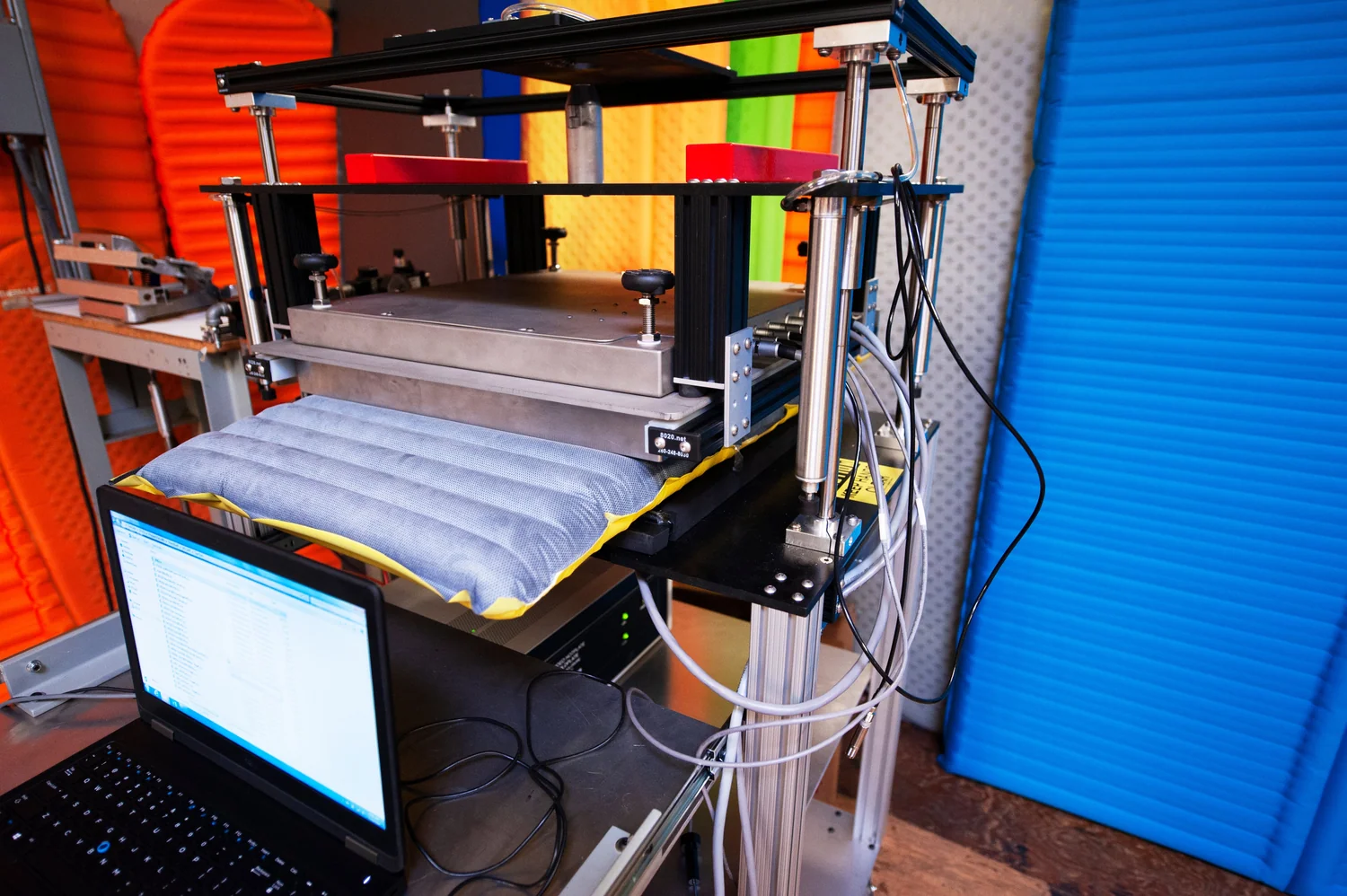
R-value is a lab measurement of how well a sleeping pad resists heat loss. During the test, a pad is placed between two metal plates: a hot plate on top kept at 35°C (95°F), to simulate body heat, and a cold plate on the bottom kept at 5°C (41°F), to simulate cold ground. The testing machine measures how much energy it takes to keep the top plate at 35°C. A pad that insulates well requires loses less heat through the pad to the cold plate and requires less energy to maintain the hot plate temperature – resulting in a higher R-value.
Most major brands test to the ASTM F3340 standard, meaning you can compare their R-values directly. Some brands skip the ASTM test and simply claim an R-value; those numbers are often estimates or marketing claims rather than standardized lab results. Because the R-value scale is linear, an R4 pad provides twice the thermal resistance of an R2 pad. R-values are also additive: stacking two sleeping pads that have an R-value of 3 results in a combined R-value of 6 and, theoretically, a system that is twice as warm.
R-value is meant to be a predictable and comparable metric for assessing how warm a sleeping pad will sleep. But our real-world testing shows that there is more to the story.
Can You Trust Sleeping Pad R-value?
If R-value told the whole story, then a higher R-value would always mean a warmer pad, and every pad on the chart below would be on the linear prediction line. Here, we plot each pad’s advertised R-value against the real-world warmth limit based on our testing. Green pads slept warmer than their R-value predicts, gray pads were within 2°C of expectations, and red pads slept colder than their R-value predicts. As you can see from the scatter, R-value alone does not always accurately predict how warm a pad will actually sleep in the backcountry. The chart does show that the overall trend is that higher R-values sleep warmer, although that trend fades somewhat as the R-values increase.
Hover over or click a pad for its numbers. Zoom in on a crowded spot, then drag to move around.
Limitations of Sleeping Pad R-value Testing
The point of a lab test is to minimize variables and allow for repeatable and consistent testing. R-value is a useful starting point, but it leaves out several factors that impact how warm a sleeping pad is in the real-world.
There are two main reasons thick and rectangular sleeping pads underperform in the real-world:
- The ASTM lab test only measures heat loss vertically through the center of the pad, ignoring heat escaping out the sides and edges. This issue is worsened by the testing room being heated to a temperature of 20°C (68°F), which is a lower temperature differential than what would be seen in subfreezing real-world conditions.
- Winter conditions can result in significantly larger temperature gradients between a warm body and the frozen ground than is simulated during the R-value test. The larger temperature gradient results in increased air movement due to the temperature differentials and more convective heat loss.
The ground. The lab’s cold plate is kept at a constant 5°C (41°F). In the backcountry, ground conditions vary wildly. Snow, ice, rock, and wet dirt conduct heat away from your pad faster than dry summer dirt or forest duff – meaning the exact same pad will feel much colder on frozen ground than on dry dirt, even at the same air temperature.
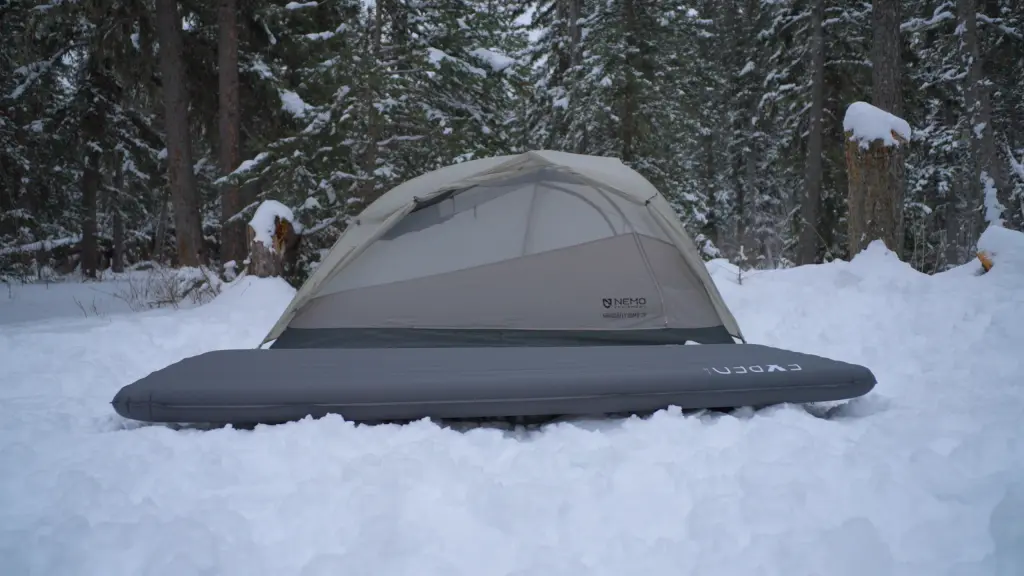
Your body. The R-value test applies light, even pressure across the pad. A real person’s hips and shoulders compress the pad (especially when side sleeping), thinning the insulation at those locations. Plus, every time you toss and turn, you physically “pump” warm air out from underneath you toward the cold edges of the pad.
The shape of the pad. Thick, wide, and rectangular pads have more surface area exposed to cold air around the edges; these factors might not only increase performance during R-value testing but decrease performance in cold real-world conditions.
That is why our testing results don’t always align with tested R-values. A few examples from our reviews:
Slept warmer than its R-value suggests
Slept colder than its R-value suggests
Use R-value to compare pads, and use our tested conditions, meaning the temperature together with the ground each pad was on, to decide what to bring.
Sleeping Pad Warmth Comparison
Pick any two pads to compare them side by side and start typing a name or brand in either box to find a pad quickly. The winning pad for each stat is marked in green.
What Makes Sleeping Pads Warm?
A sleeping pad loses heat in three ways, through conduction, convection, and radiation, and each type of insulation targets one of the three. Click a type of heat loss to highlight the insulation that reduces that heat loss and the pads built with that insulation.
1Click a heat loss type to see what sleeping pad insulation types match
2The sleeping pad insulation types that reduce heat loss
Air is a poor conductor of heat. An air chamber separating your body from the cold ground reduces direct conductive heat loss.
Internal baffles and multi-chamber structures divide the pad into small pockets, stopping air from circulating and reducing convective heat loss.
Synthetic fibres “trap” air and reduce air movement, which reduces convective heat loss.
The structure of down “traps” air and reduces air movement, which reduces convective heat loss.
Metallized layers of reflective film reflect heat back toward the sleeper, which reduces radiative heat loss.
Foam traps air in microscopic sealed cells that prevent air movement and reduces convective heat loss while creating a physical barrier that also slows conductive heat loss.
Sleeping Pad Season Ratings

Every pad on this page gets a season rating from the pad’s warmth score. The warmth score comes from the coldest conditions the pad kept us comfortable in during testing, so the season rating reflects real nights outside and not R-value.
- Summer (warmth score 0 to 3). Summer pads kept us comfortable in conditions down to about 3°C (37°F) on warm ground.
- 3-Season (warmth score 4 to 6). Pads in the 3-Season range kept us comfortable in conditions from 0°C (32°F) down to -4°C (25°F) on warm ground.
- All-Season (warmth score 7 to 8). All-Season pads kept us comfortable in conditions from -6°C (21°F) down to -10°C (14°F) on cold ground.
- Winter (warmth score 9 to 10). Winter pads kept us comfortable in conditions from -20°C (-4°F) down to -30°C (-22°F) on snow or frozen ground.
A pad’s real-world season rating often differs from what the brand advertises. Use the season filter on the table below to see every pad in a category.
Sleeping Pad R-value Guide
Every pad we have tested is on the table below. Click any column heading to sort the table by that column, or use the filters to narrow the table down by brand, season, or weight.
 Bestway Alpenlite | 7.6 | 743 g (1.6 lb) Mid-weight | 1.08 | 8/10 | -10°C (14°F)Snow or frozen ground | Slept colderR-value suggests -18°C (0°F) conditions |
|---|---|---|---|---|---|---|
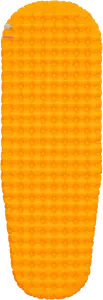 Bestway Ridgelite Read full review → | 4.9 | 700 g (1.5 lb) Mid-weight | 0.86 | 6/10 | -5°C (23°F)Cold ground | MatchesR-value suggests -5°C (23°F) conditions |
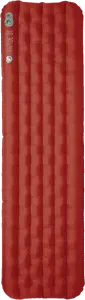 Big Agnes Rapide SL Insulated | 4.8 | 646 g (1.4 lb) Lightweight | 0.46 | 3/10 | 3°C (37°F)Warm ground | Slept colderR-value suggests -4°C (25°F) conditions |
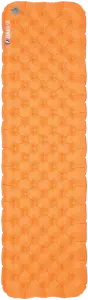 Big Agnes Zoom UL Insulated Read full review → | 4.3 | 482 g (1.1 lb) Ultralight | 0.41 | 2/10 | 5°C (41°F)Warm ground | Slept colderR-value suggests -1°C (30°F) conditions |
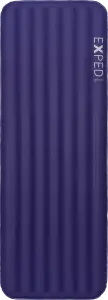 Exped MegaMat Ultra Read full review → | 4.4 | 880 g (1.9 lb) Mid-weight | 0.57 | 5/10 | -2°C (28°F)Warm ground | MatchesR-value suggests -2°C (28°F) conditions |
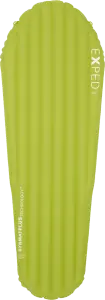 Exped Ultra 6.5R (Regular Wide Mummy) Read full review → | 6.9 | 437 g (15.4 oz) Ultralight | 0.92 | 4/10 | 0°C (32°F)Warm ground | Slept colderR-value suggests -15°C (5°F) conditions |
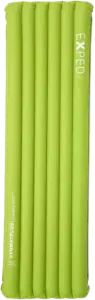 Exped Ultra 6.5R (Regular Wide Rectangular) Read full review → | 6.9 | 551 g (1.2 lb) Lightweight | 1.27 | 7/10 | -6°C (21°F)Cold ground | Slept colderR-value suggests -15°C (5°F) conditions |
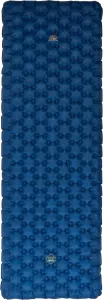 Highlander Nap-Pak Arctic R11 | 11 | 855 g (1.9 lb) Mid-weight | 0.94 | 8/10 | -16°C (3°F)Snow or frozen ground | Slept colderR-value suggests -35°C (-31°F) conditions |
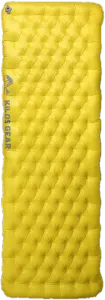 Kilos Gear AeroCloud UL | 3.8 | 489 g (1.1 lb) Ultralight | 0.41 | 2/10 | 5°C (41°F)Warm ground | Slept colderR-value suggests 1°C (34°F) conditions |
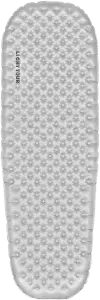 Light Tour R7.5 | 7.5 | 560 g (1.2 lb) Lightweight | 1.43 | 8/10 | -10°C (14°F)Snow or frozen ground | Slept colderR-value suggests -18°C (0°F) conditions |
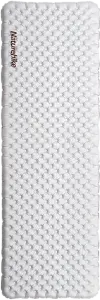 Naturehike 5.8 | 5.8 | 594 g (1.3 lb) Lightweight | 0.84 | 5/10 | -3°C (27°F)Warm ground | Slept colderR-value suggests -9°C (16°F) conditions |
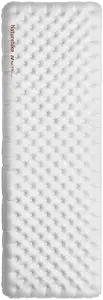 Naturehike TuYe R8.8 | 8.8 | 657 g (1.4 lb) Lightweight | 0.61 | 4/10 | 0°C (32°F)Warm ground | Slept colderR-value suggests -24°C (-11°F) conditions |
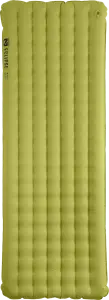 NEMO Eclipse All-Season Read full review → | 6.2 | 558 g (1.2 lb) Lightweight | 0.9 | 5/10 | -2°C (28°F)Warm ground | Slept colderR-value suggests -11°C (12°F) conditions |
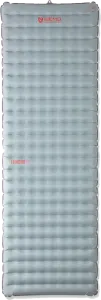 NEMO Tensor All-Season | 5.4 | 541 g (1.2 lb) Lightweight | 1.29 | 7/10 | -6°C (21°F)Cold ground | MatchesR-value suggests -7°C (19°F) conditions |
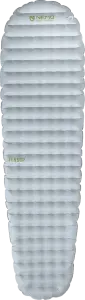 NEMO Tensor Elite Read full review → | 2.4 | 301 g (10.6 oz) Ultralight | 1 | 3/10 | 3°C (37°F)Warm ground | Slept warmerR-value suggests 8°C (46°F) conditions |
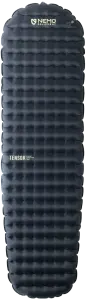 NEMO Tensor Extreme Conditions | 8.5 | 658 g (1.5 lb) Lightweight | 1.37 | 9/10 | -25°C (-13°F)Snow or frozen ground | Slept warmerR-value suggests -23°C (-9°F) conditions |
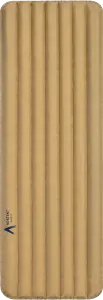 NORTENT Torv 7 | 7 | 737 g (1.6 lb) Mid-weight | 0.68 | 5/10 | -2°C (28°F)Warm ground | Slept colderR-value suggests -15°C (5°F) conditions |
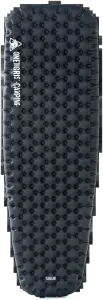 OneTigris NobleJade | 7.3 | 767 g (1.7 lb) Mid-weight | 0.52 | 4/10 | 0°C (32°F)Warm ground | Slept colderR-value suggests -17°C (1°F) conditions |
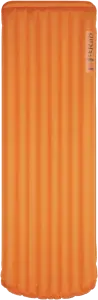 Rab Hypersphere 9.5 | 9.5 | 809 g (1.8 lb) Mid-weight | 0.99 | 8/10 | -15°C (5°F)Snow or frozen ground | Slept colderR-value suggests -28°C (-18°F) conditions |
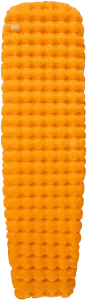 REI Helix Read full review → | 4.9 | 700 g (1.5 lb) Mid-weight | 0.86 | 6/10 | -5°C (23°F)Cold ground | MatchesR-value suggests -5°C (23°F) conditions |
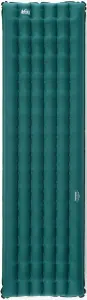 REI Traverse Read full review → | 4.3 | 711 g (1.6 lb) Mid-weight | 0.7 | 5/10 | -2°C (28°F)Warm ground | MatchesR-value suggests -1°C (30°F) conditions |
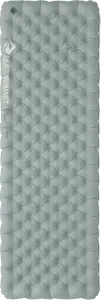 Sea to Summit Ether Light XR Read full review → | 4.1 | 625 g (1.4 lb) Lightweight | 0.64 | 4/10 | 0°C (32°F)Warm ground | MatchesR-value suggests 0°C (32°F) conditions |
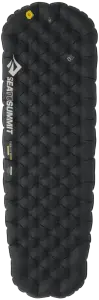 Sea to Summit Ether Light XR Pro Read full review → | 7.4 | 726 g (1.6 lb) Mid-weight | 1.24 | 9/10 | -25°C (-13°F)Snow or frozen ground | Slept warmerR-value suggests -17°C (1°F) conditions |
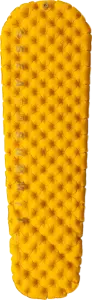 Sea to Summit Ultralight XR Insulated | 3.6 | 411 g (14.5 oz) Ultralight | 1.22 | 5/10 | -2°C (28°F)Warm ground | Slept warmerR-value suggests 2°C (36°F) conditions |
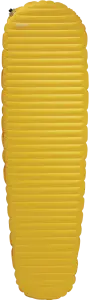 Therm-a-Rest NeoAir XLite NXT Read full review → | 4.5 | 445 g (15.7 oz) Ultralight | 1.57 | 7/10 | -8°C (18°F)Cold ground | Slept warmerR-value suggests -3°C (27°F) conditions |
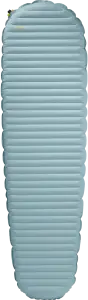 Therm-a-Rest NeoAir XTherm NXT Read full review → | 7.3 | 567 g (1.3 lb) Lightweight | 1.76 | 10/10 | -30°C (-22°F)Snow or frozen ground | Slept warmerR-value suggests -17°C (1°F) conditions |
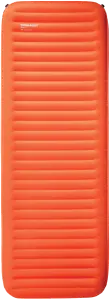 Therm-a-Rest NeoLoft Read full review → | 4.7 | 833 g (1.8 lb) Mid-weight | 0.48 | 4/10 | 0°C (32°F)Warm ground | Slept colderR-value suggests -4°C (25°F) conditions |
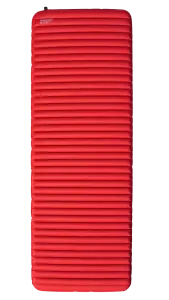 Therm-a-Rest Trailmix Read full review → | 4.5 | 779 g (1.7 lb) Mid-weight | 0.77 | 6/10 | -5°C (23°F)Warm ground | Slept warmerR-value suggests -3°C (27°F) conditions |
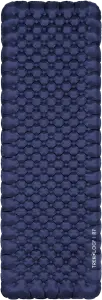 Trekology UL R7 | 7.2 | 907 g (2 lb) Heavy | 0.44 | 4/10 | 0°C (32°F)Warm ground | Slept colderR-value suggests -16°C (3°F) conditions |
No sleeping pads match these filters.
- Weight is for the size we tested and R-value is as rated by each brand.
- Coldest conditions is the coldest temperature a pad kept us comfortable at in testing, on the ground shown. A pad loses more heat to colder ground, so a limit reached on warm ground and a limit reached on snow are not a like-for-like comparison.
- Real world vs R-value compares those conditions with what the pad’s R-value usually suggests. “Matches” means within 2°C.